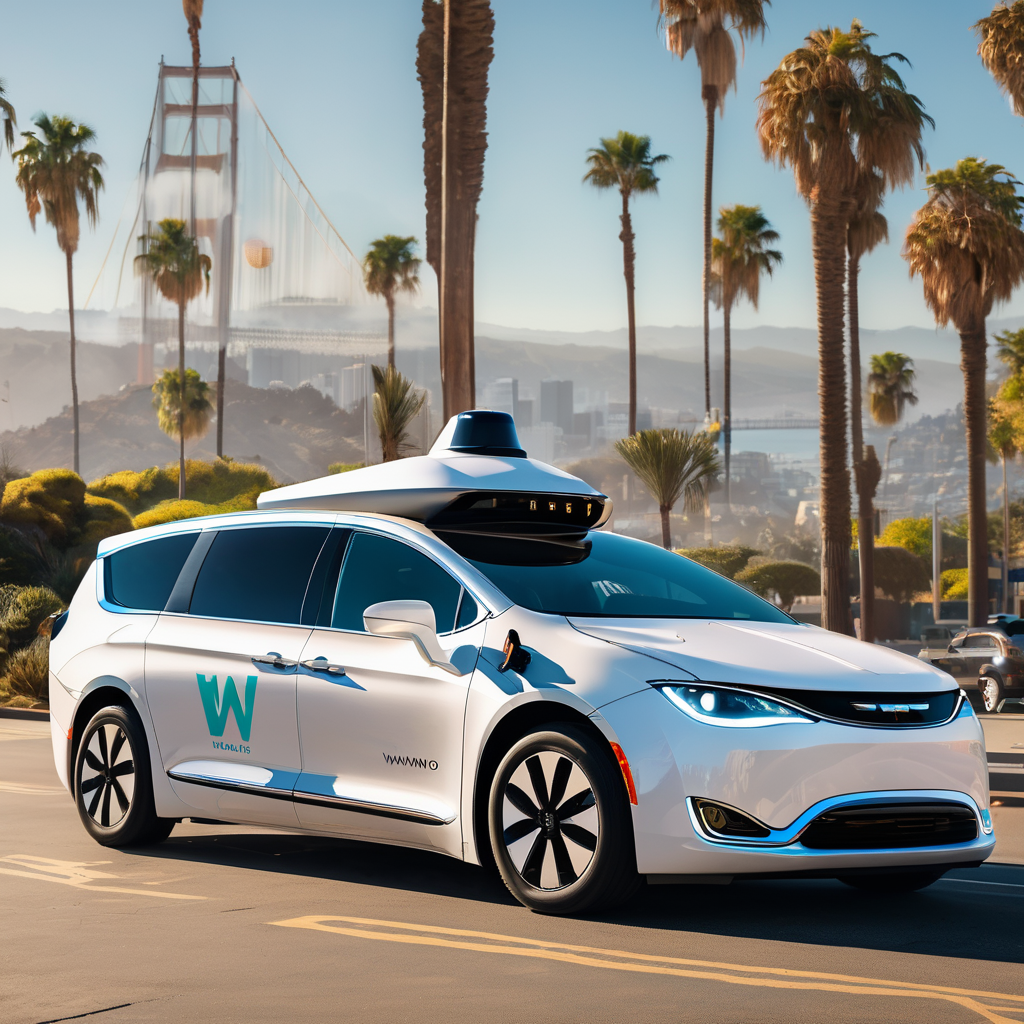
Waymo has restarted its driverless ride-hailing operations in the San Francisco Bay Area following an interruption caused by widespread power outages that began Saturday afternoon. These outages severely affected traffic flow in the city, with many traffic signals becoming inoperable and transit services disrupted. Waymo’s spokesperson, Suzanne Philion, acknowledged the challenges posed by these outages, stating that while their autonomous vehicles are programmed to treat non-functional signals as four-way stops, the scale of the disruption led to instances where the vehicles remained stationary longer than usual, contributing to traffic congestion.
The outages began at around 1:09 p.m. and peaked within two hours, affecting approximately 130,000 customers due to damage from a fire at a Pacific Gas and Electric (PG&E) substation. By Sunday morning, around 21,000 customers still faced power challenges, particularly in the Presidio, Richmond District, and parts of downtown San Francisco. San Francisco’s Mayor Daniel Lurie reported that personnel such as police officers and city ambassadors had been deployed to manage the situation in affected neighborhoods.
Eyewitness accounts revealed that several Waymo vehicles were halted in traffic during the outages, highlighting the difficulties autonomous vehicles faced amid the chaos. Photos shared online captured these vehicles stopping unexpectedly in the streets. Before the outages escalated, Waymo had proactively paused its services on Saturday evening, ensuring the safety of its riders and vehicles by returning them to depots or safely pulling them over. Philion mentioned that the majority of trips were completed successfully before the service suspension.
In the context of the power outages, Tesla CEO Elon Musk pointed out that Tesla’s robotaxi fleet was unaffected. However, it’s important to note that Tesla’s local ride-hailing service operates under a “FSD (Supervised)” system, which requires a human driver present at all times. Unlike Waymo, Tesla has not yet launched a fully driverless service in San Francisco due to regulatory restrictions.
The disruption in San Francisco highlights ongoing concerns about the readiness of cities for widespread autonomous vehicle (AV) deployment. A recent survey indicated that many Americans remain apprehensive about autonomous vehicles, with two-thirds expressing fear regarding their safety. MIT research scientist Bryan Reimer noted that predictable events like power outages necessitate a blend of human and AI intelligence in AV systems, advocating for the implementation of human backup systems in highly automated environments.
The halt in Waymo’s service symbolizes broader challenges as cities and AV companies work together to establish a balance between innovation in autonomous transportation and the reliable functioning of urban infrastructure. The ongoing developments in the AV landscape suggest a pathway towards enhancing safety and efficiency in the future, as stakeholders collaborate to address the complexities of integrating autonomous systems into daily urban life.