The United States has recalibrated its foreign assistance strategy to better serve its objectives in the Pacific region, with a particular focus on Fiji. This shift is evident in the establishment of a dedicated Foreign Assistance Office within the U.S. Embassy, reinforcing the principles of the America First Foreign Assistance policy that prioritizes U.S. interests.
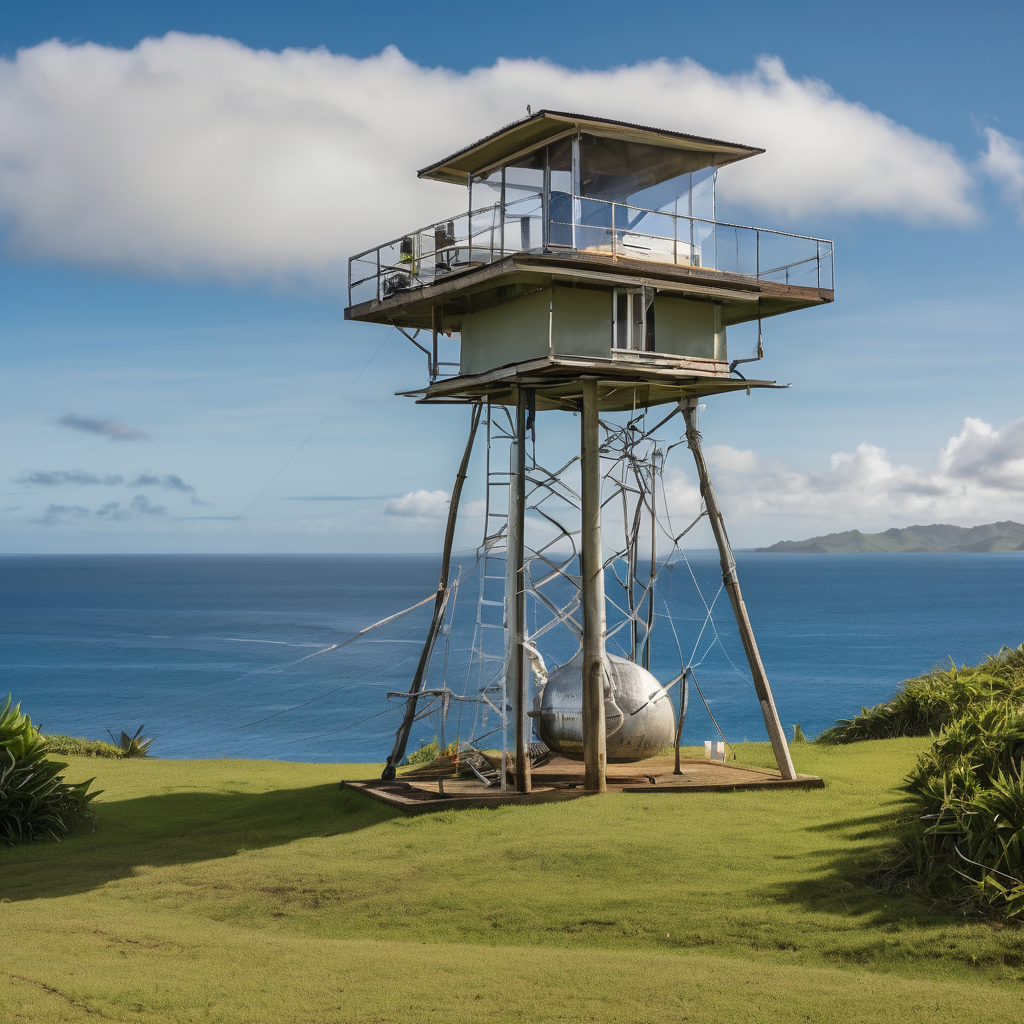
One of the notable projects is the training of local personnel in operating 3D-printed, mercury-free weather stations tailored for remote islands. These advanced stations are designed to enhance early warning systems for natural disasters such as floods and droughts, demonstrating the U.S. commitment to improving disaster preparedness in the area.
U.S. Ambassador to Fiji, Marie Damour, recently announced the provision of several Rigid Hull Inflatable Boats to the Fijian Navy. This initiative is aimed at strengthening maritime security and improving response operations during disasters, which are crucial for enhancing maritime domain awareness and fighting illegal fishing and transnational crime.
Ambassador Damour also pointed out a significant $4.4 million funding agreement signed last year, which is intended to advance Fijian military capabilities through various training and resource initiatives, including collaboration with the Nevada National Guard. This financial support forms part of a broader framework aimed at promoting democratic values, media freedom, and community engagement within Fiji.
The U.S. Embassy is additionally backing initiatives like the Fiji Media Association’s inaugural town halls, which have created a platform for greater dialogue between the government and citizens. These efforts highlight a commitment to increasing transparency and accountability in governance.
A key milestone is the recent swearing-in of the 100th Peace Corps Volunteer group, which focuses on empowering local communities through projects in business and financial management. Since its establishment in 1968, over 2,700 American volunteers have played an instrumental role in enhancing health, education, and economic stability in Fiji.
As the U.S. approaches the 250th anniversary of its independence in 2026, plans are underway for cultural events in Fiji aimed at strengthening mutual appreciation and engagement. U.S. assistance is also aligned with regional strategies such as the Pacific Islands Forum (PIF) 2050 strategy, which focuses on collective development and security efforts in the region.
While there are no direct programs akin to Australia’s Pacific labor partnerships, which offer greater employment opportunities for Fijians in the U.S., Ambassador Damour noted that legal work opportunities do exist through employer sponsorship, along with some seasonal agricultural programs managed by industry associations.
This comprehensive approach embodies a significant commitment to Fiji’s future, emphasizing not only immediate aid and relief but also a long-term partnership that aligns U.S. interests with the aspirations of the Fijian people. The continued cooperation between the two nations promises to yield substantial benefits as they work towards shared goals in the Pacific region.