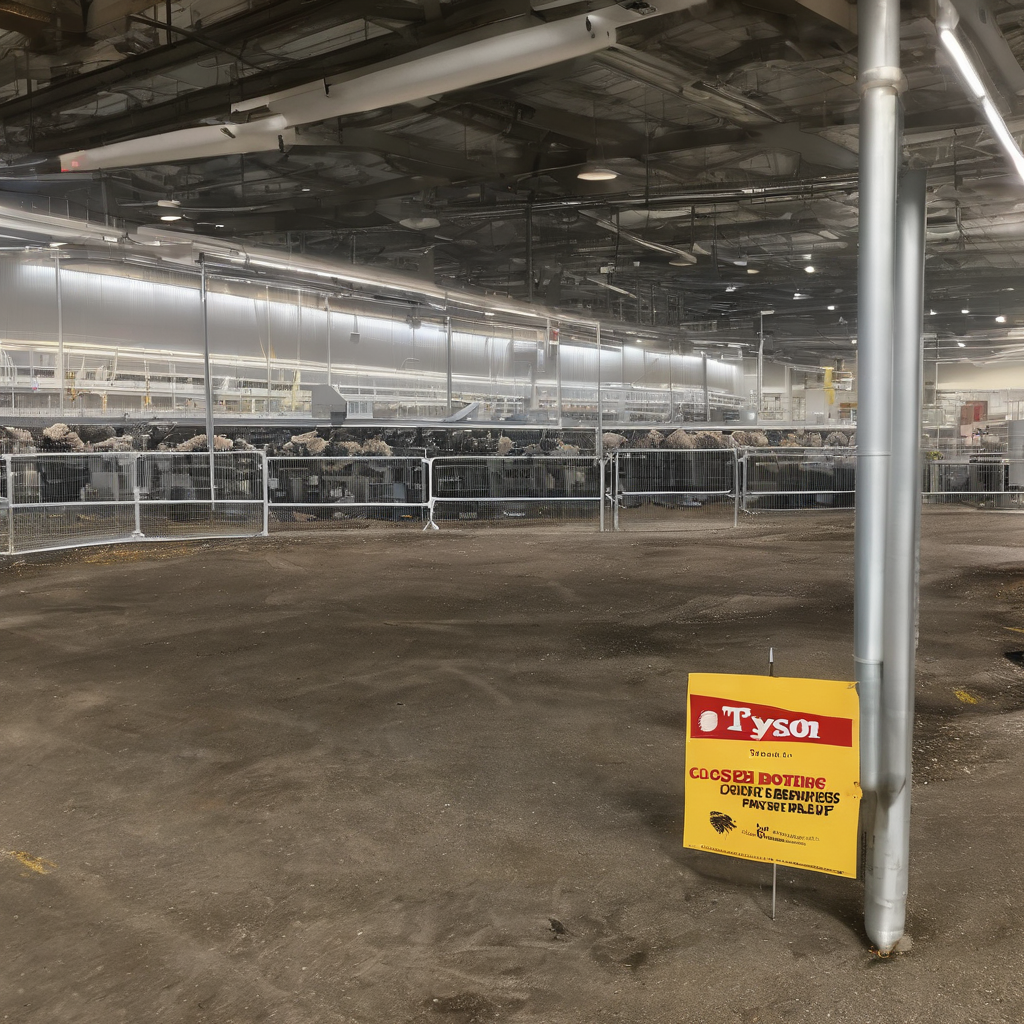
LEXINGTON, Neb. — The closure of Tyson Foods’ beef processing plant, announced unexpectedly for January 20, has plunged this rural community into emotional turmoil. The facility, which has been the backbone of Lexington’s economy and employment since it opened 35 years ago, employs about 3,200 individuals and is seen as the heart of the town.
Residents express feelings of anger and sadness in the aftermath of the announcement. Vicky Martinez, a local restaurant owner, voiced the collective sentiment, emphasizing the town’s deep dependence on the plant for both jobs and stability. “People are just really sad,” she remarked, highlighting a pervasive sense of loss.
Since its establishment in 1990, following the purchase of the former Sperry-New Holland farm equipment plant by Iowa Beef Packers, and later its acquisition by Tyson in 2001, the facility has grown to be one of the largest beef producers in the country. It produces up to 5,000 head of cattle daily, representing about 5% of the nation’s total beef production.
The shutdown is predicted to have far-reaching consequences, potentially uprooting a third of Lexington’s population as families are forced to seek employment elsewhere. Local businesses are also feeling the strain; a nearby cleaning company has already announced layoffs of 140 employees, exacerbating the situation and sparking concerns about a wider “tidal wave effect” on the community.
The closure raises grave concerns for the local healthcare and education systems, both of which rely heavily on the workforce supported by the Tyson plant. Jason Douglas, CEO of the Lexington Regional Health Center, openly criticized Tyson in a poignant letter, explaining the devastating impact on healthcare access as thousands lose employer-sponsored insurance. “When thousands of people lose employer-sponsored insurance simultaneously, the ripple effect hits our emergency department, our clinics, and our beds,” he wrote.
Similarly, the local school district, where approximately 50% of students have parents working at Tyson, faces uncertainty about student enrollment. Superintendent Dr. John Hakonson remarked on the impending challenges, estimating significant potential losses in student numbers, which could drastically affect funding. However, he expressed hope that many families will opt to stay for the remainder of the school year in a bid to keep their children in familiar surroundings.
Douglas pointedly criticized Tyson executives for prioritizing shareholder value and personal compensation over the well-being of the community that has supported the company for decades. Notably, he highlighted the stark contrast between the compensation of Tyson’s executives and that of the average worker, signaling a disconnect that has left many residents feeling disregarded.
Despite the gravity of the situation, community members continue to grapple with these life-altering changes, facing hard decisions about their future. The collective sentiment is reflected in Douglas’ closing remarks to Tyson, stressing that Lexington “deserved better from you.”
This situation stands as a somber reminder of how corporate strategies can ripple through the fabric of local communities, leaving behind both economic and emotional voids that are not easily filled. As the town faces these challenging times, many hope for recovery and resilience in the face of adversity.