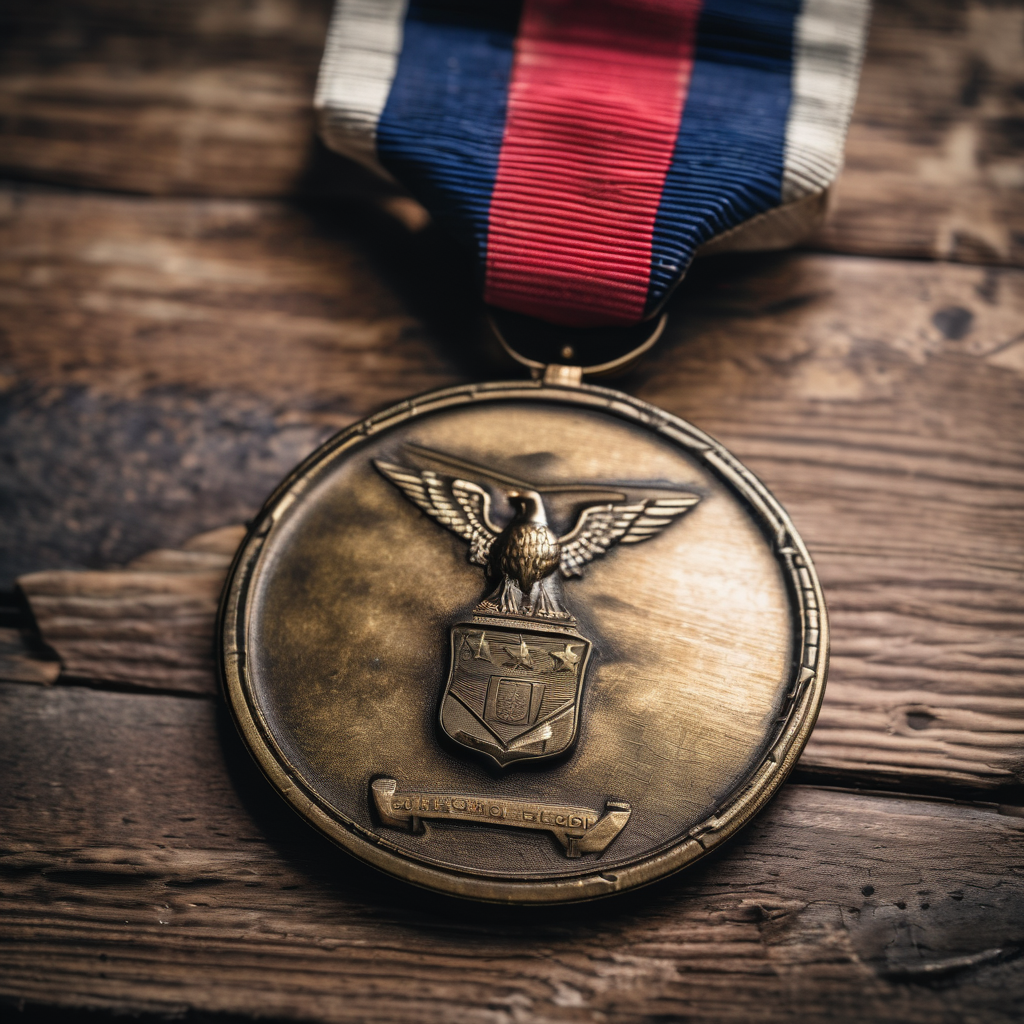
During his 2026 State of the Union address, President Donald Trump turned the spotlight away from traditional political talking points, such as tax policies and immigration, to honor remarkable acts of heroism by presenting two Congressional Medals of Honor. These awards recognized significant bravery separated by over seventy years but united by extraordinary American courage.
The House chamber was transformed into a somber military ceremony featuring uniformed officers, wounded veterans, and a 100-year-old Navy fighter pilot. Among the honorees was U.S. Army Chief Warrant Officer Eric Slover, who received the Medal of Honor for his daring actions during a January raid that Trump claimed was pivotal in capturing Venezuelan leader Nicolás Maduro.
Trump recounted the harrowing details of a Chinook helicopter mission under heavy enemy fire, revealing how Slover sustained multiple gunshot wounds yet continued to pilot the aircraft to ensure the safety of his crew. After successfully landing the helicopter, he reportedly told his co-pilot, “I’m about ready to pass out.” The president called attention to the ongoing risks faced by special operations and aviation crews in high-threat environments, underscoring the importance of their missions beyond conventional war zones. Ten other service members from the operation are set to receive commendations in a future ceremony at the White House.
The second Medal of Honor was awarded to retired Navy Capt. E. Royce Williams, who received recognition for his extraordinary aerial combat during the Korean War. At the age of 100, Williams was honored for a classified dogfight in 1952, during which he encountered seven Soviet MiG-15 fighter jets. Despite being outnumbered and facing challenging weather conditions, he managed to shoot down four enemy aircraft while his own jet sustained over 200 bullet strikes. Until his award, this remarkable feat remained largely unknown for decades.
As First Lady Melania Trump placed the medal around Williams’ neck, the chamber erupted into applause, marking one of the highlights of the evening. This moment not only affirmed Williams’ bravery but also highlighted the ongoing efforts by the Defense Department to reassess and acknowledge historical acts of valor, even long after they occurred.
The presentation of the medals in this setting is rare, emphasizing the significant contrast between the two honorees: Slover represents the modern-day military’s operational force, while Williams symbolizes the Cold War-era aviators whose histories were often hidden. Together, they embody a continuum of valor that spans from past conflicts to present-day military missions.
Trump framed the recognitions within a broader patriotic narrative as the nation approaches its 250th anniversary, remarking on the contributions of those who have served. For the military community, these awards serve as a powerful testament to the standards of bravery encapsulated in the Medal of Honor. Slover’s recognition reaffirms that acts of valor today are just as significant as those from the past, while Williams’ award illustrates that overdue recognition for bravery can still be achieved, regardless of the time elapsed.
In a moment largely devoid of political rhetoric, the focus shifted to the sacrifices made by these individuals, marking a poignant reminder of the human cost of service. As Trump remarked while standing alongside the honorees, “That’s our highest honor… and it’s an honor to be in the same room with you.” In a world often preoccupied with budgetary concerns and foreign policy debates, the emphasis on personal sacrifice stands as a powerful reaffirmation of duty and commitment to the nation.