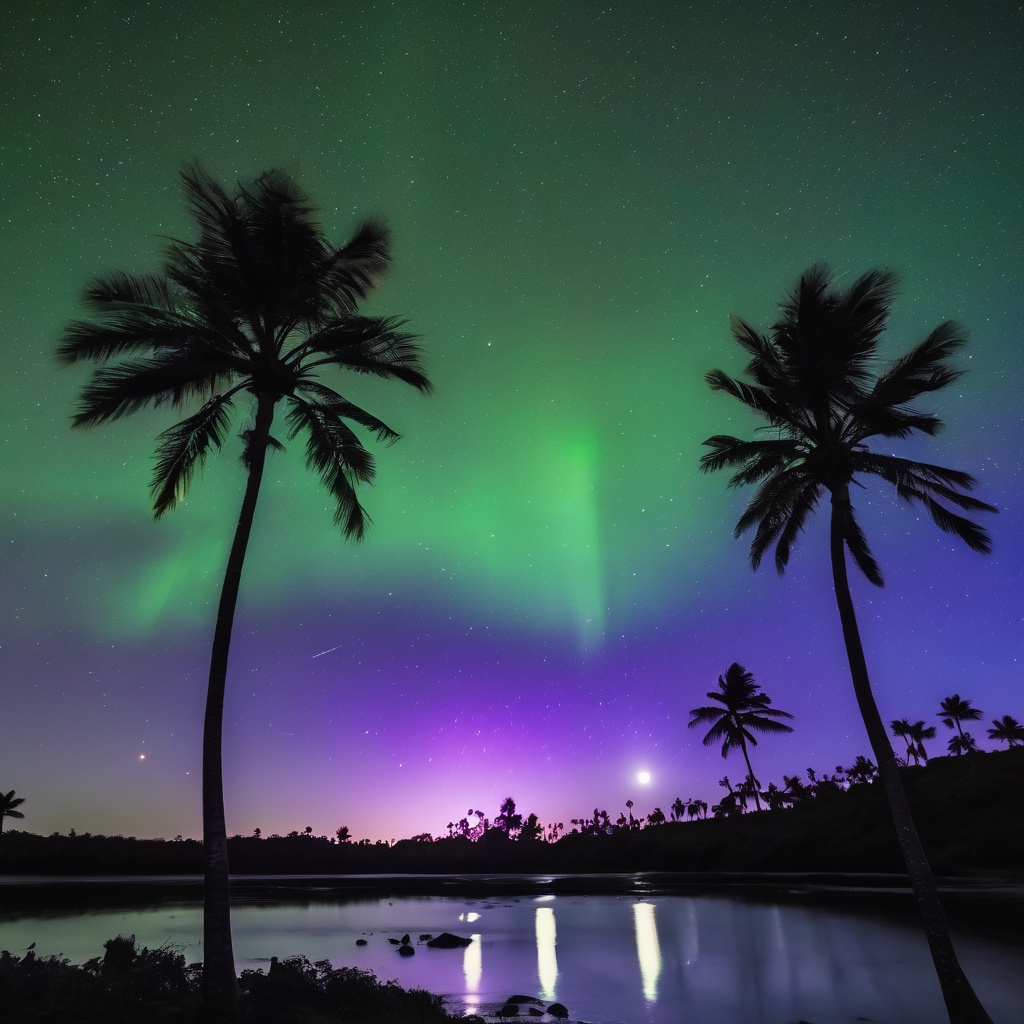
The beginning of the year is proving to be an exciting time for astronomy enthusiasts, with several celestial events poised to capture the attention of skygazers. A supermoon is set to occur on January 3, coinciding with the peak of the Quadrantids meteor shower, while tonight brings the potential for a stunning appearance of the aurora borealis, also known as the northern lights.
According to the National Oceanic and Atmospheric Administration (NOAA), the aurora forecast is influenced by a G2 magnetic storm, which typically enhances visibility of the northern lights across the northern regions of the United States. The storm is expected to reach its peak late Friday into early Saturday, just after midnight, before diminishing with the approaching sunrise.
This display is triggered by a coronal mass ejection (CME), which is a significant outburst of solar plasma and materials released from the sun on New Year’s Day. Although the CME was categorized as a C6-level flare—moderately strong—it is on a direct collision course with Earth. When this solar material interacts with the Earth’s geomagnetic field, it creates the vibrant display of the auroras.
NOAA has identified the upper third of the United States as the prime viewing area for tonight’s aurora. States such as Alaska, Washington, Idaho, Montana, North Dakota, South Dakota, Minnesota, and Wisconsin are expected to have the best vantage points. Furthermore, keen observers in parts of Wyoming, Nebraska, Iowa, Illinois, Michigan, New York, Vermont, New Hampshire, and Maine may also catch sight of the spectacle. Residents in northern Indiana, Ohio, and Pennsylvania could have the chance to view the aurora, though this will depend on the storm’s intensity.
As auroras can be unpredictable much like weather patterns, viewers are encouraged to stay informed through local news channels regarding any developments in the geomagnetic storm. Stronger-than-anticipated activity could shift the aurora’s visibility further south than initially forecast.
Anyone looking to experience the northern lights should consider a few viewing tips. It’s best to escape urban light pollution by finding a location further away from city lights. Those residing near the Canadian border have an advantageous position to witness the aurora, which may extend its reach northward. For those in the southern part of the predicted viewing area, finding an elevated spot and looking north will increase visibility.
Additionally, this evening provides an excellent opportunity to enjoy multiple cosmic events, including the Quadrantids meteor shower and the supermoon, promising an enchanting night of skylight to those willing to brave the cold to partake in these magnificent celestial displays.