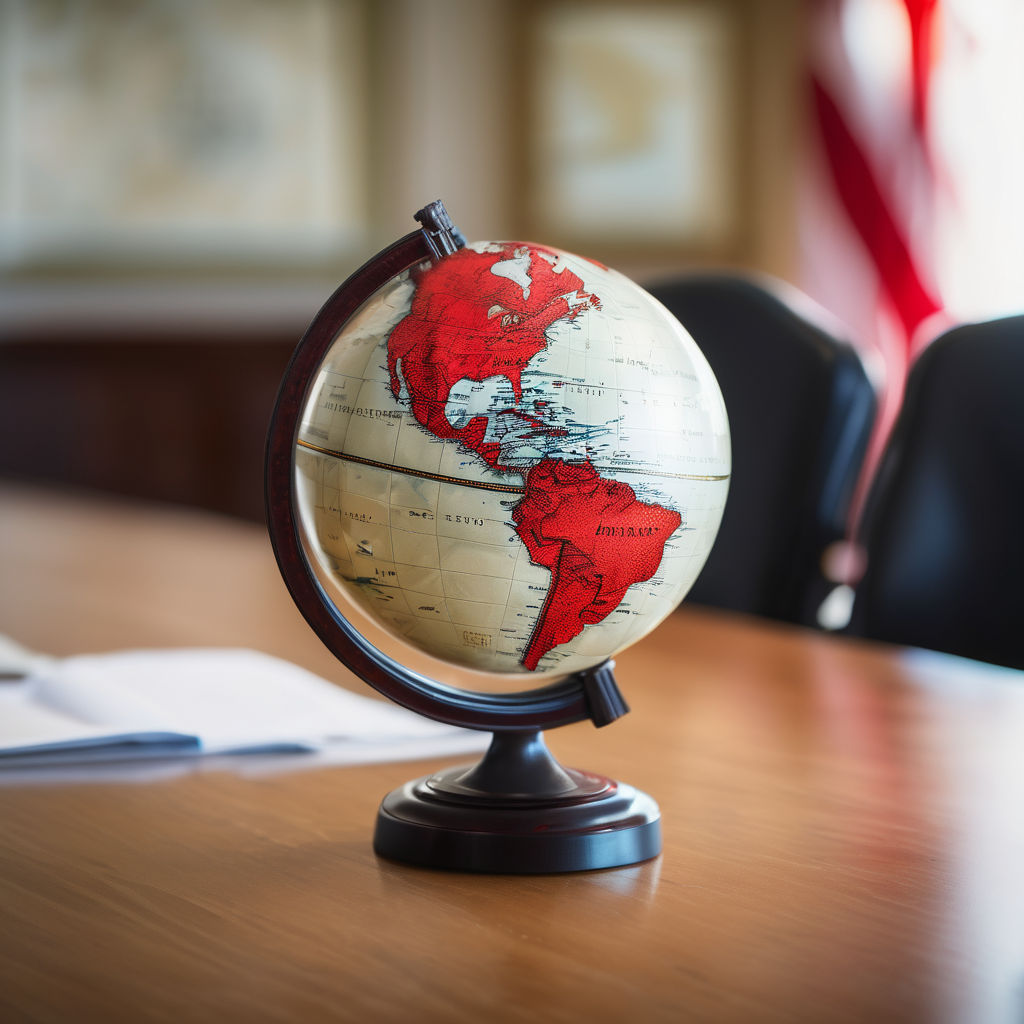
In early 2025, the New York Post captured headlines with a striking image of President Donald Trump smirking next to a classroom map of the Western Hemisphere, under the bold title: “The Donroe Doctrine.” The map featured Trump’s ambitious claims that included labeling Canada the “51st state,” describing Greenland as “our land,” renaming the Gulf of Mexico as the “Gulf of America,” and reaffirming U.S. control over the Panama Canal. This front page echoed the Monroe Doctrine from 1823, which established the U.S. stance against European colonization in its hemisphere.
Prior to Trump’s return to the presidency, his ambitions for the region were viewed as odd, especially as his confrontational stance towards Canada negatively influenced conservative electoral prospects in the country. Furthermore, his interest in Greenland complicated relations with Denmark without clear advantages, igniting tensions with the European Union.
However, the specifics of the Donroe Doctrine have become more pronounced in the context of U.S. military deployments in the Caribbean, marking the most significant American presence in decades. This military engagement is perceived as a direct challenge to Venezuela’s authoritarian regime under President Nicolás Maduro, with U.S. forces targeting suspected drug trafficking operations in the area. Analysts suspect a broader goal of regime change under Trump’s administration.
Additionally, Trump has exerted considerable influence in Latin America, actively supporting candidates in numerous elections, from Honduras to Chile, and strategically sanctioning left-leaning governments. A notable instance of this occurred when Trump offered a $20 billion bailout to Argentina, coinciding with electoral gains for President Javier Milei’s libertarian allies. This shift on the continent mirrors the rise of right-wing political figures aligned with Trump’s ideologies.
Recent policy outlines from the White House formally reference the Monroe Doctrine and propose what is being termed the “Trump Corollary,” which emphasizes U.S. dominance in the hemisphere while warning against interference from countries like China. The administration has articulated intentions to deny non-Hemispheric competitors the capability to establish military presences or control vital resources in the region.
Experts like Christopher Sabatini from Chatham House are critical of this approach, describing it as a partisan strategy to reshape the region in favor of Trump-backed leaders. This has diverged from previous U.S. administrations that focused on support for democratic principles and free markets. The current rhetoric and approach signify a move toward a more aggressive stance reminiscent of historical colonial attitudes.
The evolving political landscape in Latin America, characterized by concerns about gang violence and corruption, appears to resonate with Trump’s agenda. As political leaders increasingly adopt hardline stances against crime, the current environment may align more with Trump’s vision for the region. Brian Winter, editor of Americas Quarterly, notes that recent developments in Latin American politics echo themes common in U.S. domestic discussions.
Furthermore, advisers such as Stephen Miller are reportedly leveraging conflicts like the one in Venezuela to promote policies that could contribute to mass deportations of Venezuelans from the U.S. Reflecting on these strategies, former adviser Stephen K. Bannon pointed out the renewed acceptance of concepts like the Donroe Doctrine among Trump’s base, suggesting a shift toward narratives that prioritize a defense against perceived threats from immigration and narcotics.
Yet, this approach has its critics. Stephen Wertheim of the Carnegie Endowment highlights the adoption of tactics from the war on terror, suggesting that Trump’s methods contribute to a militarized stance on policy that affects relations within the hemisphere. Notably, countries in Latin America have historically experienced low levels of terrorism, raising questions about the necessity of such a dominant security argument.
Critics argue that a more constructive path for the U.S. in Latin America would involve fostering development through investments in infrastructure rather than exerting dominance. China’s growing influence through trade and investment emphasizes the need for the U.S. to adapt and engage collaboratively with its southern neighbors. Jorge Heine, a Chilean diplomat, criticizes the outdated approach of harking back to early 19th-century doctrine, asserting that such attempts ignore the complexities of current global dynamics.
Ultimately, while the Trump administration’s objectives signal an assertive shift in U.S. policy towards Latin America, the long-term implications may risk alienating the region through a heavy-handed strategy. As discussions surrounding international partnerships and shared advancements continue, the potential for positive engagement remains significant in shaping future relations.