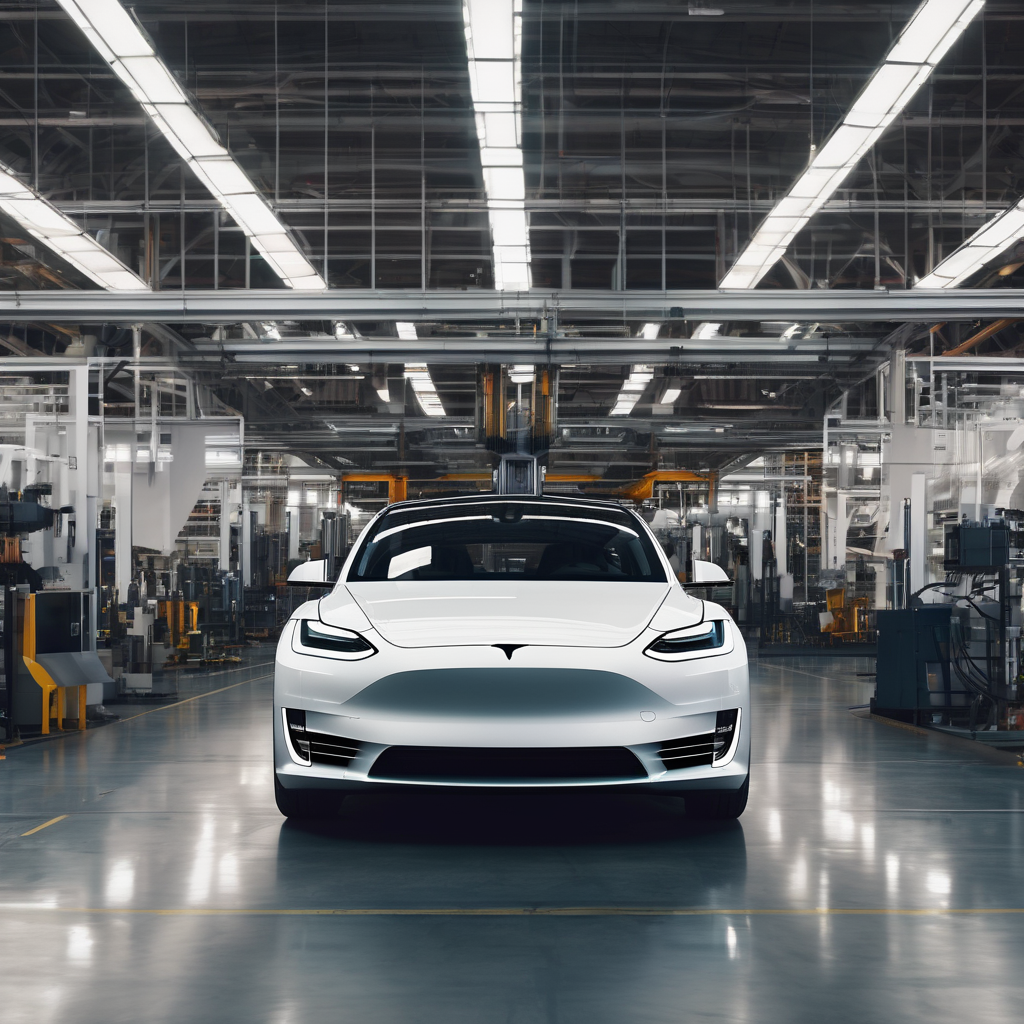
Tesla (TSLA) is making significant changes in its production strategy, officially ending the manufacture of its Model S and Model X vehicles. Instead, the company plans to convert its Fremont factory space into a facility dedicated to the production of its Optimus robots.
In a recent earnings report, Tesla revealed a steep decline in its financial performance, with a 63.7% drop in net income, totaling $840 million as vehicle deliveries fell by 16% year-over-year. Despite these setbacks, Tesla reported generating $6.22 billion in free cash flow for 2025, reflecting a 74% increase from the previous year.
Tesla remains a dominant player in the electric vehicle (EV) market, although its stock has dropped approximately 10% year-to-date, hovering around the $400 mark. The sentiment surrounding Tesla on Reddit has also worsened, falling from a neutral average of 42.9 to a bearish 32.3 over the past month, which saw a minor uptick to 38.0 this week. This sentiment shift coincides with the company’s strategic pivot towards robotics.
During the recent earnings call, CEO Elon Musk articulated the rationale behind the cessation of Model S and Model X production, stating, “It’s time to bring the Model S and X programs to an end with an honorable discharge. We are going to take the Model S and X production space at our Fremont factory and convert that into an Optimus factory with a long-term goal of producing a million units a year of Optimus robots.”
The decision has sparked extensive discussions among investors, particularly on platforms like Reddit. A notable post highlighted the tension between Tesla’s status as an established automobile manufacturer and its strategic transformation into an AI and robotics powerhouse. One user on r/investing, inquiring whether “Tesla is not a car company,” garnered significant engagement, reflecting growing skepticism about the company’s future direction despite its reliance on car sales for revenue.
As Tesla navigates this transitional phase, its commitment to innovation through robotics could redefine its identity in the tech landscape, fulfilling Musk’s vision of a more automated future. This shift signals a decisive moment for the company as it attempts to adapt to evolving market demands while addressing investor concerns.