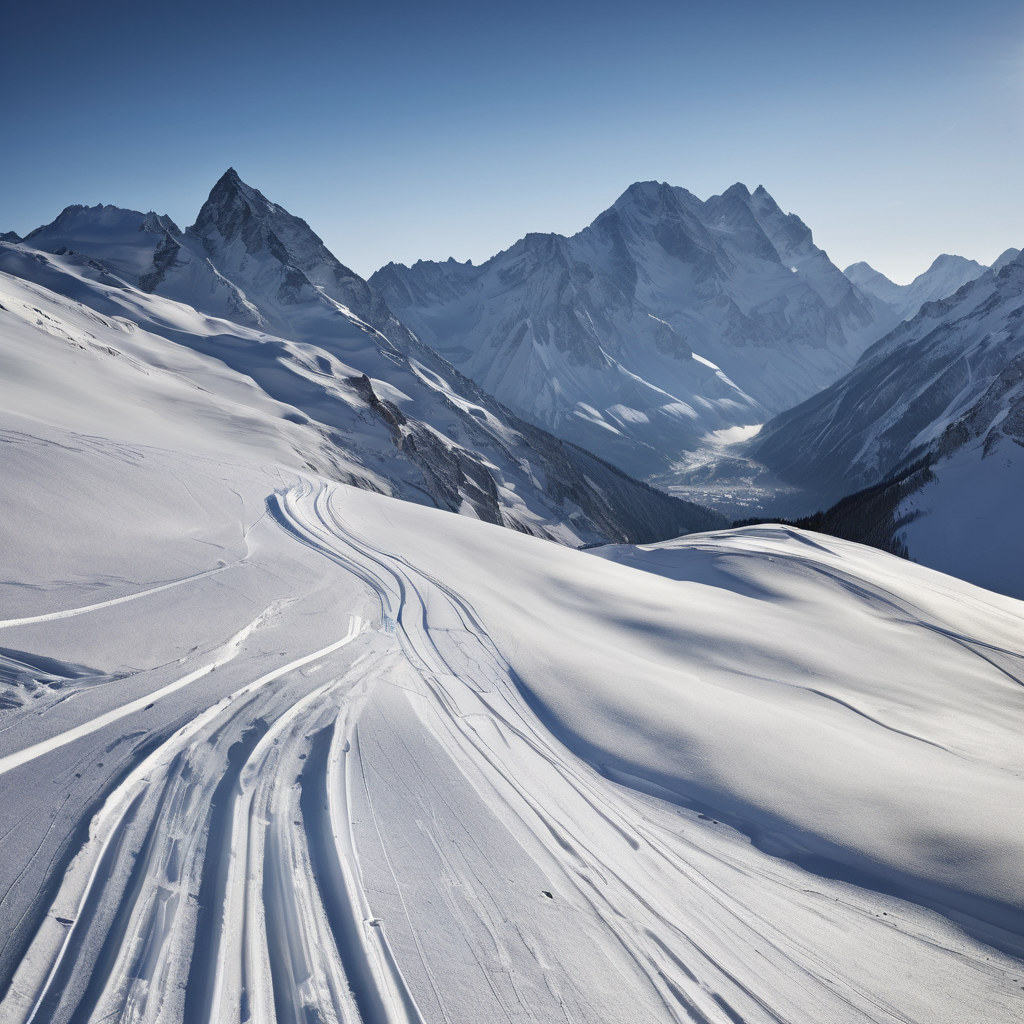
The 2026 Winter Olympics promises to showcase challenging and exhilarating events, particularly at the men’s downhill competition on the Stelvio course in the Italian Alps. World Cup skier Leo Ducros describes this daunting piste as a fusion of Wolverine’s fierce claws and Batman’s dynamic prowess, emphasizing its predictive nature that leaves even seasoned skiers awestruck.
Standing at 3,442 meters, the Stelvio course is notorious for being a harsh test of both physical and mental endurance. A ski coach famously likened racing on this slope to rollerblading down 3,000 stairs at 62mph (100km/h) in dim conditions. As racers hurl themselves down, the chilling sounds of skis against icy bumps and the rush of air create an environment charged with adrenaline. Navigating its steep turns and a staggering 1,023-meter vertical drop takes less than two intense minutes, demanding utmost precision from the athletes.
This formidable slope has faced criticism over its risky conditions; Marco Odermatt, an elite Alpine skier, once described it as “a fight for survival.” Recently, the course has seen its share of accidents, including the airlifting of skier Fredrik Møller after a shoulder dislocation during training. Meanwhile, Austria’s Daniel Hemetsberger sustained facial injuries in a crash against safety netting.
Traditionally, the world’s top downhill skiers tackle this course in December when the snow is optimized for speed and visibility is limited, creating a treacherous environment. The upcoming Olympic race will take place under relatively improved lighting conditions, which may offer athletes better visibility and confidence during their runs. Ryan Cochran-Siegle recorded the fastest training time on Wednesday, highlighting the potential for faster conditions as weather improves.
Competitors like Nils Allègre acknowledge that modern equipment has escalated the speeds on the Stelvio, making every turn and jump vital. Recent incidents, however, remind everyone of the course’s dangerous reputation. Skiers must navigate every section with extreme caution, as unpredictability and physical fatigue can lead to catastrophic mistakes.
The course features a notorious jump known as San Pietro, modified to enhance airtime, allowing skiers to soar about 45 meters high. As fatigue sets in, which can happen rapidly, maintaining focus becomes crucial. Many athletes, including Allègre, emphasize mental preparation as critical; their training regimes blend physical conditioning with mental resilience, using visualization techniques to combat stress and fear associated with the course.
Allègre recalls past injuries on Stelvio but stresses the importance of confronting and managing one’s fears. “You really have to dare and accept that you cannot control everything,” he said, summarizing the mentality required to conquer such a notoriously challenging slope. As the Winter Olympics approach, skiers prepare themselves not just for the race but for the mental game that comes with facing one of the toughest courses in the sport. With courage and skill, these athletes aim to master the Stelvio, ready to etch their names in Olympic history.