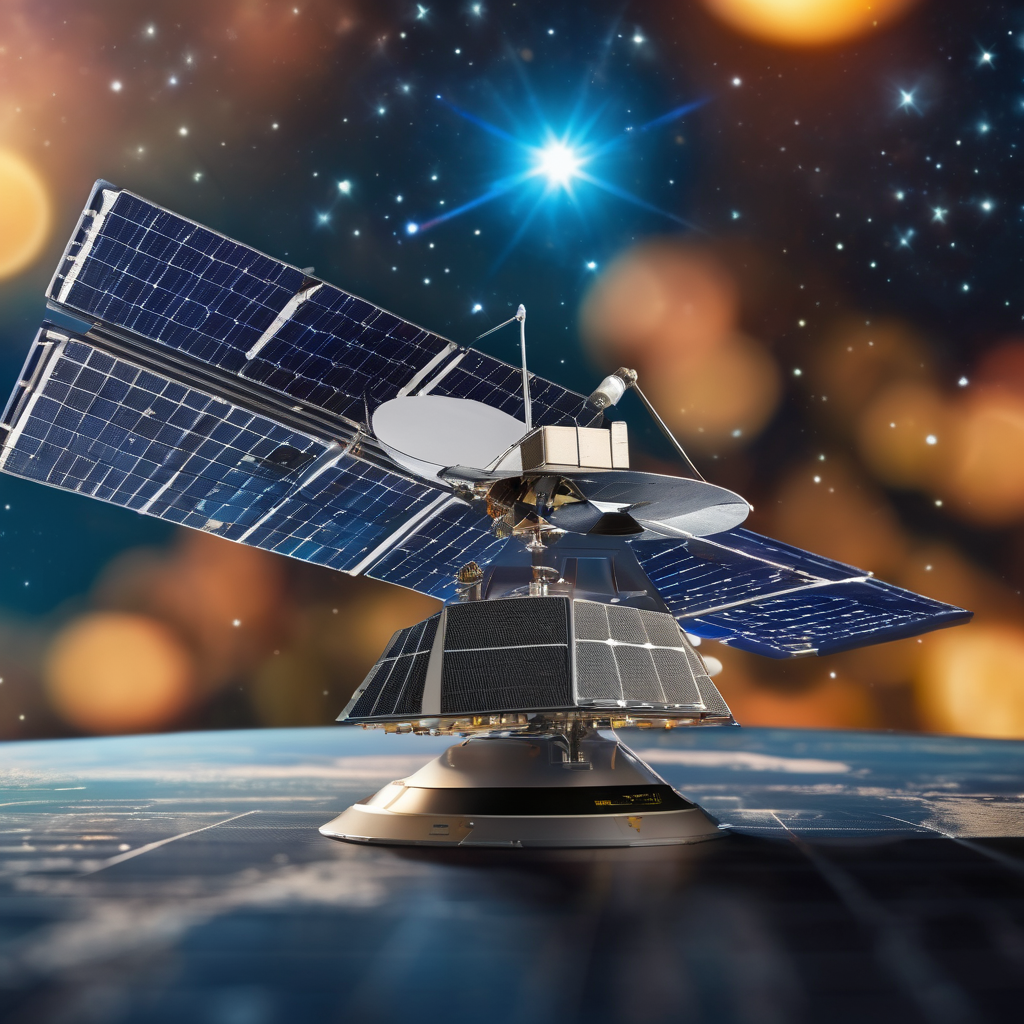
Starlink, the satellite internet division of SpaceX, has announced a significant adjustment to the orbital heights of a portion of its satellite fleet, planned for implementation in 2026. This decision stems from growing safety concerns regarding the increasing number of objects in low Earth orbit (LEO) and the associated risks of collisions.
Approximately 4,400 of Starlink’s satellites, currently operating at altitudes around 550 kilometers, will be gradually relocated to a lower orbit of about 480 kilometers above the Earth’s surface. This transition is expected to take place gradually throughout 2026.
Lowering the orbital altitude carries multiple implications. A key benefit is the reduced time required for satellites to deorbit at the end of their operational lifespan. Estimates suggest that this timeframe may decrease by over 80%, facilitating a quicker removal of inactive satellites from orbit and diminishing the risk of generating additional space debris.
Moreover, this adjustment is anticipated to decrease the number of satellites operating at altitudes below 500 kilometers, a zone already heavily trafficked. This specific region is one of the busiest in space, where the paths of numerous commercial and scientific spacecraft intersect.
Starlink also highlights the safety aspect of this strategy. Transitioning satellites to a lower orbit is expected to mitigate hazards arising from uncoordinated maneuvers by other satellite operators or new launches. The ongoing congestion in low Earth orbit amplifies the chances of close encounters between objects, necessitating frequent orbital corrections.
Safety adjustments are conducted automatically, utilizing data from national and international tracking systems monitoring space objects. When a potential collision with another object is detected, satellites can temporarily maneuver to minimize the risk of impact.
These measures follow an incident in December, when one of Starlink’s satellites generated a small amount of debris and temporarily disrupted communication with another spacecraft at approximately 418 kilometers. Following the event, the company stated they would conduct a thorough investigation to identify the causes of this incident.
The situation in low Earth orbit underscores the sensitivity of space traffic management. Even minor errors can trigger chain reactions, leading to an increase in hazardous fragments.
According to estimates from the European Space Agency, around 40,000 objects currently orbit the Earth at altitudes of up to 2,000 kilometers. Of these, about 11,000 are active satellites or other operational payloads, while the remainder consists of inactive parts and debris. Starlink itself contributes significantly to the active satellite count, with over 9,300 satellites.
In addition to larger debris, experts are increasingly concerned about smaller particles; over 1.2 million objects larger than one centimeter are believed to be in orbit, posing serious risks of catastrophic damage in collisions.
As the number of satellites increases, so do the necessary safety maneuvers. Research indicates that between December 2024 and May 2025, Starlink executed more than 144,000 maneuvers to reduce the risk of close encounters with other objects. This marks a 200% increase compared to a similar previous period.
Experts contend that this trend is a direct result of rising traffic density in orbit and the rapid expansion of satellite constellations. Consequently, the issue of responsible space traffic management and orbital stewardship is increasingly gaining attention at the international level.