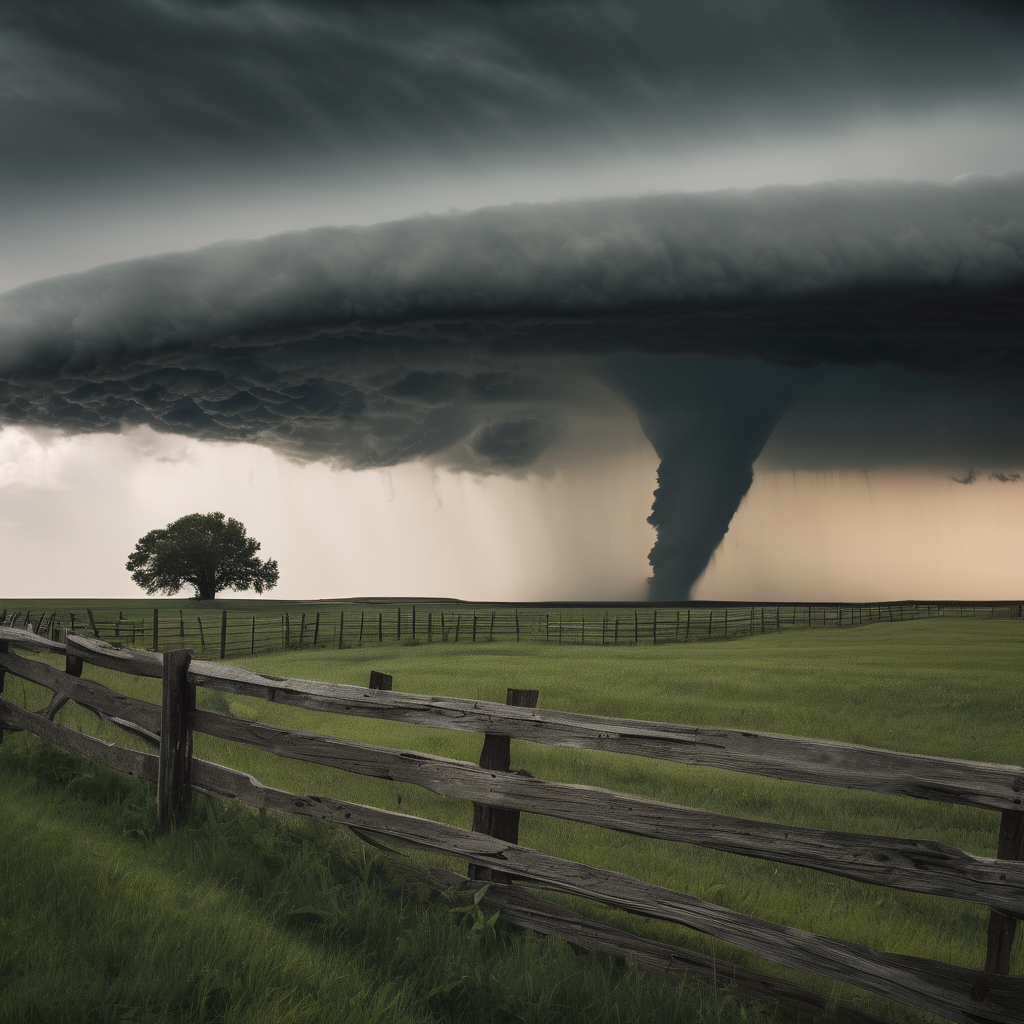
As the first major storm outbreak of spring approaches, concerns are mounting about the potential for severe weather, including strong tornadoes, affecting millions across the heartland of the United States. The National Weather Service has predicted that scattered severe thunderstorms will begin late Thursday in areas like the Texas Panhandle and western Oklahoma, extending into parts of Kansas. Along with these thunderstorms, forecasters warn of large hail, damaging winds, and possibly a few tornadoes.
The most intense storms are expected to evolve on Friday, impacting not just Oklahoma and Kansas but also Missouri and parts of adjacent states. Melissa Mayes, deputy director of the Washington County Emergency Management Agency in Oklahoma, emphasized the significance of this event, marking it as the beginning of the spring storm season when residents began to pay closer attention to weather developments.
Over 6 million people are reported to be in the highest risk zone for severe weather on Friday, which includes significant urban areas such as Kansas City and Tulsa. An additional 22 million people face a slightly lower risk extending through cities like Oklahoma City, St. Louis, Omaha, and Milwaukee.
Emergency management authorities are actively preparing for the impending storms. John Stipetich, deputy emergency management director in Douglas County, Kansas, mentioned his collaboration with forecasters to provide the community with timely updates on weather conditions.
Meteorologists attribute the upcoming severe weather to an atmospheric clash between warm air moving north from the Gulf Coast and cold air descending from Canada. This pattern is not only expected to trigger storms but also bring unusually high temperatures across parts of the eastern U.S. during the weekend. According to federal forecasts, places like Louisville, Kentucky, could see temperatures rise to 81 degrees (27.2 Celsius) on Friday, with Atlanta potentially hitting 82 degrees (27.8 Celsius) by Saturday.
As these storms coincide with the start of tornado season, which typically spans different months across various regions, safety experts are putting forth a call to action for preparedness. Social media will play a pivotal role in disseminating safety information to the public, especially in areas populated by individuals unfamiliar with local weather patterns, such as university campuses.
To ensure safety during these turbulent storms, experts recommend understanding the difference between a Tornado Watch, which indicates favorable conditions for tornadoes, and a Tornado Warning, which signifies that an active tornado is occurring. With the onset of storm season, proactive measures and awareness can significantly mitigate risks to communities as they brace for potentially severe weather.