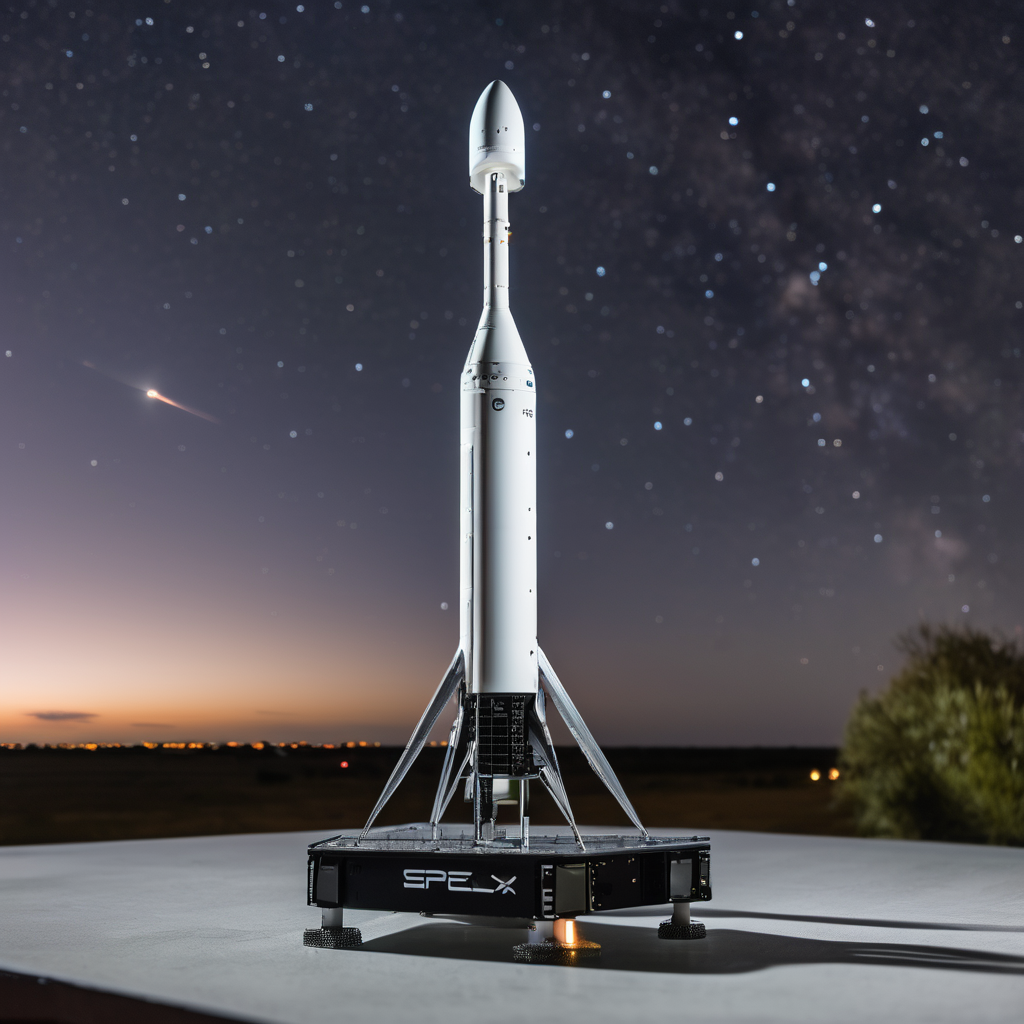
SpaceX is making headlines this week with three scheduled missions, emphasizing its dominance in the early 2026 launch calendar as the exclusive provider of the year’s initial five launches. This week includes two flights in the Starlink series and a rideshare mission featuring 20 payloads that encompass an exoplanet observation initiative for NASA.
Kicking off the series is the Falcon 9’s Starlink Group 6-96 mission, set to occur on Thursday, January 8, from Cape Canaveral Space Force Station in Florida. The launch window will open at 13:29 EST (18:29 UTC), and with Booster B1069 on its 29th flight, the mission will deliver 29 Starlink v2-Mini satellites into low-Earth orbit. After stage separation, the first stage will return to the droneship Just Read The Instructions positioned downrange.
Currently, Starlink serves over nine million customers worldwide. At the beginning of the week, SpaceX reported a total of 10,868 Starlink satellites launched, with 1,445 deorbited and 8,170 functioning in designated operational orbits.
Following closely is the Starlink Group 6-97 mission, scheduled for Saturday, January 10. Launching from the same pad at SLC-40, this mission will also send 29 Starlink satellites to enhance the Group 6 constellation, operating at an altitude of 559 kilometers. The CEO of Starlink Engineering, Michael Nicholls, recently introduced plans to lower the altitude of roughly 4,400 satellites from about 550 kilometers to 480 kilometers during 2026. This strategic move aims to increase orbital safety, ensuring defunct satellites deorbit faster, thus mitigating collision risks.
On January 11, a Falcon 9 will launch from Vandenberg Space Force Base in California, delivering 20 payloads into a Sun-Synchronous Orbit. Among these is NASA’s Pandora mission, which will study at least 20 exoplanets and their stars for a year, utilizing simultaneous observations in visible and near-infrared light. This research will complement data from major observatories like NASA’s James Webb Space Telescope.
Additionally, ten satellites for Kepler Communications’ next-gen Tranche 1 constellation will be deployed, offering a resilient communication network. The mission will also showcase Spire Global’s innovative Hyperspectral Microwave Sounder, which aims at enhancing global weather forecasting through atmospheric measurements.
Finally, India’s Indian Space Research Organisation (ISRO) is set for its first launch of the year on January 12, with the EOS-N1 Earth observation satellite leading a rideshare of 18 smaller payloads. This launch from the Satish Dhawan Space Center features a PSLV rocket configured to deliver diverse payloads, including a small experimental spacecraft by Orbital Paradigm designed for atmospheric return.
As space exploration continues to thrive, the synergy between SpaceX and ISRO showcases the expanding landscape of global space missions, which aim to enhance communication capabilities and deepening our understanding of space phenomena.