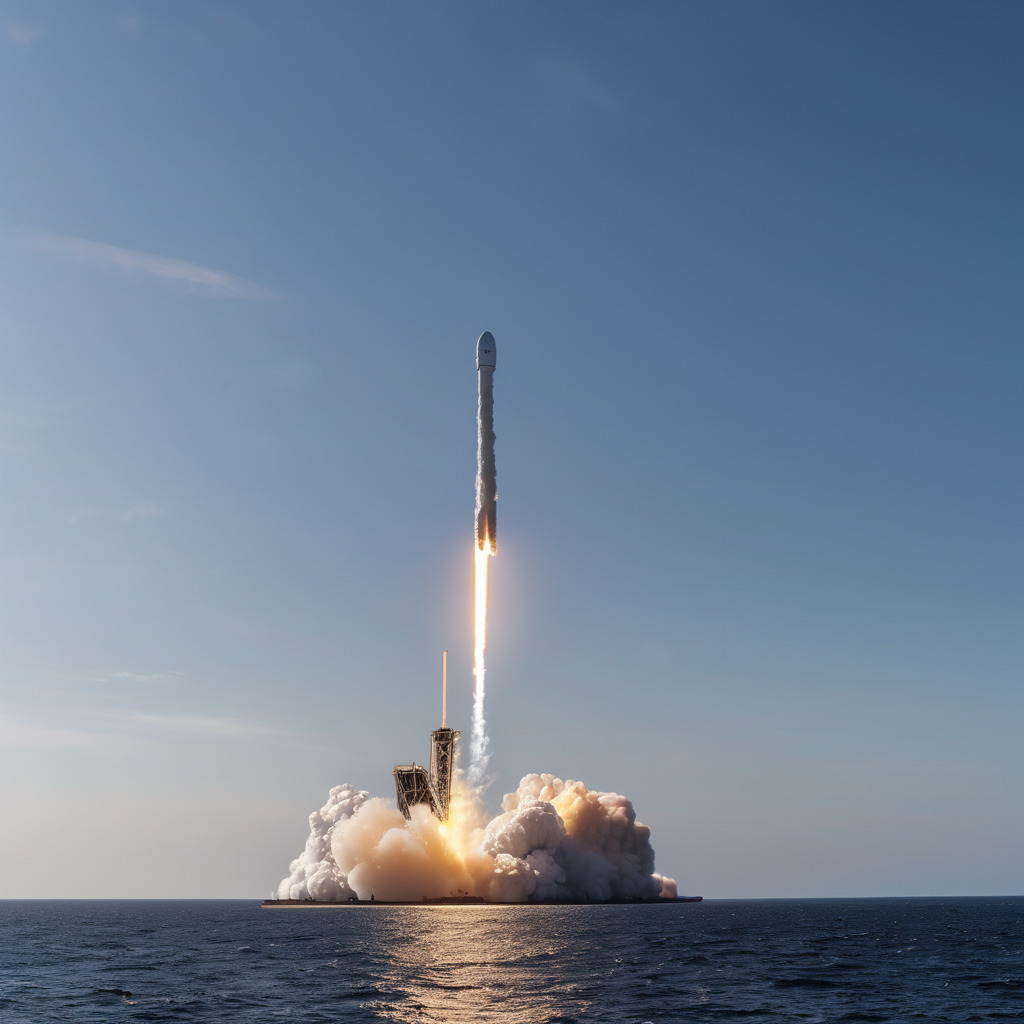
CAPE CANAVERAL SPACE FORCE STATION — An ideal Tuesday evening set the stage for a successful Starlink launch, as SpaceX aimed to bolster its satellite constellation.
The Falcon 9 rocket successfully launched the Starlink 6-110 mission from Space Launch Complex 40 at Cape Canaveral Space Force Station. The launch window opened at 3:56 p.m. ET and remained open until 7:56 p.m. ET, allowing SpaceX to schedule the liftoff at precisely 6:04 p.m. ET. The 45th Weather Squadron offered an optimistic outlook, providing a 95% chance of favorable conditions for the launch, with no restrictions reported.
This mission marked the 10th flight for the first-stage booster, identified as B1092. Notably, its prior missions include significant contributions to the Starlink network, and after stage separation, the booster successfully returned and landed on the droneship Just Read the Instructions, stationed in the Atlantic Ocean.
The launch deployed a total of 29 satellites into low-Earth orbit, joining thousands of similar satellites already providing internet service to various regions around the globe. SpaceX, which owns Starlink, continues to enhance its services and expand internet access worldwide.
Dr. Jonathan McDowell from the Harvard-Smithsonian Center for Astrophysics has been actively tracking the expansion of the Starlink satellite fleet, highlighting the growing influence of these satellites in improving global connectivity. With each launch, SpaceX moves one step closer to achieving its mission of providing comprehensive internet coverage, especially in underserved areas.
As the Starlink network grows, it presents a hopeful vision of a more connected world, bringing opportunities for education, business, and communication to people everywhere. The successful launch not only signifies a technical achievement for SpaceX but also points to a future where internet access is within reach for more individuals across the planet.