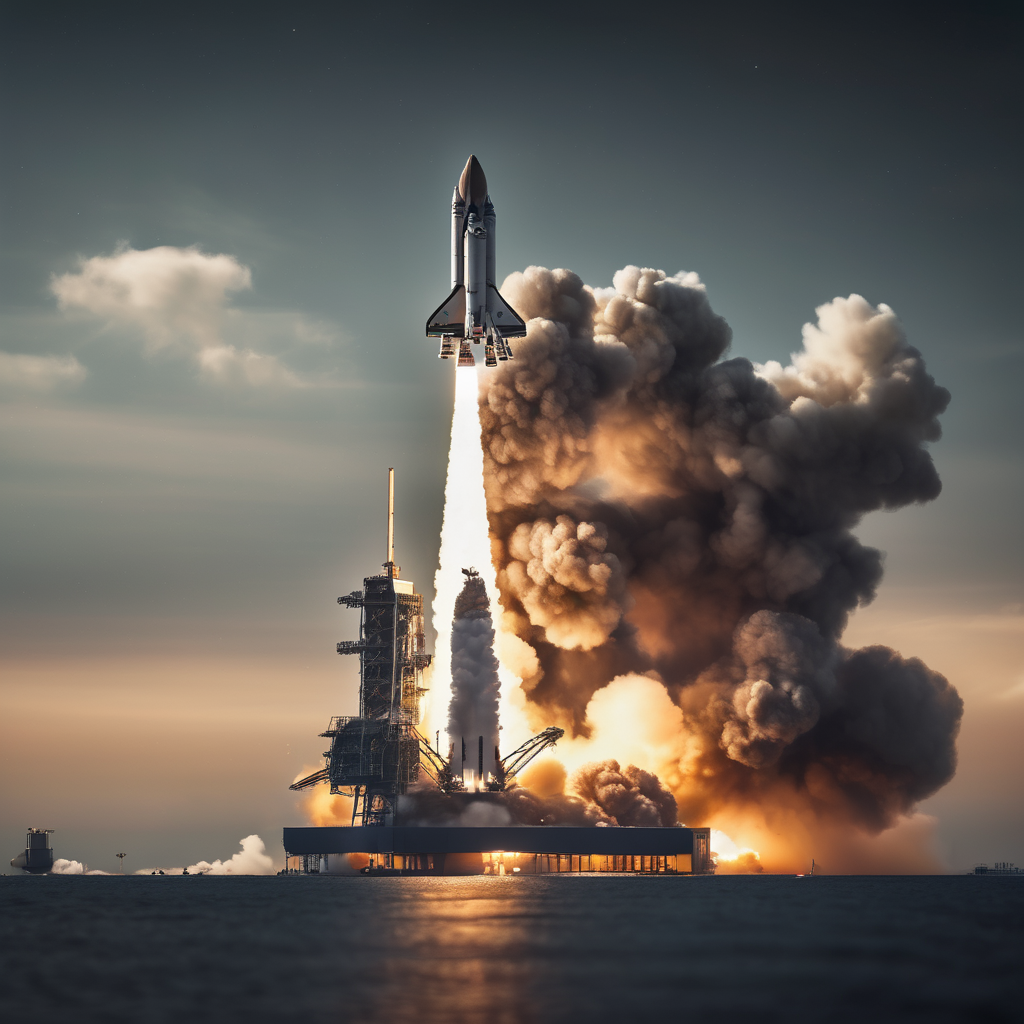
The Soyuz rocket successfully launched to the International Space Station (ISS) on November 27, 2025, carrying NASA astronaut Chris Williams and Roscosmos cosmonauts Sergey Kud-Sverchkov and Sergei Mikaev. The launch took place at 4:27 a.m. EST from the Baikonur Cosmodrome in Kazakhstan, marking the beginning of an important mission for the crew.
After a swift three-hour journey, the Soyuz MS-28 spacecraft docked at the space station’s Rassvet module at 7:34 a.m. Upon the anticipated opening of the hatch at around 10:10 a.m., the new crew will be greeted by the existing Expedition 73 team, which includes NASA astronauts Mike Fincke, Zena Cardman, and Jonny Kim, alongside JAXA astronaut Kimiya Yui and Roscosmos cosmonauts Sergey Ryzhikov, Alexey Zubritsky, and Oleg Platonov.
The live coverage of the hatch opening will be available on NASA+, Amazon Prime, and YouTube starting at 9:50 a.m., allowing enthusiasts worldwide to witness this pivotal moment.
During his stay on the ISS, Chris Williams will participate in crucial scientific research and technology demonstrations aimed at paving the way for future human space exploration and enhancing life back on Earth. His responsibilities will include the installation and testing of a new modular workout system designed for long-duration missions, along with supporting experiments to enhance cryogenic fuel efficiency and cultivate semiconductor crystals in microgravity. Additionally, Williams will assist NASA in developing new re-entry safety protocols to protect astronauts on future journeys.
The Expedition 74 mission will officially commence on December 8, subsequent to the departure of the current crew members, who will have completed an eight-month scientific mission.
On December 7 at 10:25 a.m., viewers can tune in to witness the change of command ceremony, where leadership of the ISS will transition from Sergey Ryzhikov to Mike Fincke.
This ongoing collaboration and scientific endeavor exemplify the commitment of space agencies around the world to advance our understanding of space and improve conditions for life on Earth, fostering hope for future exploration.