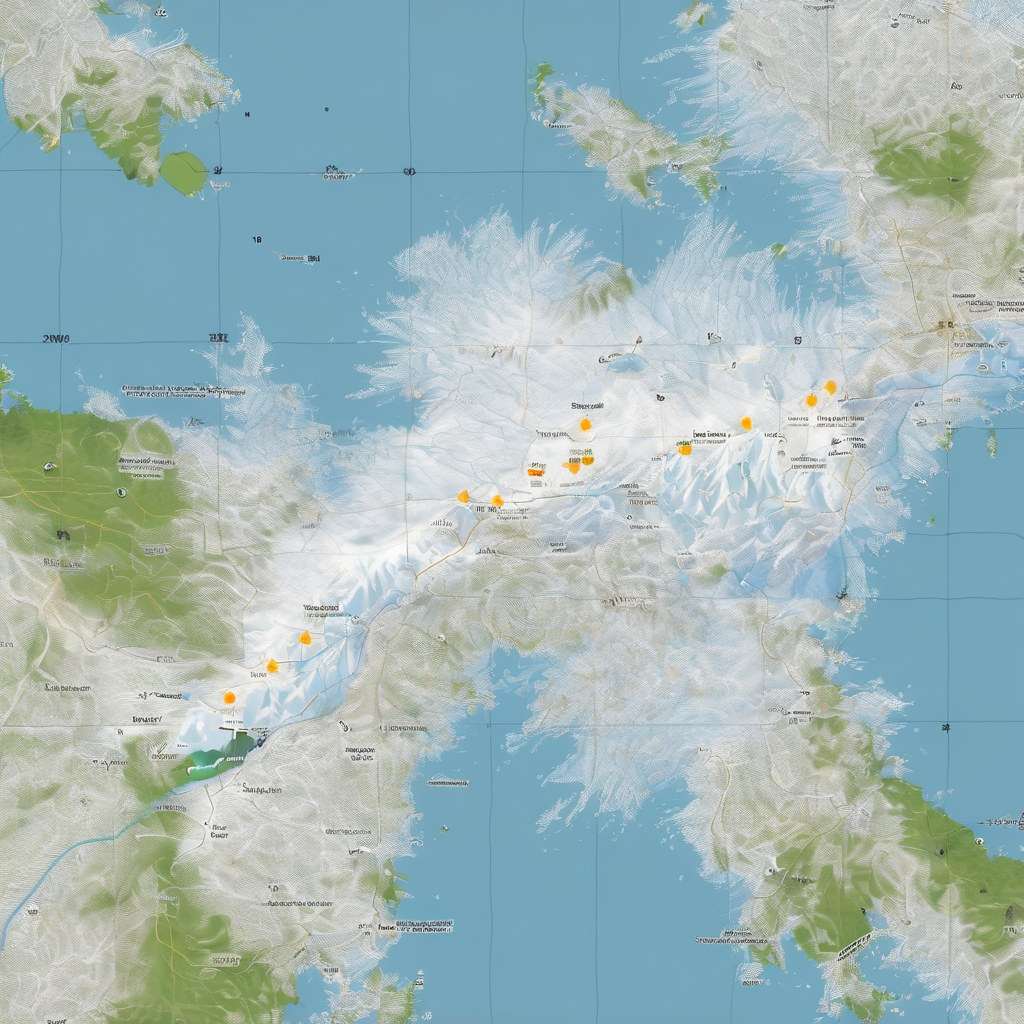
Wintry weather is becoming increasingly likely this weekend across parts of the Deep South and Southeast, with flurries potentially reaching as far south as northern Florida. Some areas along the Gulf Coast and coastal Carolinas may even see measurable snow. However, the forecast carries a degree of uncertainty, as different weather models are showing varied outcomes.
The European and Canadian models suggest minimal impacts, predicting festive flakes for many regions in the South, while the American GFS model foresees significant accumulations, particularly along the beaches of Biloxi, Mississippi. Cold Arctic air is already moving into the Deep South, leading to temperatures in the 20s as far south as Macon, Georgia, and Montgomery, Alabama, with coastal areas experiencing milder conditions in the upper 30s. By Friday, temperatures could drop another ten degrees, with freezing temperatures extending down to Florida’s Big Bend.
As the weekend approaches, another wave of Arctic air is expected to move in Saturday night into Sunday, raising questions about the likelihood of snow. Given the evolving nature of the weather patterns, a probabilistic approach is advised. Current predictions indicate a 20 percent chance of an inch of snow in the Florida Panhandle, a 30 percent chance in southeast Georgia, and a 40 to 50 percent chance in eastern parts of the Carolinas. This represents a notable increase from earlier model simulations.
A cold front will sweep through the Southeast on Saturday night, reinforcing the cold air already present. A wave of low pressure is anticipated to develop along this front, with temperatures likely cold enough for snow on its western side. Two main uncertainties are notable in this forecast: the extent to which the cold front moves southeast and the speed at which low pressure forms along the front.
If the cold front advances further southeast, precipitation could outpace colder air, resulting in just flurries for Alabama and the Florida Panhandle, while eastern parts of the Carolinas might receive a couple of inches of snow. Conversely, a rapidly developing low pressure could lead to more significant moisture and enhanced snow chances. The current forecast is further complicated by an upper-air disturbance originating from the Gulf of Alaska, which should provide more accurate data for computer models in the coming days.
As the situation develops, residents in the Southeast are advised to prepare for the possibility of wintry weather this weekend. With conditions on the brink of creating a winter spectacle, there remains hope for a picturesque landscape coated in fresh snow.