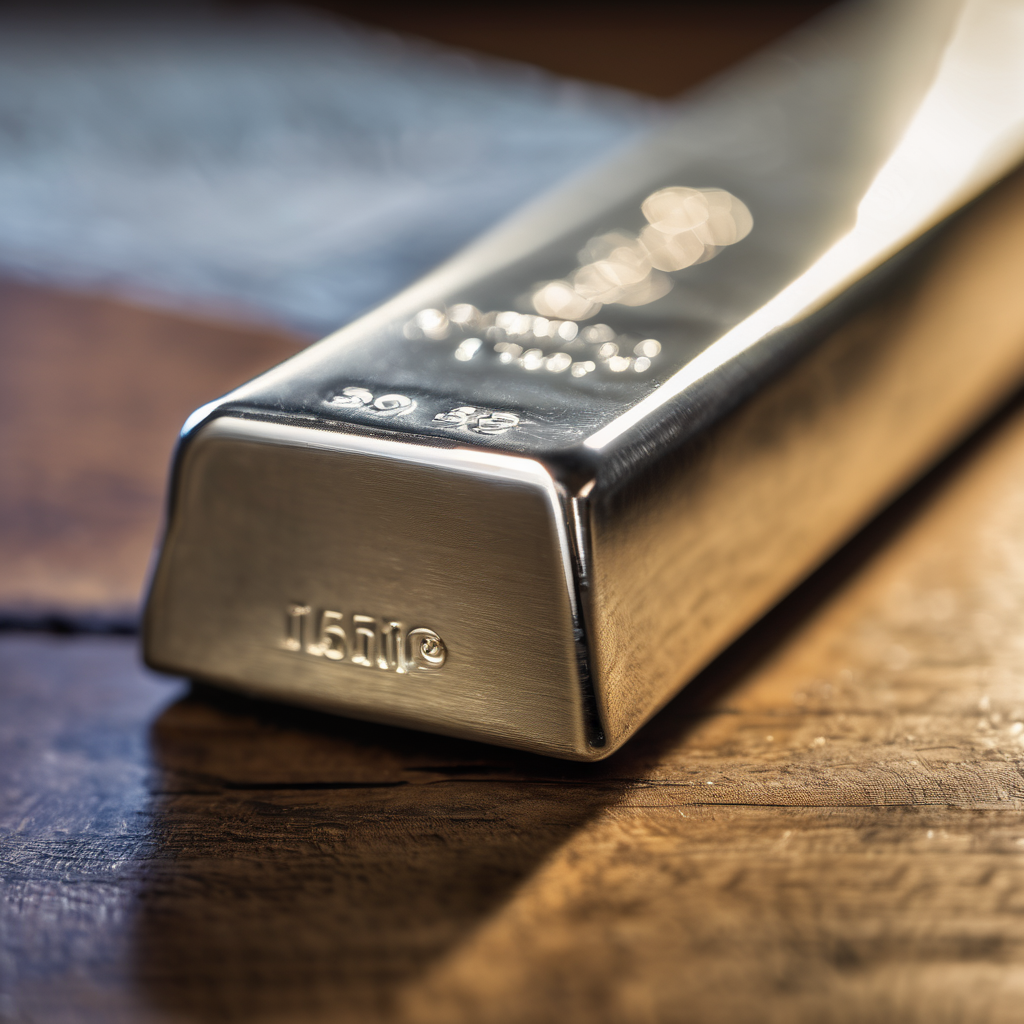
Silver prices surged to new record highs in London on Wednesday, exceeding $61 per Troy ounce, propelled by ongoing concerns of market shortages and expectations surrounding the Federal Reserve’s interest rate decisions. With Jerome Powell’s recent departure as chair, the next Fed meeting in June 2024 is anticipated to bring changes after President Donald Trump’s criticisms of high interest rates.
Market volatility is expected as traders await details from the Federal Reserve’s dot plot, which outlines forecasts for growth and inflation. While gold remains under $4,200 per Troy ounce, silver has achieved its fifth record high in eight trading sessions this December, reflecting a robust upward trajectory.
Though the pace of silver’s price gain in recent weeks has slowed—recording a 22% increase over the past month compared to 24.1% the previous day—it still represents a considerable rise in the market, placing it in the top 2.5% of price increases since 1968. The decrease in interest rates is shifting investor focus toward assets perceived as stores of value, such as silver, according to experts including Yeow Hwee Chua from Nanyang Technological University.
Analysts from Standard Chartered and other institutions have noted that the driving force behind this surge is a supply shortage in the silver market that has persisted over the last five years, coupled with disruptions in regional stockpiles. This dynamic is increasing interest among speculators and trend-followers, as highlighted by analysts from Julius Baer and other sources.
The demand for silver-backed exchange-traded products has further bolstered price growth. Forecasts from the Silver Institute and other analysts suggest sustained industrial demand, particularly due to factors such as solar energy, electric vehicles, and data centers, anticipated to rise through 2030.
In China, silver prices also reached new highs, with stockpiles at the Shanghai Futures Exchange increasing as well, indicating a tight market. Meanwhile, stock levels in New York remain low, emphasizing the overall supply-demand imbalance. The gold-to-silver ratio has declined, reflecting silver’s increasing strength compared to gold.
Despite the optimism, analysts caution that while silver prices are likely to maintain upward momentum, short-term fluctuations could occur, with the risk of a potential pullback. However, the long-term outlook appears positive, pointing toward continued demand growth as industries increasingly turn to silver for its unique properties.