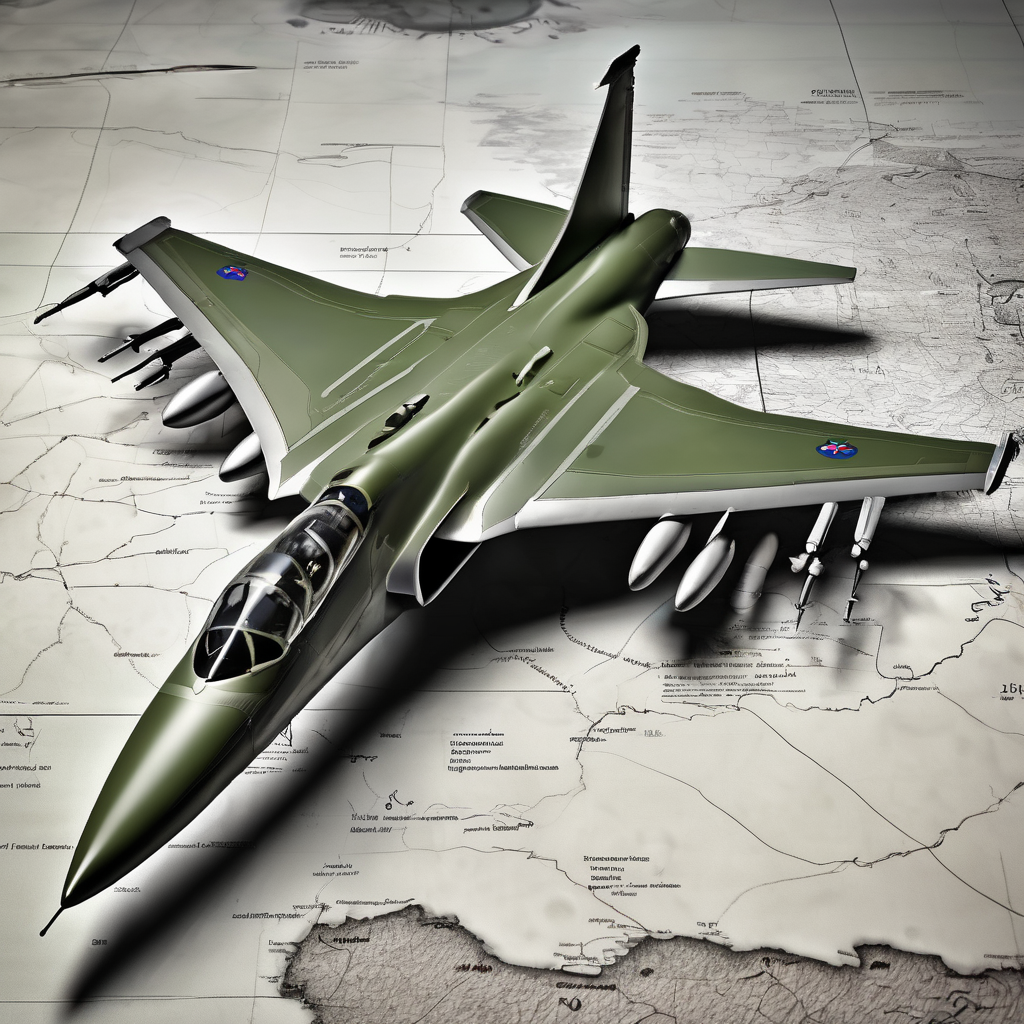
In a fascinating chapter of Cold War history, the United States executed a covert operation named Project Constant Peg, designed to train military pilots to engage in aerial combat against Soviet-era aircraft. This program was spearheaded by the USAF’s 4477th Test and Evaluation Squadron (TES), famously known as the “Red Eagles.” Operating from the Tonopah Test Range in Nevada, these pilots flew a variety of captured Soviet aircraft, including the MiG-17, MiG-21, and later, the MiG-23, to prepare American aircrews for potential conflicts.
The program’s genesis traced back to the late 1970s when the Red Eagles sought to enhance their fleet of MiG-21s. As detailed by Rob Zettel, a retired USAF pilot and former member of the Red Eagles, the quest to procure more aircraft led them to an unexpected source: China. An operation in November 1982 saw a C-5A transport aircraft dispatched to pick up new jets from the Chinese Chengdu Aircraft Industry Group.
As the C-5A approached Chinese airspace, the crew prepared for the unusual event. TSgt Jim Bell, a member of the team, recounted the experience he had while onboard as they entered the Chinese Air Defense Identification Zone (ADIZ), where they were informed to anticipate escort from People’s Liberation Army Air Force (PLAAF) fighters. This heightened their awareness as they navigated towards Beijing, marking a rare and sensitive moment in U.S.-Chinese relations just a decade after President Nixon’s historic visit to China.
Upon landing at Beijing Capital International Airport, the team quickly set to work under tight schedules and secrecy. They discovered that instead of MiG-21s, they were actually picking up newly manufactured F-7Bs, which were derived from the MiG-21 design. Bell participated in three trips to China over 18 months, ultimately aiding in the acquisition of nine F-7s, all shrouded in secrecy and wartime strategy.
The assembly of these planes began upon their return to the Tonopah Test Range, where they would undergo modifications and evaluations crucial for U.S. operational readiness. This operation exemplified the lengths to which the U.S. military would go to maintain an advantage over potential adversaries.
The legacy of Project Constant Peg endures as a testament to innovative military training strategies during the Cold War, and the cooperation that unfolded, albeit secretly, between nations with a complicated history. As air power continues to evolve, the experiences learned from such programs remain invaluable to current and future air warfare tactics. The efforts of the Red Eagles not only fortified American aircrew confidence but also enhanced the understanding of enemy aircraft capabilities, an essential component of military training that persists today.