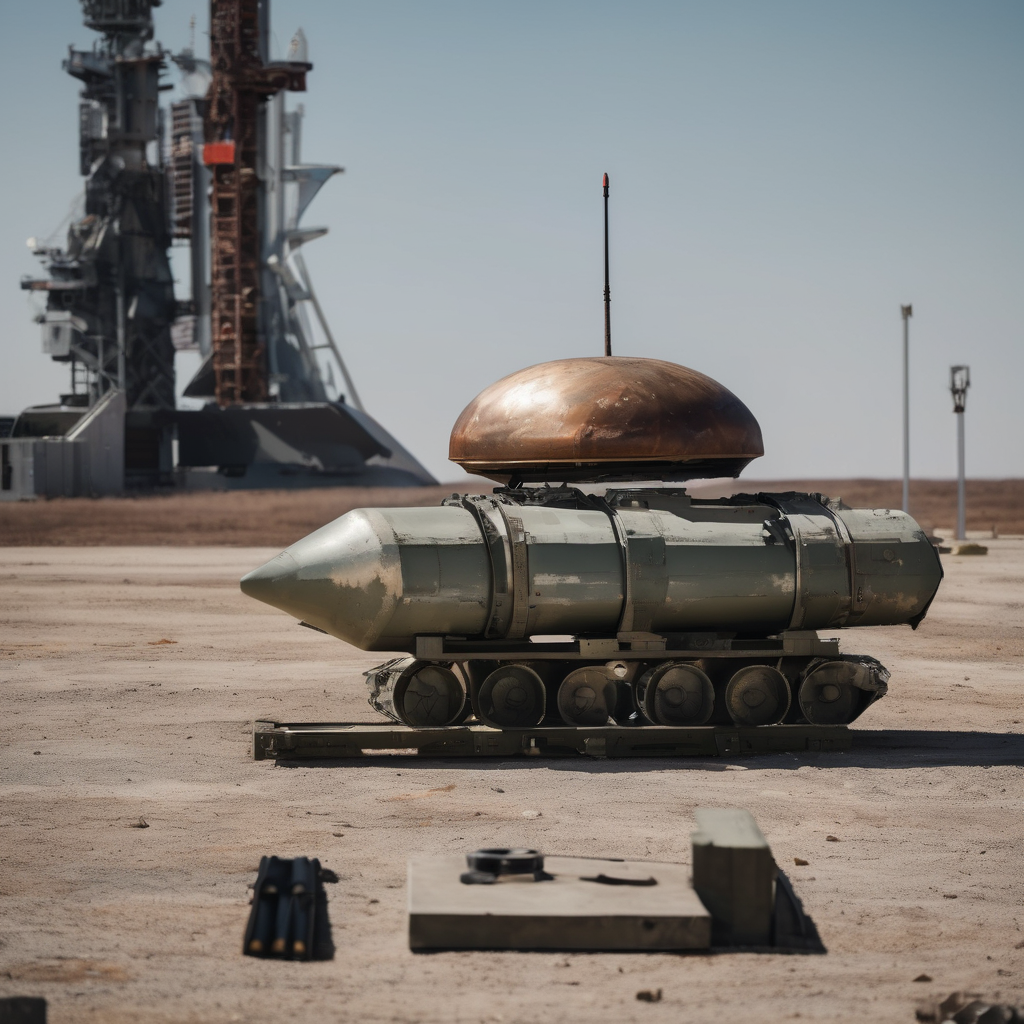
Russia has launched the Oreshnik missile into Ukraine for the second time since the onset of the full-scale war in 2022, marking a significant escalation in tensions between Moscow and Kyiv, as well as its allies in the West. This recent strike, which took place overnight into Friday, drew attention to several explosions in the western city of Lviv, though Russian officials did not disclose the exact target location.
The Oreshnik, believed to be a medium-range ballistic missile, has a range that experts estimate could stretch between 600 to 1,000 miles. Some U.S. defense officials have labeled it as an intermediate-range ballistic missile (IRBM), suggesting that its actual capabilities may extend beyond 3,000 miles. This week’s launch from Kapustin Yar aimed at Lviv, approximately 900 miles away, indicates its far-reaching potential.
One of the missile’s defining characteristics is its ability to deploy multiple warheads upon re-entry, a feature that allows a single missile to target several locations simultaneously. The Oreshnik can potentially deliver up to six independently-targetable reentry vehicles (MIRVs), each capable of carrying multiple ordnances, creating a more complex and multi-dimensional threat during an attack.
The name “Oreshnik,” which translates to “Hazel Tree,” is derived from its visual effect when the warheads descend in a streak of fiery light. The Ukrainians, however, referred to the missile as “Kedr,” meaning Cedar. Some U.S. officials have suggested that this missile is an evolution or a basic mimicry of the RS-26 Rubezh missile, initially developed in 2008.
The use of the Oreshnik comes against the backdrop of ongoing disputes surrounding the Intermediate-Range Nuclear Forces Treaty, which aims to prohibit IRBMs and decrease the nuclear threat across Europe. The U.S. formally withdrew from this treaty in 2019, renewing concerns about nuclear-capable missiles in the region.
Russia’s first use of the Oreshnik occurred shortly after the Biden administration provided authorization for Ukraine to utilize U.S.-supplied ATACMS missiles to strike targets in Russia. The recent missile’s velocity, estimated at 8,000 mph (13,000 kph), along with its steep trajectory, presents significant challenges for existing air defense systems in Ukraine, making it a formidable asset in Russia’s military arsenal.
The implications of this missile launch are profound, particularly as it strikes close to the Eastern European borders of NATO member states. Ukrainian Foreign Minister Andrii Sybiha referred to the offensive as a “grave threat” to security on the European continent, emphasizing the considerable concerns regarding NATO’s collective response.
This act is perceived not only as a tactical move by Russia but also as a bold statement of its military capabilities and intentions amid escalating geopolitical tensions. As the Kremlin reportedly claims to increase production of the Oreshnik and potentially station it in Belarus, the situation remains precarious and highlights the urgency for continued diplomatic efforts to stabilize the region and deter further military actions.