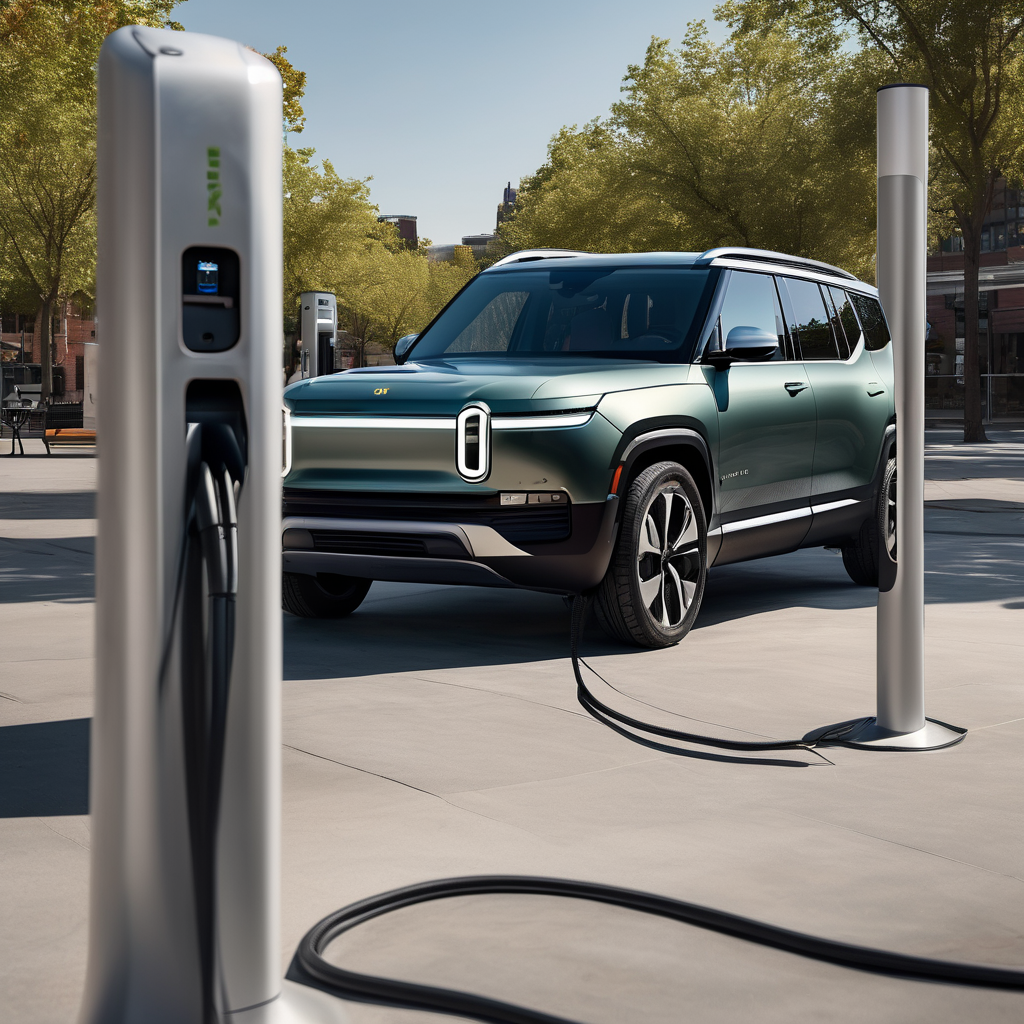
Rivian Automotive (NASDAQ: RIVN) has faced a significant decline, with shares plummeting an astonishing 89% since going public in late 2021, leaving many shareholders feeling the weight of the investment. Despite this downturn, there are arguments that the crash was necessary to recalibrate expectations, aligning them more closely with the reality of establishing a new automotive brand in a competitive space. Recently, the narrative surrounding Rivian has shifted, focusing not just on its internal issues but also on broader challenges facing the electric vehicle (EV) industry as a whole, particularly in light of the Trump administration’s rollback of governmental support for EVs.
Rivian now stands at a crossroads, facing the need to navigate these significant industry challenges while potentially emerging stronger over the next five years. The changes brought about by the administration’s policy restructuring hit the U.S. EV sector hard, with the loss of incentives such as the $7,500 tax credit set to expire in October 2025. This sudden shift has resulted in a notable 36% decrease in U.S. EV sales year over year, according to Cox Automotive.
However, this downturn may present an unexpected opportunity for Rivian, especially as it could disproportionately affect its larger competitors more than the company itself. A prime example is Ford Motor Company, which has shifted focus from fully electric vehicles to battery hybrids in response to market instability. Ford recently reported a $19.5 billion asset writedown tied to the cancellation of EV models and pulled back the launch of its fully electric F-150 Lightning, a direct competitor to Rivian’s R1T electric truck.
Even as the overall EV market faces contraction, a decrease in competition offers Rivian an opportunity to build brand recognition and capture market share. CEO Ryan Scaringe has expressed optimism, labeling the current environment a “win” for Rivian. Furthermore, the substantial tariffs imposed by the Trump administration on imports could deter global car manufacturers like Kia and Stellantis from pursuing their planned fully electric models in the U.S. market, leading to a less saturated field for Rivian to operate in.
As Rivian plots its path forward, the unfolding landscape of the electric vehicle sector may allow the company to position itself advantageously. While challenges prevail, there is hope that Rivian could capitalize on changing dynamics, gaining more attention and traction in an evolving market.