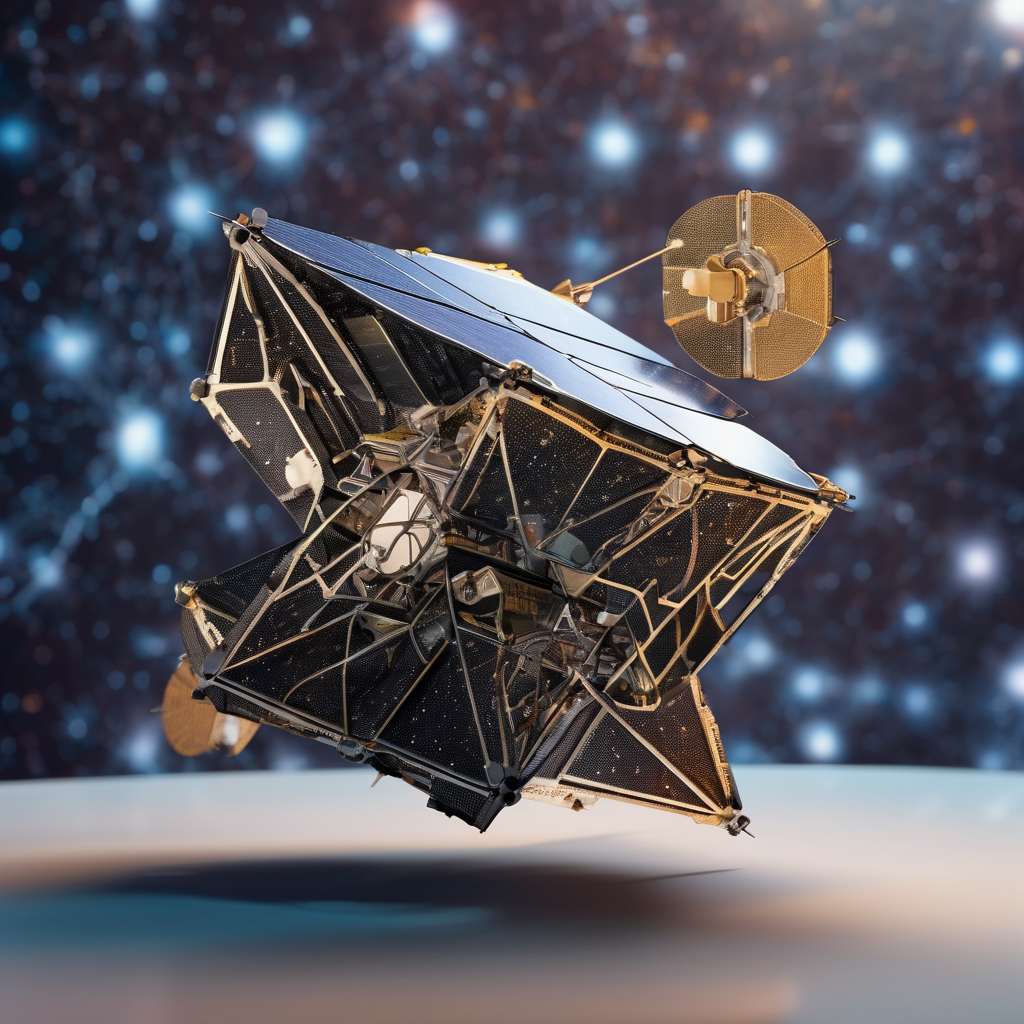
The ever-increasing number of satellites in Earth’s orbit is raising significant concerns about the potential for catastrophic collisions in space. As numerous companies and nations launch new satellite constellations at an unprecedented rate, incidents that threaten orbital safety have become more frequent.
Recently, a SpaceX Starlink internet satellite had to activate its thrusters to avoid a close encounter with a Chinese satellite, underscoring the urgent need for better coordination among satellite operators. Michael Nicolls, SpaceX’s VP of engineering for Starlink, expressed frustration on social media, stating that no deconfliction measures were taken between the two satellites, resulting in a dangerously close approach. He emphasized that such situations arise primarily due to a lack of coordination regarding satellite positions and trajectories.
The satellite involved was part of the Chinese Kinetica 1 rocket mission, launched by Guangzhou’s CAS Space, which carried six multifunctional satellites along with other international payloads. Although CAS Space stated that they followed protocols to avoid collisions, they acknowledged the shared sentiment expressed by Nicolls regarding the necessity for heightened coordination among satellite operators to mitigate risks.
This incident further emphasizes a growing problem, as the number of active satellites orbiting the Earth has surged in recent years. SpaceX alone has nearly 9,300 satellites in orbit, and with their average operational lifespan being around five years, the company must continuously replenish its fleet. In total, the European Space Agency reports that approximately 13,000 operational satellites are currently in orbit, with thousands more classified as space debris.
In addition, the tracking of over 54,000 space objects larger than four inches reveals just how populated the space surrounding our planet has become. As experts warn, the potential for a single collision to trigger a catastrophic chain reaction—known as Kessler syndrome—could have dire consequences for future space activities. LeoLabs’ senior technical expert Darren McKnight has referred to this issue as a “ticking time bomb,” highlighting that the inevitability of collisions poses a real threat to both satellites and astronauts alike.
Nevertheless, the silver lining in this scenario is the recognition of the problem by various stakeholders. The commitment expressed by CAS Space to enhance coordination indicates a willingness to collaborate in building a safer orbital environment. As satellite operations continue to expand, fostering cooperative practices will be vital to ensuring the long-term sustainability of space endeavors and protecting assets in orbit. The growing dialogue around orbital safety suggests an emerging awareness and a hopeful shift towards more responsible practices in the burgeoning space industry.