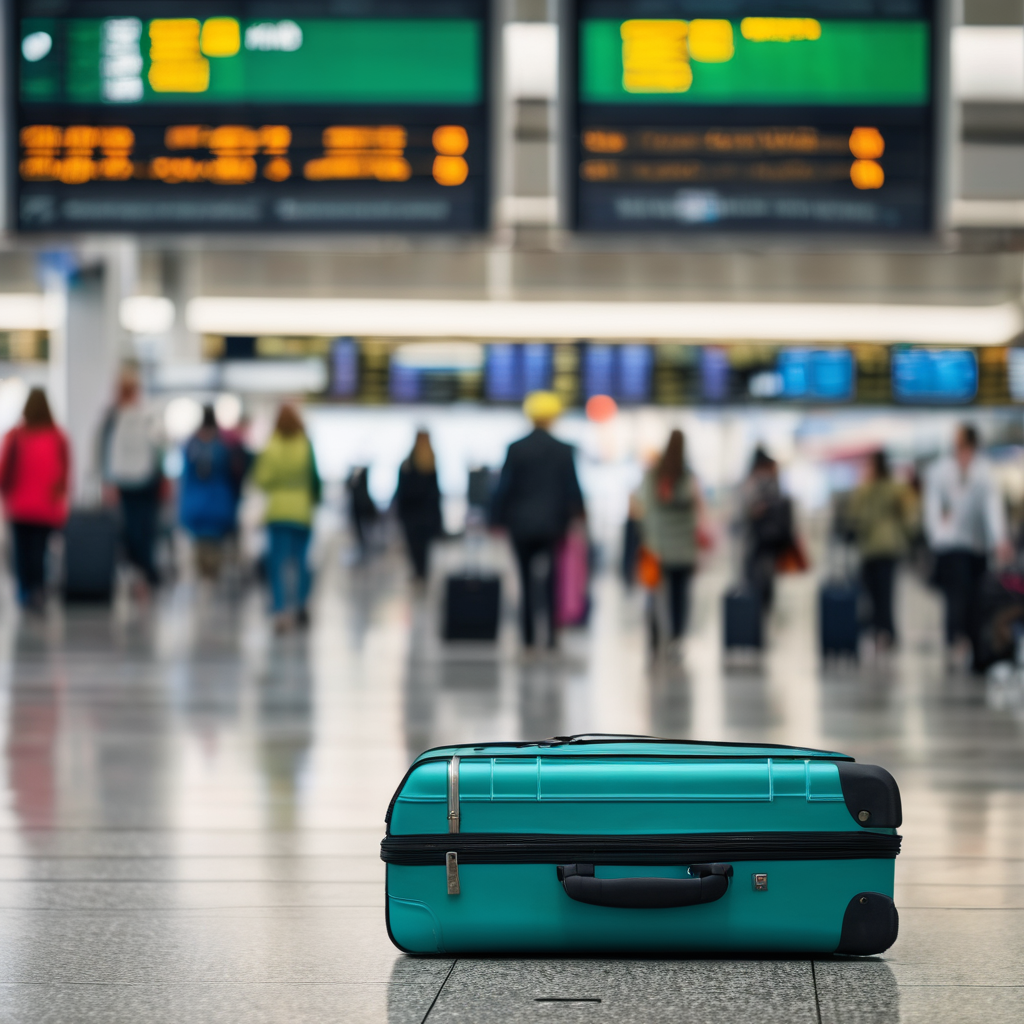
Travel chaos erupted at Luis Munoz Marin International Airport in Carolina, Puerto Rico, as flights were delayed and cancelled following U.S. military strikes on Venezuela. The FAA imposed flight restrictions in the Eastern Caribbean, ceasing U.S. commercial flights in the region. On Sunday, airlines scrambled to accommodate stranded travelers, adding numerous extra flights; however, many customers found themselves unable to secure seats, with some facing days of delays.
The airspace restrictions, which were lifted overnight, had caused widespread cancellation of nearly 400 flights on Saturday alone. As operations returned to normal, approximately 20 flights were cancelled on Sunday, but passengers still struggled to find available seats as demand surged. Many travelers, who were wrapping up their holiday vacations, shared their frustrations on social media, reporting a lack of accommodation options and the inability to afford extended hotel stays.
In response to the overwhelming demand, American Airlines announced the addition of 17 extra flights connecting San Juan with several Caribbean destinations and its hubs in Miami and Charlotte, North Carolina. Southwest Airlines also increased its service, adding multiple round-trips and diverting additional aircraft to assist with the demand. Even with these measures, popular flights quickly filled up, leaving some travelers without seating until late in the week. United Airlines and Delta Air Lines also planned to provide additional services to bolster capacity.
The unexpected nature of the flight disruptions following military action highlighted how swiftly such events can impact civilian air travel. U.S. Transportation Secretary Sean Duffy confirmed that the previous restrictions were set to expire shortly after midnight ET. The airspace closure came in the wake of a significant U.S. operation that led to the capture of Venezuelan President Nicolas Maduro, who was indicted on serious charges related to narcotics trafficking.
The challenges experienced by airlines and travelers reflect a broader trend where conflicts can disrupt air travel not just within the immediate vicinity but also across wider regions, drawing parallels to other global situations that have affected civilian aviation, including recent incidents involving military actions in the Middle East and earlier conflicts following Russia’s invasion of Ukraine. Despite the difficulties, the resilience of the airlines and their commitment to serving affected passengers showcases the importance of adaptability in the face of crisis, eventually leading to a restoration of services for those in need.