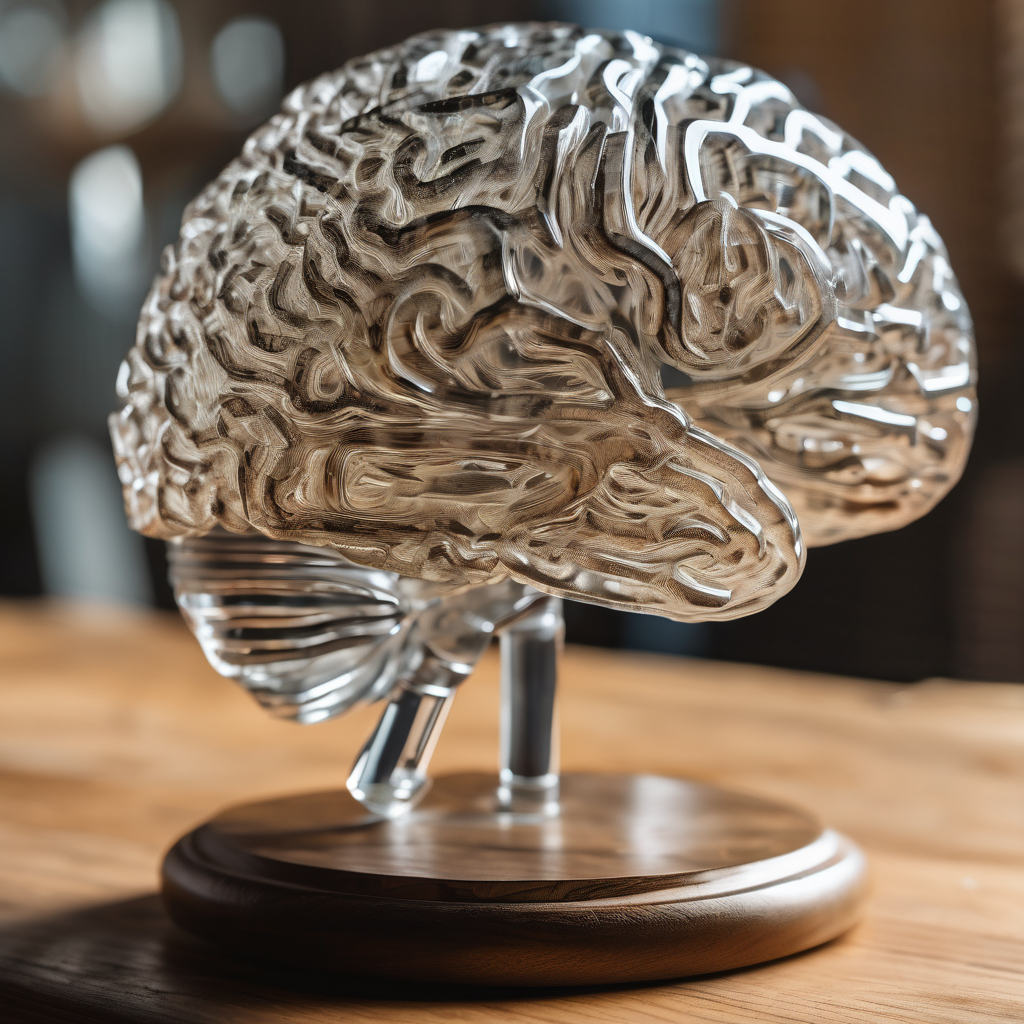
In his latest book, “A World Appears: A Journey into Consciousness,” Michael Pollan embarks on an intriguing exploration of the nature of consciousness, drawing on his background as a celebrated food writer and an engaged thinker. Known for his earlier work, “This Is Your Mind on Plants,” Pollan pushes the boundaries further by not only experimenting with intriguing substances like magic mushrooms but also delving into philosophical questions about the essence of consciousness: What is consciousness? Why does it exist? Could machines ever possess it?
Pollan’s approach is quintessentially American nonfiction, featuring interviews with a range of prominent neuroscientists, philosophers, and psychologists, including notable names such as Antonio Damasio and Anil Seth. He skillfully weaves personal narrative into the scientific discourse, enriching the reader’s understanding of complex concepts with relatable anecdotes. Pollan’s insightful character sketches provide a vivid backdrop to the interviews, capturing the unique personalities of his subjects.
Throughout the book, Pollan demonstrates a delicate balance between skepticism and open-mindedness regarding the science of consciousness. He suggests that scientific inquiry may have plateaued under the assumption that consciousness is strictly tied to higher-order thought in the human brain. However, some forward-thinking neuroscientists are exploring deeper structures, such as the brainstem, which may play a crucial role in consciousness.
Pollan posits that consciousness may be intrinsically tied to biological processes rather than something that artificial intelligence could replicate. The book touches upon intriguing recent studies indicating that plants may exhibit rudimentary forms of consciousness, able to learn and respond to their environments in sophisticated ways. This expansion of the understanding of consciousness prompts readers to reconsider the line between sentient beings and the natural world.
As Pollan navigates the complex theories surrounding consciousness, he also criticizes the overzealous claims of those in the tech industry who might assert that artificial systems can experience consciousness. He emphasizes the need to differentiate between biological neurons and artificial transistors, advocating for a thoughtful and grounded perspective on the state of consciousness research.
While Pollan’s journey into the depths of consciousness is intellectually stimulating, some critiques have pointed out a noticeable male-centric perspective that permeates his exploration. Nevertheless, his philosophical musings invite readers to appreciate the unresolved mysteries of consciousness, maintaining that questions remain and inviting further discussion.
In “A World Appears,” Michael Pollan not only presents insightful scientific discourse but also leaves readers with the acknowledgment that the enigma of consciousness is perhaps one of the most exciting and unsolved challenges in both science and philosophy today. This thought-provoking work serves as a compelling invitation to reflect on the nature of our own consciousness and that of the world around us.