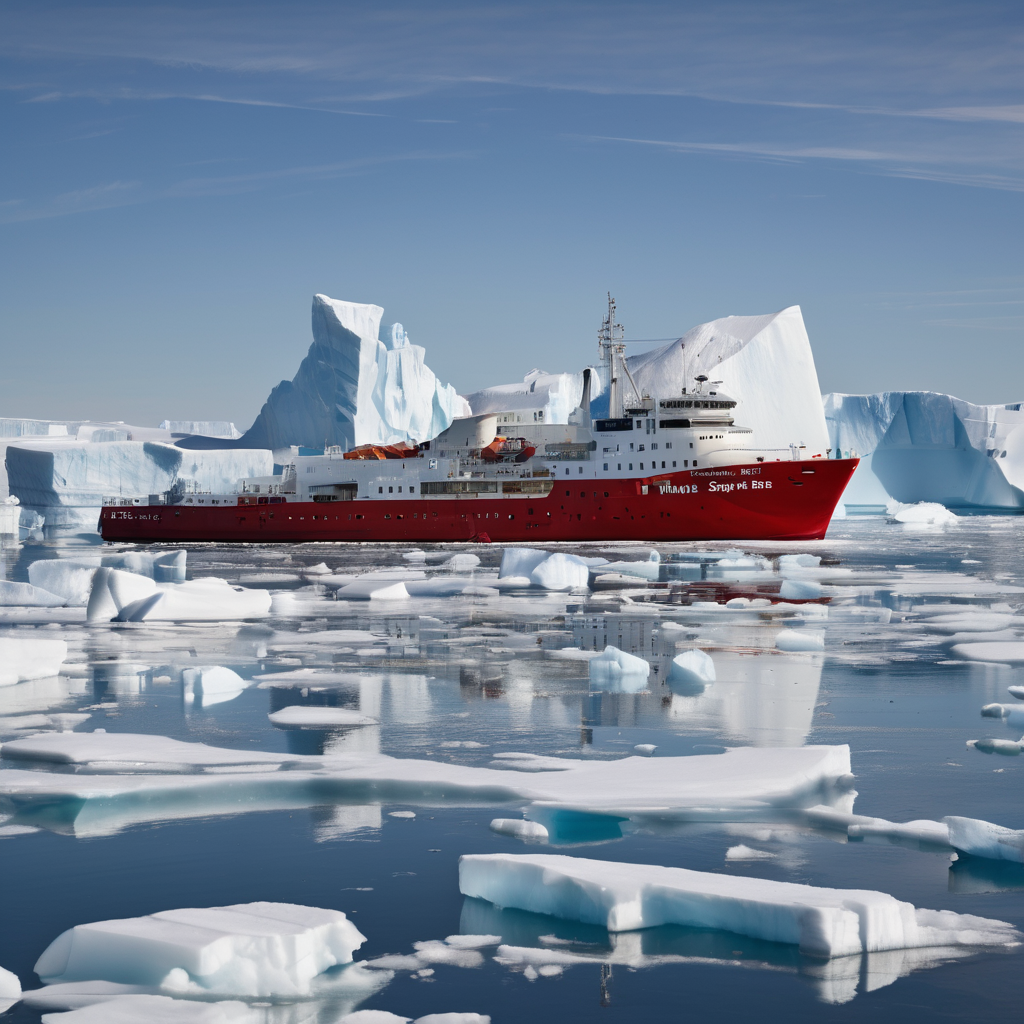
The U.S. Coast Guard Cutter Polar Star, celebrating its 50th year of commissioned service, successfully rescued the Australian cruise ship Scenic Eclipse II from pack ice near McMurdo Sound during its 29th deployment to Antarctica. The heavy icebreaker responded to a distress call late Friday night after the cruise ship became stranded about eight nautical miles from the sound. Through diligent efforts, Polar Star’s crew conducted two close passes to break the vessel free, then escorted it approximately four nautical miles to open water.
This rescue coincided with Polar Star’s icebreaking operations in the Southern Ocean in support of Operation Deep Freeze 2026. This crucial mission provides logistical support for the U.S. Antarctic Program, managed by the National Science Foundation. The operation involves creating navigable channels through thick Antarctic ice to facilitate fuel and cargo deliveries essential for sustaining various research stations and operations.
Captain Jeff Rasnake praised his crew’s unwavering resolve and positivity despite the challenges they face. “I am constantly amazed at this crew’s tremendous energy and enthusiasm,” he noted, highlighting their commitment to maintaining high standards throughout their mission.
Commissioned on January 17, 1976, Polar Star is the only active heavy icebreaker in the U.S. fleet and stands as a vital asset in polar operations. Since leaving Seattle in November for its current deployment, Polar Star has undertaken numerous Operation Deep Freeze missions and Arctic expeditions, aimed at defending U.S. sovereignty and ensuring the security of vital shipping lanes. The cutter showcases unparalleled heavy icebreaking capabilities, continuing to perform where few vessels can.
Commander Samuel Blase remarked on Polar Star’s remarkable longevity, stating, “At 50 years old, Polar Star remains the world’s most capable non-nuclear icebreaker.” He attributed this success to the diligent crews that have maintained the vessel over the years, emphasizing that Polar Star is set to continue its critical role for many more years.
Recently, Polar Star completed a five-year Service Life Extension Program, finalized in September 2025 after extensive refurbishments at Mare Island Dry Dock in California. This $12.7 million investment improved essential systems, including propulsion and communication, further enhancing the vessel’s operational capabilities. Captain Rasnake expressed optimism about the cutter’s current state, stating, “This is a tremendous ship, and it is in better shape today than it was ten years ago,” attributing its condition to the crew’s hard work and ongoing support for polar icebreaking missions.
As Polar Star celebrates this milestone in its 50 years of service, it joins elite company with other distinguished Coast Guard icebreakers such as USCGC Glacier, matching its record of Operation Deep Freeze deployments this year. However, the Coast Guard currently operates only three polar-capable vessels — Polar Star, the medium icebreaker Healy, and the converted commercial vessel Storis — which is insufficient to meet operational demands.
To address this gap, the Coast Guard is engaging in an extensive recapitalization effort, which includes constructing up to nine new Arctic Security Cutters in collaboration with Finland and developing three new Polar Security Cutters to eventually replace Polar Star. However, the first of these new heavy icebreakers is not expected to be operational until 2030, underscoring Polar Star’s crucial role in carrying out the nation’s polar missions in the interim.
The continued operation of the Polar Star represents a commitment to maintaining a strong U.S. presence in polar regions, ensuring vital support for both national interests and scientific research.