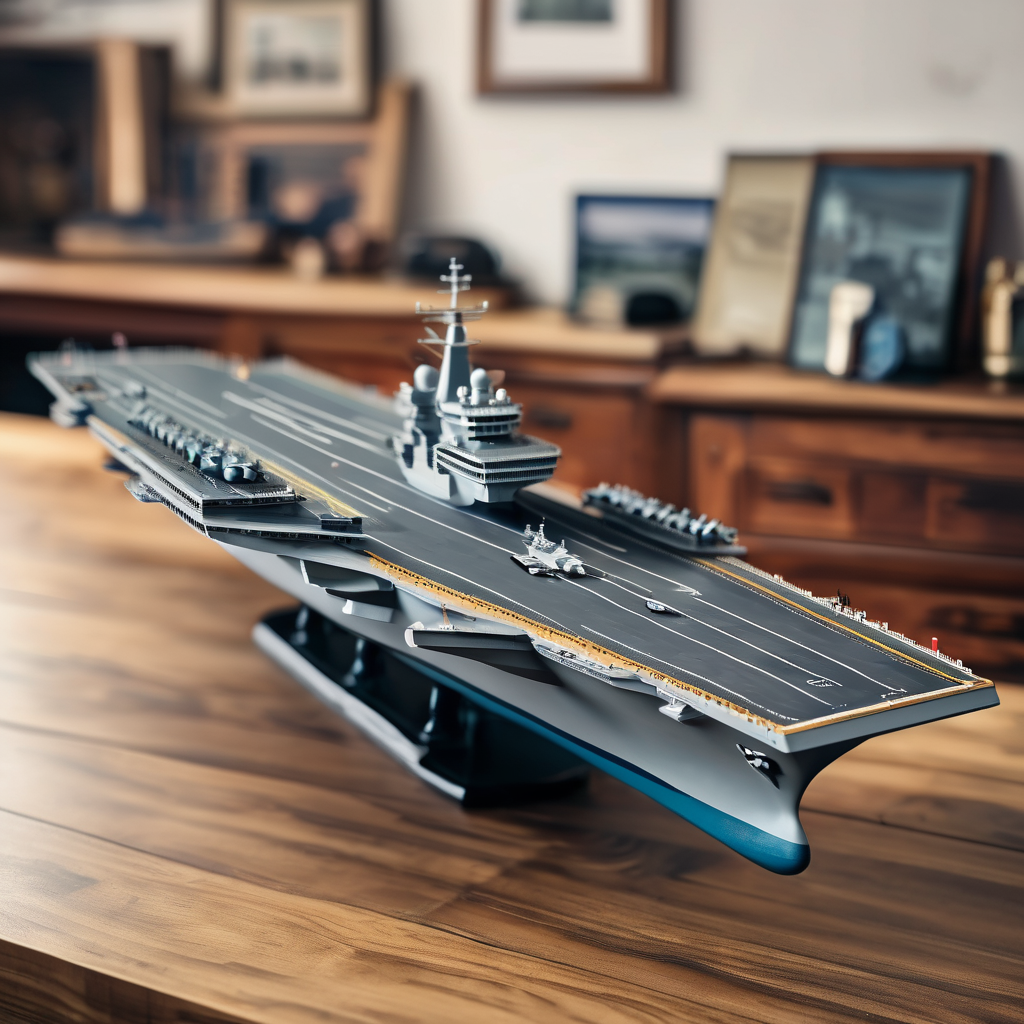
The Pentagon is preparing for a significant military buildup in the Middle East, deploying the largest force of American warships and aircraft in decades. This operation includes two aircraft carrier strike groups, amid increasing tensions and warnings from President Donald Trump regarding potential military action against Iran if negotiations surrounding its nuclear program fail.
President Trump emphasized the challenges of reaching a meaningful agreement with Iran, reiterating the necessity for a strong deal, with the implication that failure could lead to serious consequences. Experts note that the Trump administration may consider various military options, including targeted strikes aimed at Iran’s air defenses or its leadership. However, they caution that any military action could provoke Iranian retaliation, escalating tensions and risking American lives.
Currently, the USS Abraham Lincoln carrier strike group, which includes around 5,700 additional service members, has been stationed in the Arabian Sea. This initial deployment was followed by the USS Gerald R. Ford and three destroyers, increasing the Navy’s presence to at least 16 warships in the region, a substantial escalation compared to the previous contingent of 11 ships.
Additional aircraft have also arrived, including over 100 U.S. fighter jets such as F-35s and F-22s, as well as support aircraft and cargo planes, showcasing a determined effort to bolster military readiness in the Middle East. Satellite images indicate a significant concentration of American aircraft at strategic bases, including 50 planes at Muwaffaq Salti Air Base in Jordan.
The buildup, although substantial, does not involve the kind of ground forces seen during historic military operations. Defense experts acknowledged that while the current asset deployment is the largest since the 2003 invasion of Iraq, it remains limited compared to earlier conflicts, such as Operation Desert Storm.
As tensions rise, analysts expect that Iran may respond aggressively to any perceived military action, complicating the situation further. Experts have suggested that Iran’s strategy may lean towards striking U.S. and allied forces to deter escalation, rather than limiting its responses as in previous incidents.
The ongoing developments reflect a precarious balance in the geopolitical landscape, demanding careful navigation to avoid conflict while maintaining strategic interests in the region. The situation remains fluid, as both sides assess their postures in light of the complex and evolving military dynamics at play.