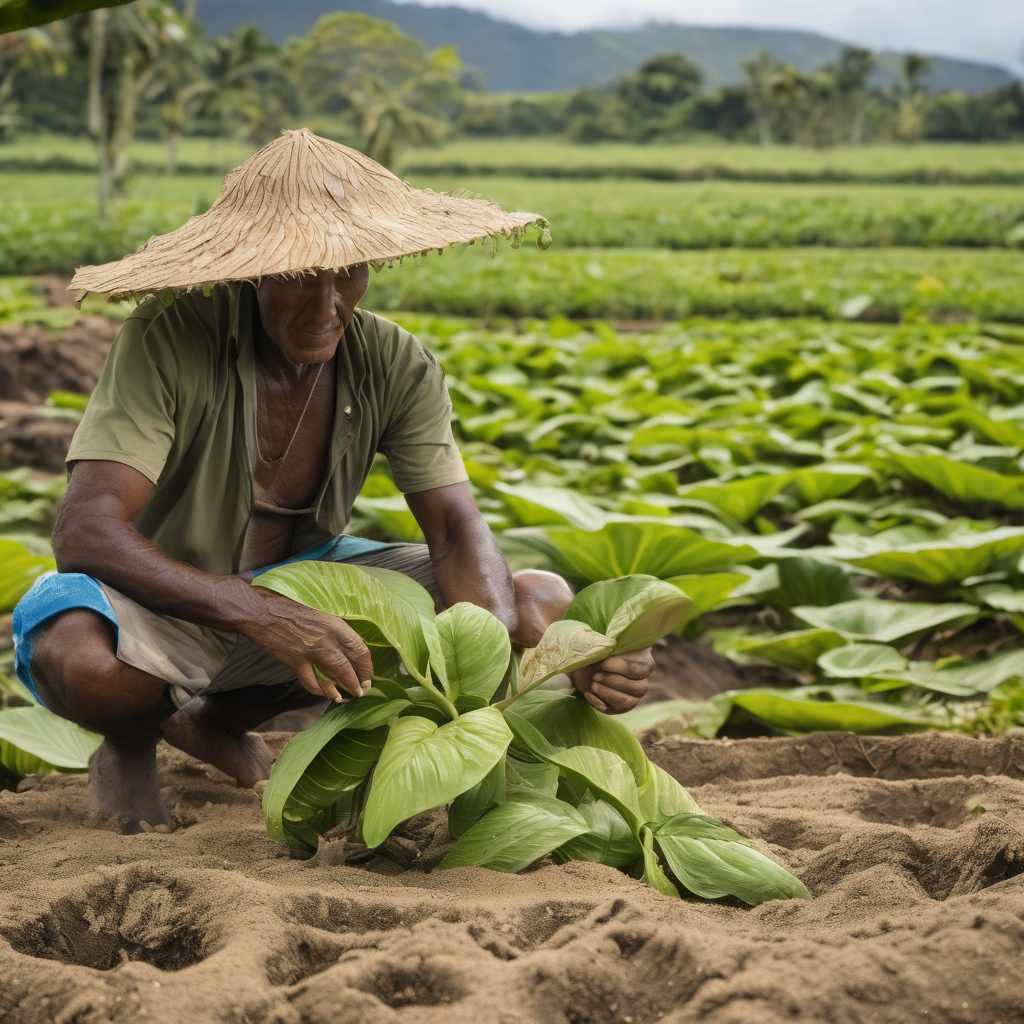
Kava dieback is increasingly posing a serious threat to farms across Fiji, prompting agriculture authorities to take immediate action to protect the nation’s crucial kava crop. Permanent Secretary for Agriculture and Waterways, Dr. Andrew Tukana, has linked the progression of the disease to the Cucumber Mosaic Virus, which is further aggravated by environmental stress. This condition manifests in symptoms like stem blackening and can ultimately lead to plant death, complicating the efforts of farmers to maintain steady production levels.
Dr. Tukana noted the variety of obstacles currently confronting the kava industry, stating, “the cover industry has been inundated with multiple challenges.” These challenges extend beyond dieback to include issues such as on-farm theft, inadequate quality planting materials, and deteriorating soil health. A recent survey indicated that 20 percent of kava farms have been affected by dieback, endangering an industry valued at over $54 million and impacting roughly 18,500 families who depend on it for their livelihoods.
Many farmers still depend on traditional farming methods, which may prove inadequate against these modern challenges. In response, David Hicks, Program Manager of the Pacific Horticultural and Agricultural Market Access (PHAMA), revealed that collaborative efforts with the Ministry of Agriculture are underway to launch Fiji’s first guide aimed at helping farmers manage and diminish dieback effectively.
The Ministry and PHAMA stress the significance of embracing modern agricultural practices while using the new guide to bolster the resilience and sustainability of Fiji’s kava industry in the face of these urgent challenges. Such proactive initiatives offer hope for enhancing the sector’s productivity and securing the livelihoods of farmers reliant on this vital crop. With concerted efforts and updated strategies, there is optimism for the future of kava farming in Fiji, ensuring its important role in both the economy and community well-being.