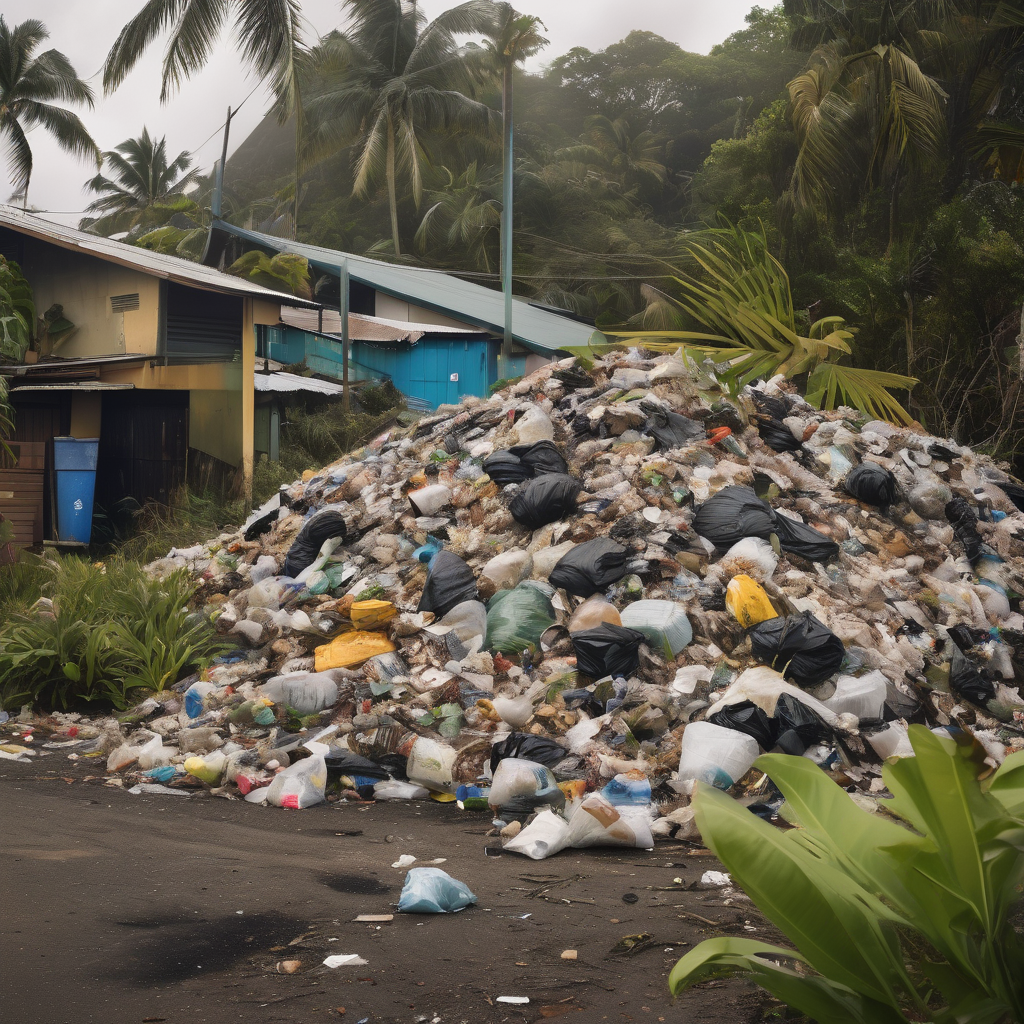
The Nasinu Town Council has attributed the increasing accumulation of rubbish within the municipality to improper waste disposal practices by residents, particularly following routine collection times. Council Administrator Salesh Kumar emphasized that the problem does not primarily stem from delays in waste collection services.
“Most areas were serviced within the standard collection time-frame,” Mr. Kumar noted. He indicated that illegal dumping by residents significantly contributes to the additional rubbish piles observed after collections.
In an effort to address the issue, the council has been proactively clearing debris from the most impacted areas. Collection efforts are ongoing, with teams working to clean up spots from Narere towards Navosai, as well as along Ratu Dovi Road towards Tomanu Road, and in the Caubati area.
Mr. Kumar provided insights into the council’s waste management schedule, highlighting that green waste is collected monthly, while household and kitchen waste is picked up three times a week. Additionally, bulky items and white goods are collected biannually. However, the council faces challenges, including ineffective waste separation practices and continual illegal dumping.
A significant portion of the collected waste is found to be a mix of materials including white goods, green waste, and kitchen waste. Alarmingly, Mr. Kumar mentioned that illegal dumping is also being perpetrated by individuals from outside the Nasinu area. The council appreciates reports and evidence shared by vigilant residents, which have been vital in tackling the problem.
Mr. Kumar called on community members to engage in proper waste separation at home, consider backyard composting when possible, and report any instances of illegal dumping they observe in public areas. He stressed the value of collaboration among residents to combat illegal dumping, reiterating that while the council remains committed to maintaining consistent waste collection, the active participation of the community in waste sorting is essential for developing a more efficient and sustainable waste management system.
By fostering a sense of responsibility and proactive engagement, the residents of Nasinu can work together to enhance their environment and ensure cleaner public spaces for all. This approach not only addresses the immediate concerns of waste accumulation but also contributes to a healthier and more sustainable community.