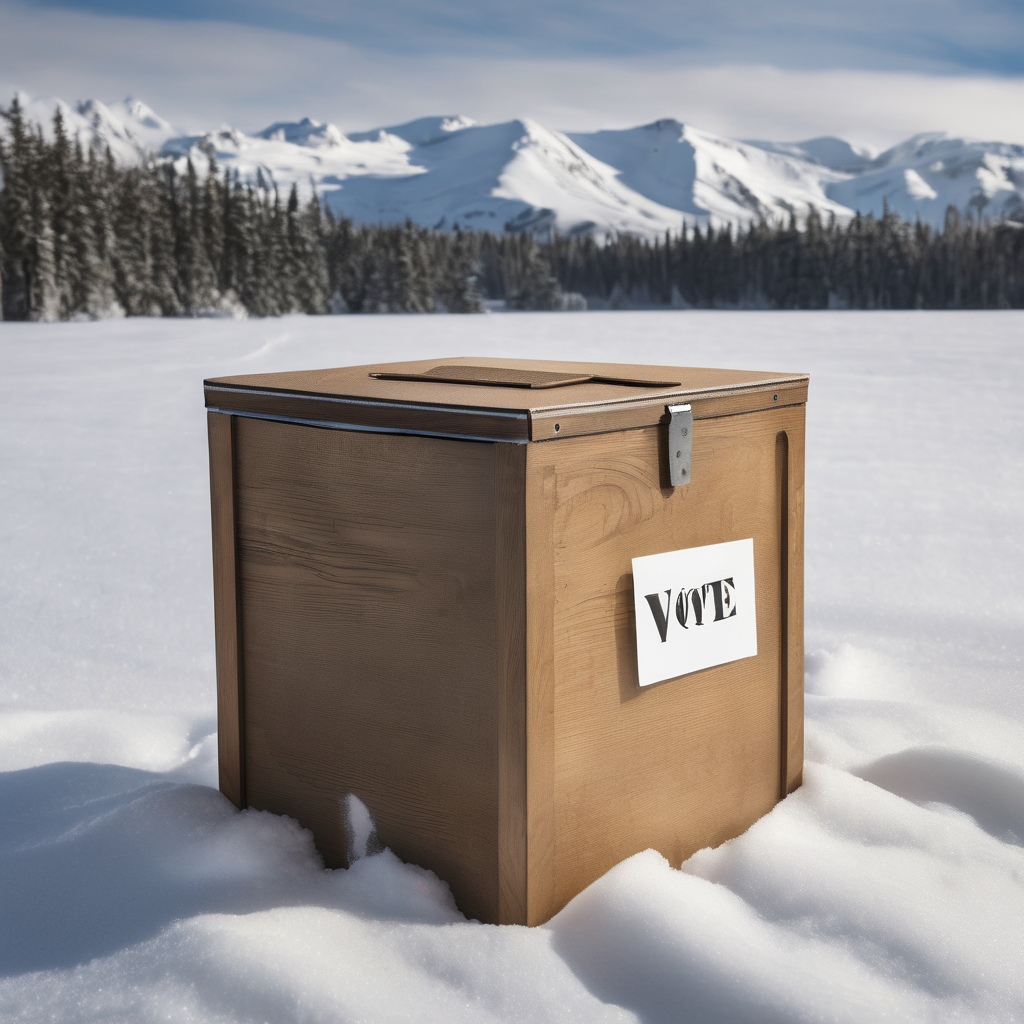
Senator Lisa Murkowski, a Republican from Alaska, has voiced her opposition to the SAVE America Act, arguing that it would undermine state control over election administration and disenfranchise many Alaskans. The Act proposes federal mandates regarding voter registration and identification requirements, which, according to Murkowski, do not account for the unique geographic and demographic challenges faced by her state.
Murkowski highlights that the Constitution grants states the power to regulate their own election processes, allowing them to adapt to specific local conditions. She expresses concern that a uniform approach, as proposed in the SAVE America Act, would fail to consider Alaska’s vast rural areas—with 80% of its communities and 20% of its population lacking access to a road system. The logistical burdens of complying with the Act’s identification requirements could force many Alaskans to incur significant travel expenses just to register to vote.
The legislation also mandates proof of U.S. citizenship that many residents may not possess, as Alaska’s REAL IDs do not meet the bill’s specifications. Forcing individuals to provide additional documentation could create barriers for voters, particularly among Alaska Natives and those with varied identification circumstances. Furthermore, the bill threatens to complicate voting by mail, a method previously utilized by over 40,000 Alaskans during the last presidential election.
Murkowski also raises concerns about the reliability of the federal Department of Homeland Security database intended to assist in determining voter eligibility. Reports indicate that this system has made significant errors, particularly regarding the citizenship status of individuals born outside the U.S., potentially disenfranchising legitimate voters.
Despite the need for a secure voting system, Murkowski believes that existing federal laws already prohibit noncitizen voting in federal elections, questioning the necessity of such stringent new measures. She points to Alaska’s own experience with implementing federal requirements as evidence of the challenges and inefficiencies that could arise from the SAVE America Act.
In conclusion, while Murkowski acknowledges the importance of election integrity and voter identification, she maintains that states are better equipped to manage their voting processes in a way that serves all their residents effectively. She calls for caution against sweeping reforms that may inadvertently disenfranchise voters in her state, emphasizing the necessity for thoughtful consideration rather than partisan solutions.