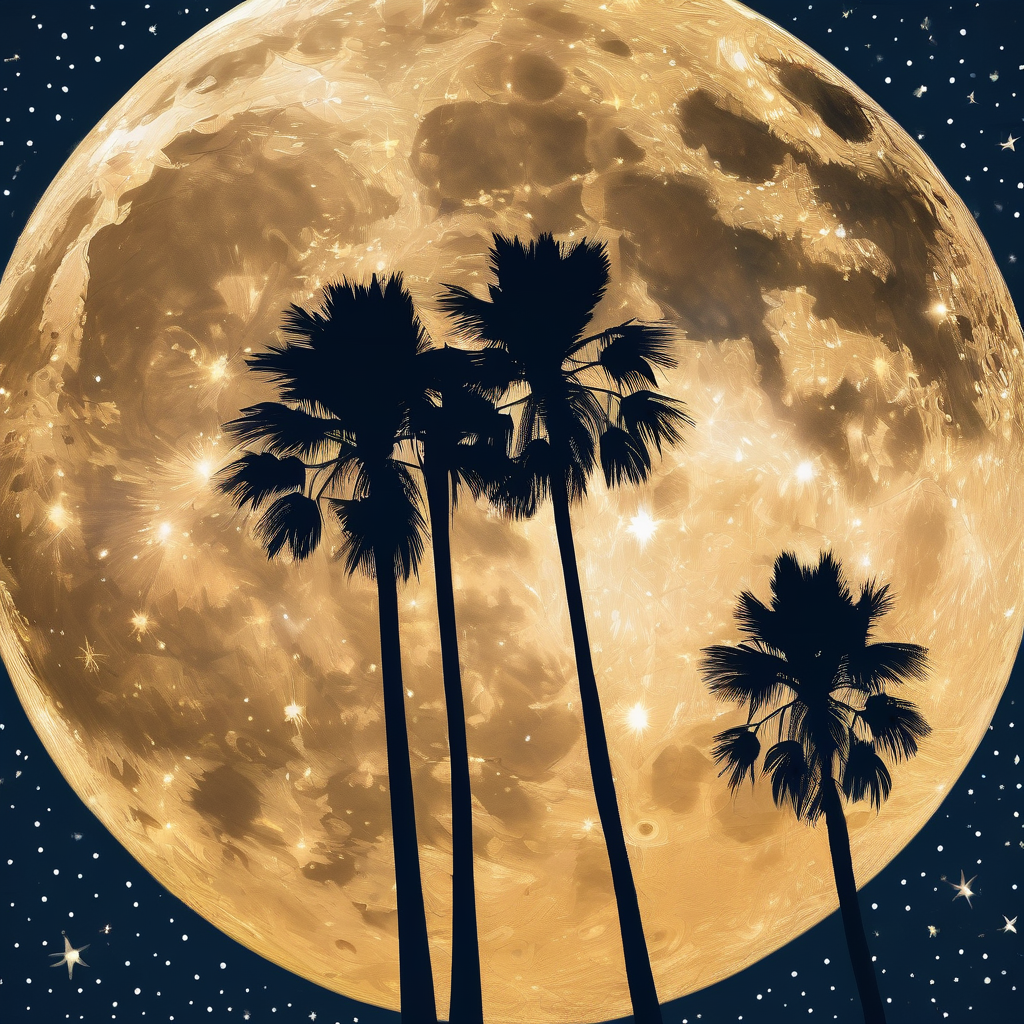
The final supermoon of 2025 is set to illuminate the December skies, marking a celestial event that captures the attention of skywatchers worldwide. Supermoons occur several times a year, forming a series during particular periods when the moon’s elliptical orbit brings it closer to Earth. This year, the last of three consecutive supermoons will be visible on Thursday night, with its peak illumination reaching around 3:15 p.m.
According to information from Griffith Observatory, the supermoon promises to be the biggest and brightest as darkness descends, making it an exciting opportunity for those eager to appreciate its beauty. Observers can catch a glimpse of the supermoon free of charge and without any special equipment, although the subtle changes might be difficult to detect at a glance.
NASA defines a supermoon as a full moon that appears larger and brighter due to its proximity to our planet. While this event might be more a term of popular usage than scientific terminology, it signifies a full lunar phase that coincides with a particularly close pass to Earth. These occurrences take place approximately three to four times a year.
When viewed from its closest position, a supermoon can appear up to 14% larger and 30% brighter than the faintest moon, which happens when it’s at its farthest distance from Earth. This phenomenon recently delighted San Diegans, who captured the Beaver Moon in November, showcasing its spectacular display across the region.
Looking ahead, enthusiasts can anticipate the next round of supermoons, which will occur on December 4, 2025, followed by another on January 3, 2026. Such astronomical events continually inspire a sense of wonder and excitement among stargazers, reminding us of the beauty and majesty of our universe.