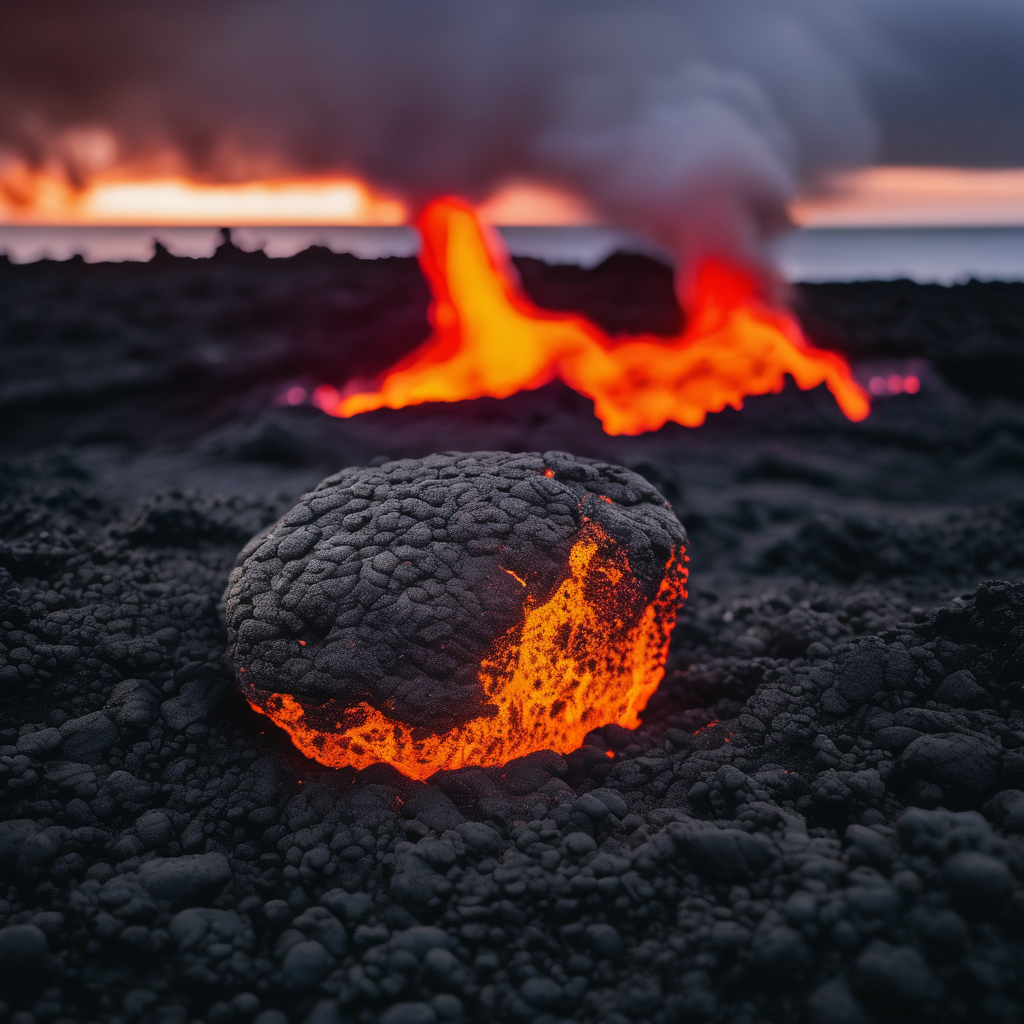
The highly anticipated “Episode 40” of the Kilauea eruption could occur at any moment through Saturday, as indicated by scientists from the U.S. Geological Survey. According to the Hawaiian Volcano Observatory (HVO), the forecast has been adjusted due to ongoing precursory activities. Recently, lava has been overflowing consistently from the north vent of the Halemaumau crater, displaying pulses of dome fountaining alongside overflows from the south vent.
Officials reported that activity had diminished this morning to about one overflow per hour from the south vent, accompanied by only minor spattering. Additionally, the Kilauea summit region is experiencing deflation, as indicated by tiltmeter readings from the previous day.
While Kilauea’s East Rift and Southwest Rift zones remain quiet, the HVO noted that nearly continuous lava overflows were observed from the north vent over the weekend, along with intermittent dome fountains in the southern vent. The active lava flow continues to stretch over 1,500 feet across the crater floor, with the most recent observations showing a decrease in activity at the north vent after 3 a.m. this morning. Currently, spattering is visible, and the south vent’s overflows have slowed considerably.
Kilauea has been erupting episodically since December 23, 2024, primarily from the north and south vents of the Halemaumau crater. These episodes generally last less than 12 hours and are interspersed with pauses that may extend beyond two weeks. The volcano’s alert level remains at “watch,” while the aviation color code is set to orange, signaling caution among pilots and surrounding communities.
As the Kilauea eruption unfolds, monitoring and reporting efforts remain critical, ensuring that the public stays informed about this significant natural phenomenon.