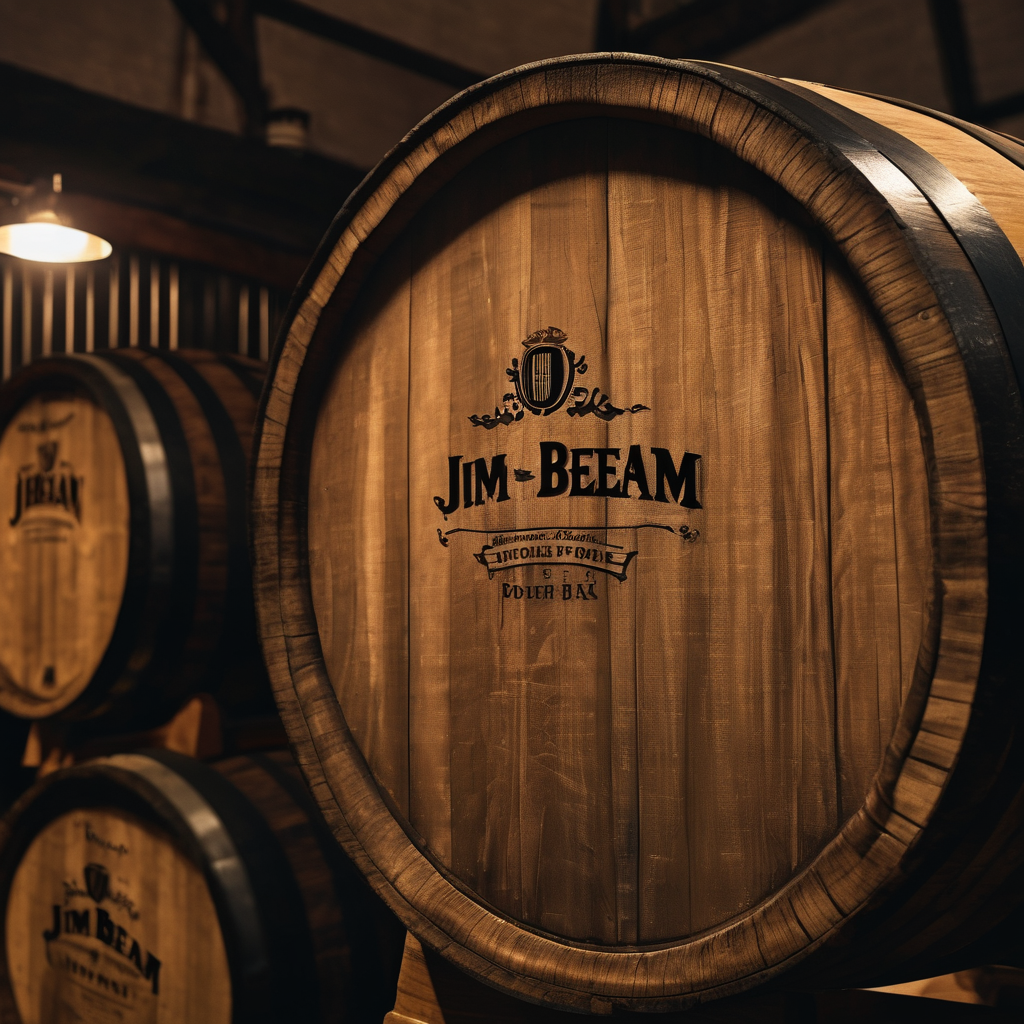
Jim Beam, the renowned bourbon whiskey maker, is set to pause production at its main distillery in Clermont, Kentucky, beginning January 1. This temporary halt is part of the company’s plans to invest in enhancements at the site. Despite the shutdown, the James B. Beam campus will remain open for visitors.
While production at the main distillery will cease, Jim Beam will continue operations at its Fred B. Noe craft distillery in Clermont and the Booker Noe distillery located in Boston, Kentucky.
The decision to pause production is influenced by ongoing challenges facing the wine and spirits industry. Recent statistics reveal a decline in alcohol consumption among Americans, with Gallup reporting that the percentage of U.S. adults who drink has decreased to 54%, the lowest level in nearly nine decades. Additionally, U.S. exports of spirits fell by 9% in the second quarter, a situation exacerbated by tariffs imposed during the Trump administration. Notably, exports to Canada suffered significantly, plummeting by 85% as retailers there removed U.S. products in response to the tariffs.
The bourbon industry specifically has seen a marked reduction in production, with whiskey distillers producing 55 million fewer proof gallons this year compared to the previous year, which equates to a 28% drop. A proof gallon refers to a gallon of liquid that contains 50% proof alcohol.
However, bourbon enthusiasts can find solace in the fact that Kentucky warehouses are currently stocked with a record 16.1 million barrels of aging bourbon. This number, reported in October by the Kentucky Distillers’ Association, represents the highest inventory since the repeal of Prohibition and signifies a 27% increase compared to 2024. The rise in bourbon supply can be attributed to the growing number of distilleries in Kentucky, even as the industry deals with fluctuations in demand linked to tariff concerns and evolving drinking preferences.
To meet the legal definition of bourbon, the spirit must be aged in new charred oak barrels and consist of at least 51% corn in its grain mash, adhering to established U.S. distilling regulations. The future outlook for the bourbon industry may depend on how effectively it navigates these challenges while enjoying significant aging inventories.