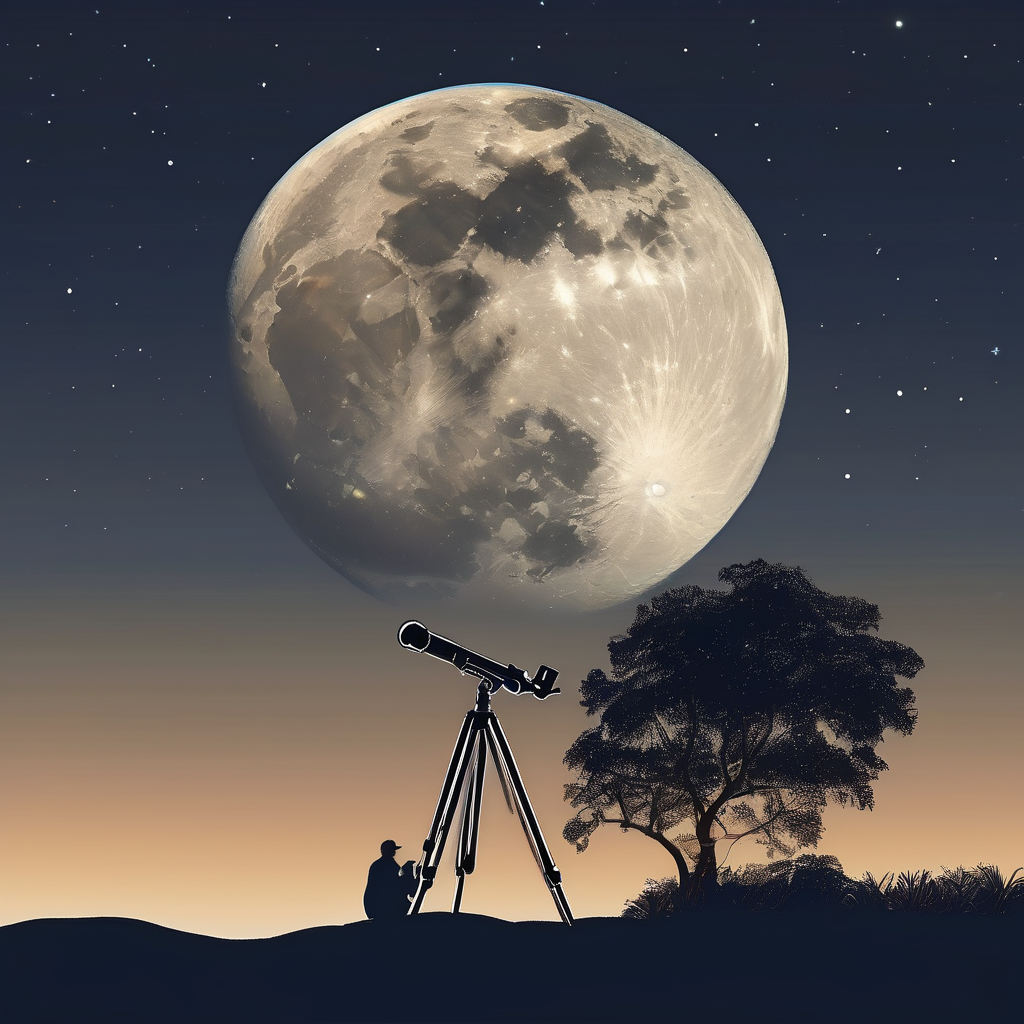
For amateur astronomers and enthusiasts eagerly anticipating the celestial display, the Celestron StarSense Explorer DX 130AZ has emerged as a top pick for those looking to observe the moon. As detailed in the best beginner’s telescope guide, it offers an excellent option for basic astronomy.
Tonight, the January 2026 full moon—commonly referred to as the “Wolf Moon”—will grace the night sky, marking the first full moon and supermoon of the year. This astronomical event takes place when the moon is positioned directly opposite the sun in Earth’s sky, resulting in the lunar surface appearing fully illuminated. The peak illumination of this magnificent full moon is scheduled for 5:03 a.m. EST (10:03 GMT) on January 3. However, observers can expect to see a nearly full moon on the nights surrounding this peak.
The Wolf Moon, named for the wolves that were known to howl during cold winter nights, also carries traditional names such as the “Moon After Yule” and the “Severe Moon,” the latter reflecting the harsh conditions typical of January as recognized by Indigenous Dakota culture. This month’s full moon coincides beautifully with the moon’s closest approach to Earth, a phase known as perihelion, creating a supermoon that can appear up to 30% brighter and 14% larger than more distant full moons. This marks the final supermoon of a series of four consecutive supermoons until we reach another on November 24, 2026.
For those keen on experiencing the Wolf Moon rise, the best time to look is to the eastern horizon at dusk on January 2, just before sunset. The moon will appear strikingly large near the horizon due to a visual effect known as the “moon illusion.” This effect will be notably visible on January 3 as well, just after sunset in a darker sky, often giving the moon an orange-yellow tint due to atmospheric scattering of light.
In addition to the moon, bright Jupiter will be visible just under four degrees to the right of the lunar disk, creating a stunning pairing in the night sky. As an interesting benchmark, the width of three fingers held at arm’s length represents about five degrees of sky.
For those looking to preserve this extraordinary sight, using a camera to capture the moment is highly encouraged, with various guides available for those interested in astrophotography. Furthermore, astute photographers can refer to recommendations for the best cameras and lenses to make the most of the 2026 night sky.
Astrophotography enthusiasts are invited to share their images and experiences with the community, fostering a sense of connection among skywatchers as they enjoy this awe-inspiring celestial event.