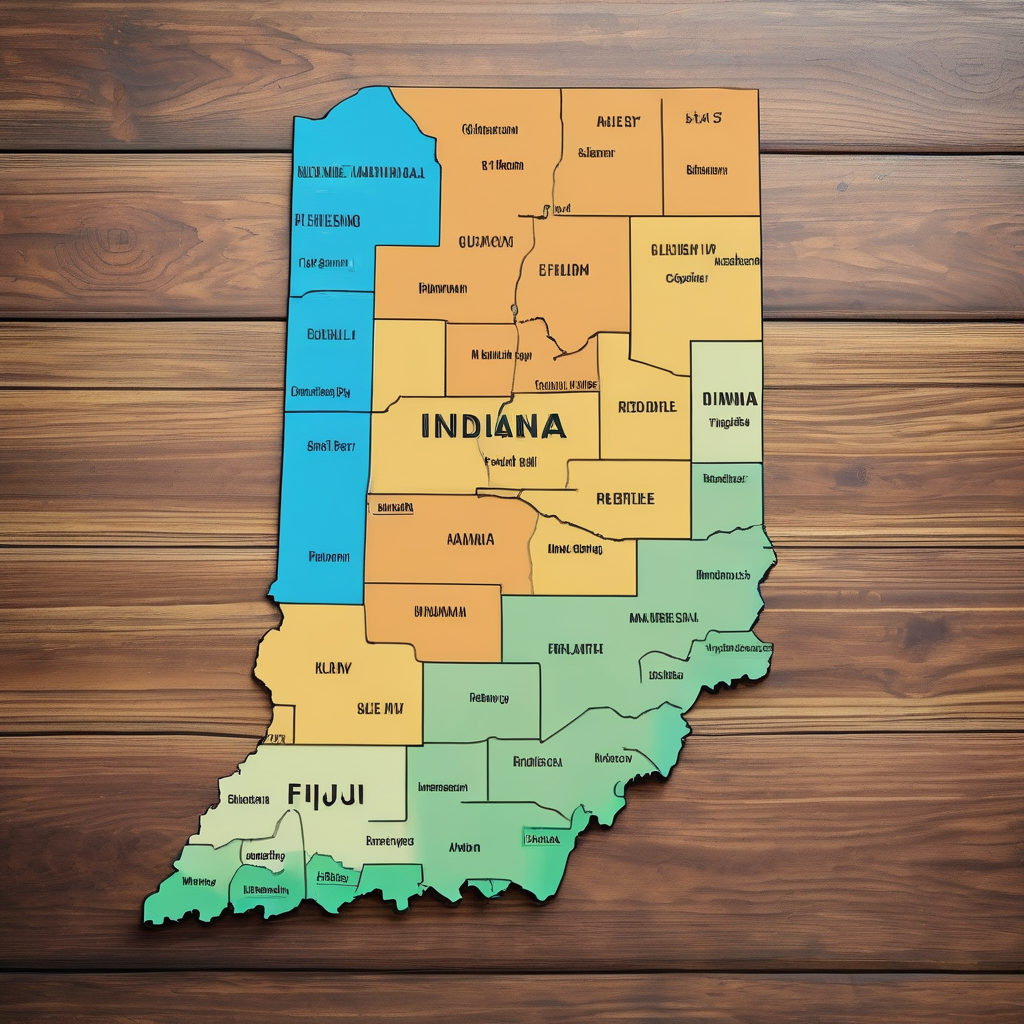
Indiana state senators are scheduled to cast their votes on a contentious Republican-drawn congressional map that has stirred significant debate over the past several months. The proposed redistricting plan, which received approval from the state House last week, aims to eliminate Indiana’s two Democratic-held districts. This move aligns with former President Donald Trump’s efforts to strengthen the GOP’s slim majority in anticipation of the upcoming midterm elections.
Republican lawmakers in several states, including Texas, North Carolina, and Missouri, have adopted new district maps at Trump’s urging, but Indiana’s lawmakers have been more reluctant, hesitating to engage in mid-decade redistricting. Republican leaders in the state Senate have indicated a lack of sufficient support to pass the legislation, despite numerous appeals from Trump and other national GOP figures who have been actively lobbying Indiana lawmakers.
Trump has intensified his campaign by personally targeting Rodric Bray, the Senate’s Republican leader, via social media. He warned that any senator who opposes the redistricting effort may face primary challengers in the future, claiming Bray would not remain in politics if he continued to undermine the Republican Party.
The efforts to sway Indiana lawmakers have grown urgent, with House Speaker Mike Johnson and various GOP leaders communicating directly with state representatives to encourage their support for the map. While GOP officials believe they are close to securing the necessary votes—requiring at least 25 in a Senate where Republicans hold a 40-10 majority—the situation remains uncertain.
In a concerning turn of events, Republican legislators have faced threats of violence, including swatting attempts, linked to their positions on the redistricting issue. Lawmakers such as Sen. Michael Crider and Sen. Dan Dernulc reported receiving alarming threats, including pipe bomb threats and false police reports designed to provoke dangerous responses. Despite these intimidation tactics, Dernulc maintains that these threats will not alter his voting stance.
Demonstrations against the redistricting proposal have been taking place, with activists expressing their concerns over the implications of such political maneuvers. Sen. Mike Gaskill, the bill’s sponsor, acknowledged the challenges surrounding political gerrymandering during discussions but emphasized the necessity of his party’s efforts to affirm their influence on a national scale.
The upcoming vote in the Senate is seen as an opportunity to resolve a protracted debate that has left many lawmakers feeling exhausted. With the tension surrounding the proposal, all eyes are now on the Senate as its members prepare to finally address the redistricting bill. The outcome of Thursday’s vote will potentially provide clarity on Indiana’s congressional map and its broader implications for the Republican Party in the midterm elections.