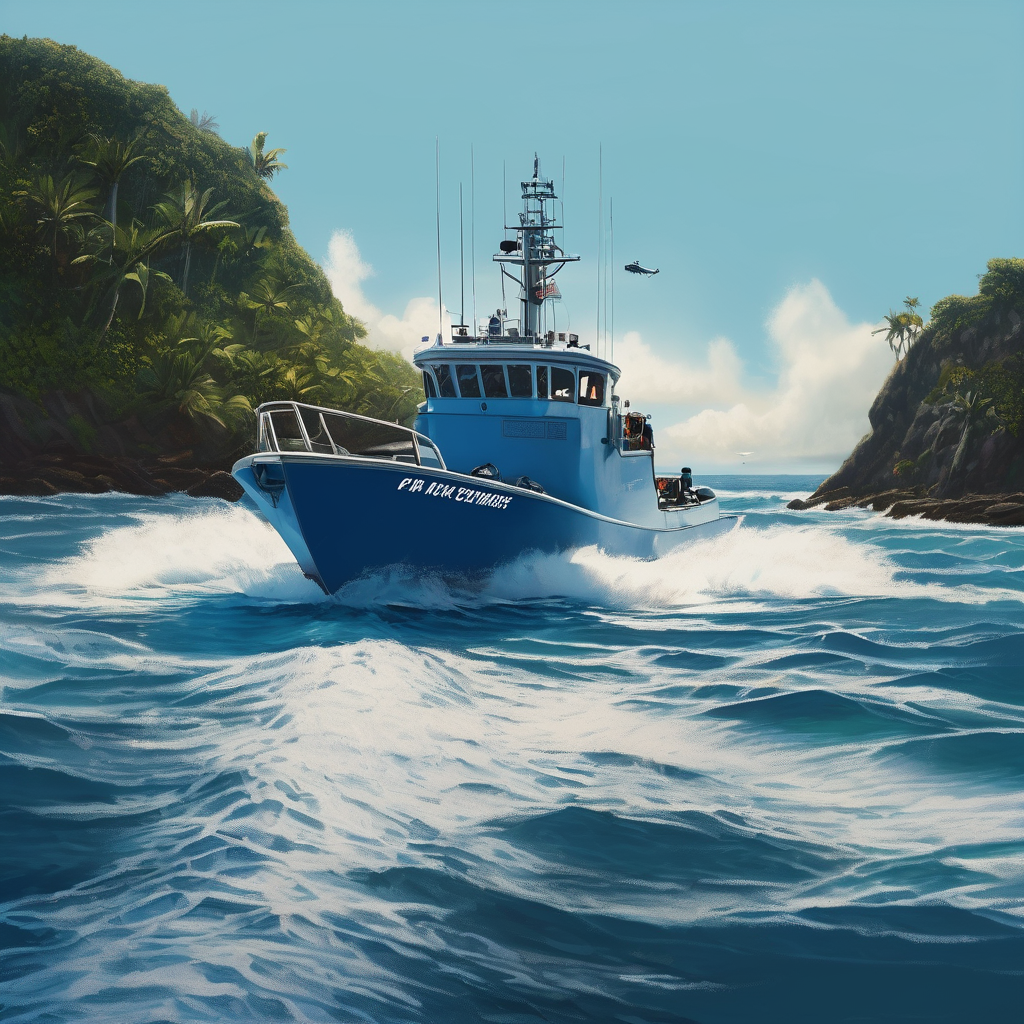
Customs authorities across the Pacific are intensifying their efforts to tackle the growing threat of sophisticated transnational criminal networks that are exploiting the region’s expansive ocean territories and legitimate supply chains. During a recent discussion, Mohammed Ajaz, a Customs Enforcement Advisor with the Oceania Customs Organisation (OCO), articulated how the role of Customs officials has evolved significantly.
Ajaz pointed out that Customs officers have transitioned from mere border administrators to crucial defenders of society against highly organized criminal syndicates. The vast maritime zones overseen by Pacific island nations, despite their relatively small populations, have attracted narcotics traffickers looking to exploit these areas as lucrative drug corridors for global markets.
Recent statistics reveal the severity of the situation. In a staggering incident in January, Fiji saw the interception of 2.6 tonnes of cocaine, while French Polynesia confiscated 4.87 tonnes on the same day. These figures indicate that criminal networks view the Blue Pacific as a billion-dollar opportunity for drug trafficking.
One of the most concerning tactics employed by these syndicates is their infiltration of legitimate supply chains. Criminals are known to recruit insiders and cleverly conceal illicit drugs within industrial machinery, refrigerated containers, and everyday goods. Ajaz elaborated on the “rip-on, rip-off” method, where drugs are seamlessly integrated into legitimate cargo during its trans-Pacific journey.
In light of this escalating threat, OCO is taking proactive measures to bolster intelligence-sharing among its 24 member nations and strengthen partnerships with global organizations, including the World Customs Organisation. The initiative also involves adopting new technologies, incorporating non-intrusive inspection systems, and providing specialized training to safeguard trade while dismantling these criminal operations.
Ajaz emphasized the profound impact drug infiltration has on communities, highlighting the lack of rehabilitation systems available to handle the consequences when drugs permeate these areas. He asserted the necessity for community partnerships in prevention efforts, stating, “Prevention is our only real option.” Success, according to him, should not only be measured by the volume of seizures but also by the safety of families, the well-being of youth, and the overall preservation of communities.
The ongoing commitment of customs authorities in the Pacific to confront these challenges demonstrates their dedication to ensuring regional safety and security. This proactive stance fosters a hopeful outlook for enhanced collaboration and increased community engagement in prevention initiatives.