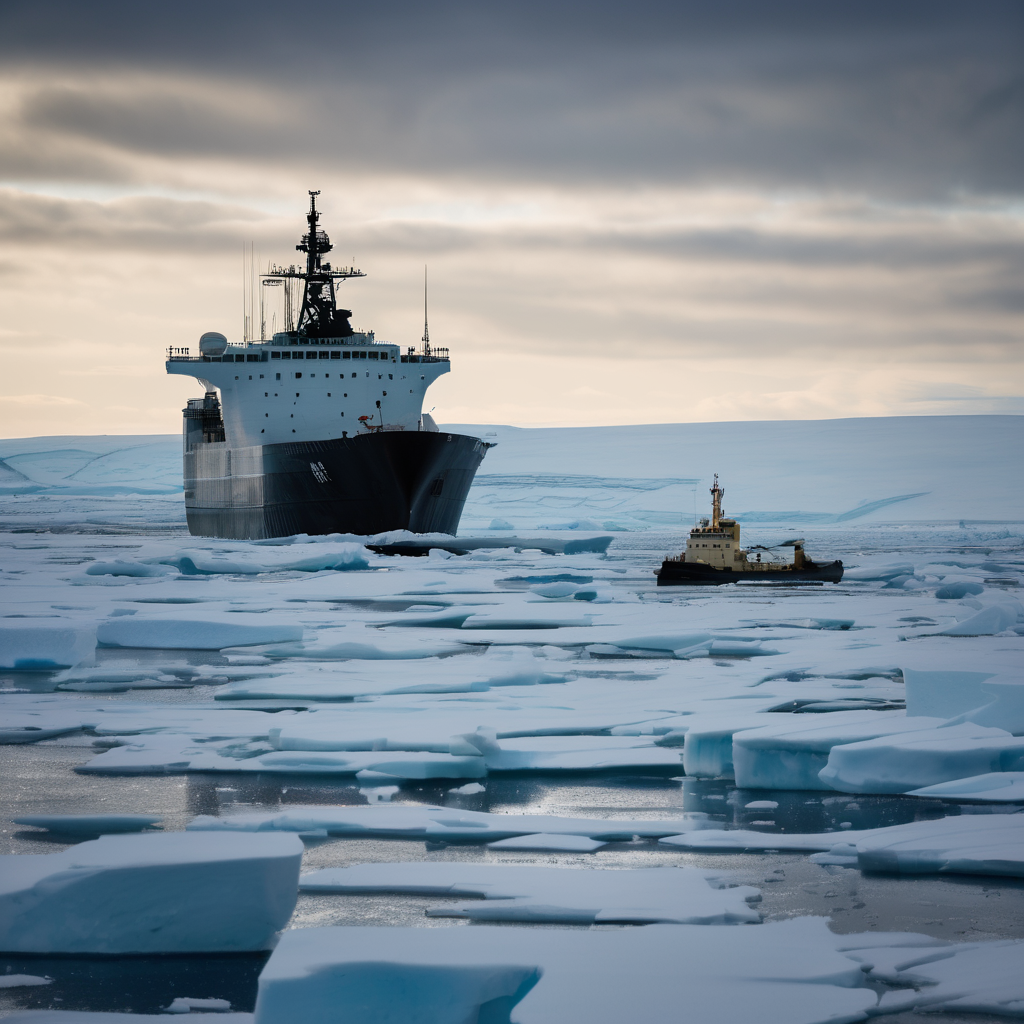
As tensions mount over President Donald Trump’s renewed threats to acquire Greenland, military activity around the Arctic island has intensified, with both the United States and several European nations ramping up their presence. On January 19, the U.S. military announced that aircraft would soon arrive at the Pituffik Space Base in Greenland as part of a “long-planned” exercise. This announcement comes amid Trump’s insistence that the U.S. requires “complete and total control” over Greenland for national security purposes, according to leaked communications with Norway’s prime minister.
In response to these developments, European NATO countries have also dispatched troops to Greenland for training and reconnaissance missions, albeit in limited numbers. Notable contributions include personnel from Germany, Sweden, Norway, Finland, the Netherlands, the United Kingdom, and France, as part of Denmark-led operations called Operation Arctic Endurance. These exercises are intended to address security challenges posed by Russian and Chinese activities in the region and explore the feasibility of a rotating European military presence on the island.
The U.S. military’s actions have been coordinated with Denmark, which has sovereignty over Greenland. According to a statement from North American Aerospace Defense Command, Danish officials and the Government of Greenland have been informed of all planned activities. While the number of European troops currently stationed in Greenland is relatively small, the deployments carry significant symbolic weight in the context of escalating military rhetoric from Trump, who has also threatened tariffs against several NATO allies that have not acquiesced to his Greenland aspirations.
Additionally, U.S. military officials reported that 1,500 troops from the 11th Airborne Division have been put on standby, potentially gearing up for a deployment tied to immigration enforcement operations in Minnesota. However, their training background in arctic warfare makes this a curious situation, as the troops are specifically trained for cold-weather conditions and operations.
Denmark’s Defense Minister, Troels Lund Poulsen, emphasized that the European deployments aim to assess how enhanced military presence and activities in the Arctic can be effectively implemented, underscoring a commitment to ensuring security in the region that goes beyond national boundaries.
The situation remains fluid, with ongoing military exercises exploring international defense strategies in the Arctic. Despite the underlying tensions, these collaborative efforts reflect a united front among allies committed to maintaining stability and security in the region.