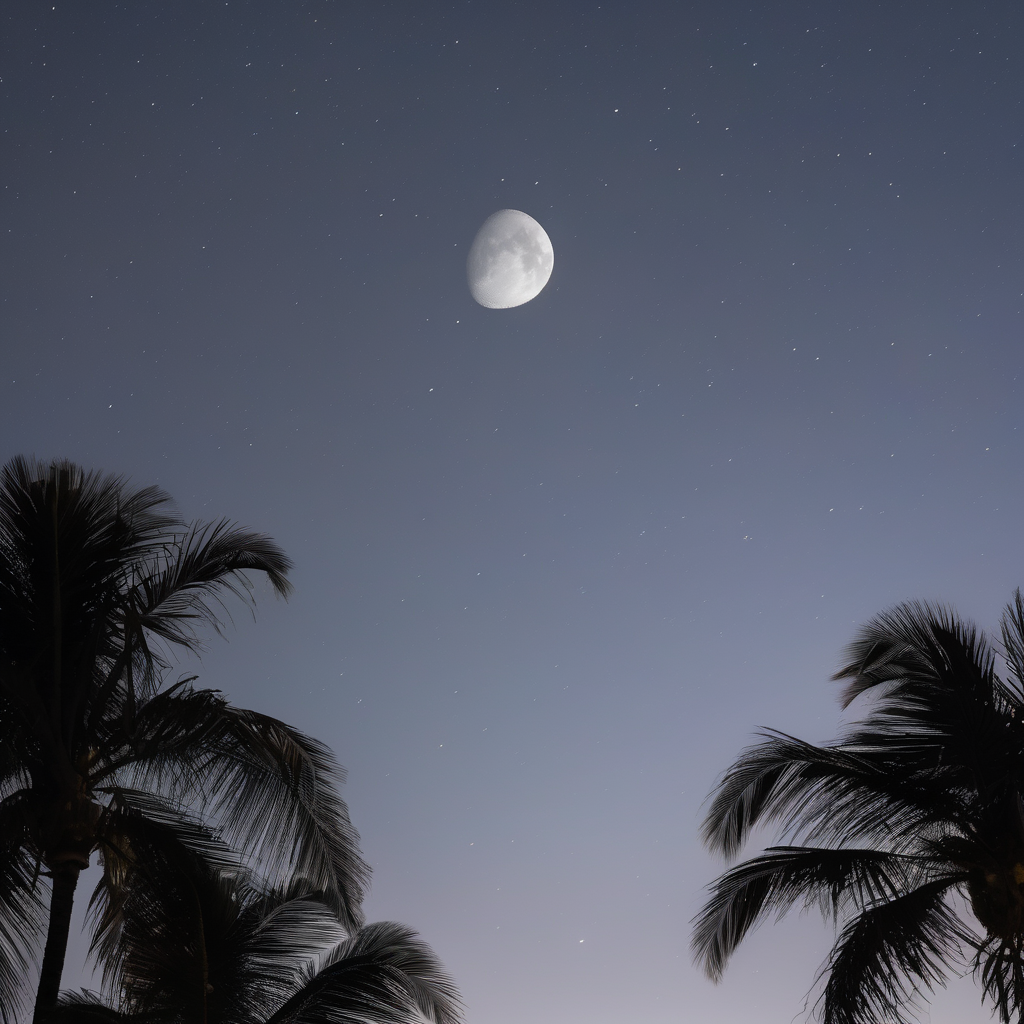
As we enter the Gibbous phase of the Moon’s cycle, tonight’s sky offers a captivating view ahead of the upcoming Full Moon. Observers can look forward to a lunar display, with 58% of the Moon illuminated, making it an excellent opportunity for stargazing.
On this evening, which falls on December 28, enthusiasts can see several prominent features on the Moon’s surface with the naked eye, including the vast plains known as the Mare Fecunditatis and Mare Serenitatis, as well as the Tycho Crater. For those equipped with binoculars, additional attractions such as the Endymion Crater, Archimedes Crater, and the stunning Apennine Mountains will become visible. The use of a telescope will reveal even more notable sites, including the historic Apollo 11 landing area, the Descartes Highlands, and the Linne Crater.
The next notable lunar event is the Full Moon scheduled for January 3, following the last full lunar display that took place on December 4. Understanding the lunar phases enriches the experience of stargazing. It takes approximately 29.5 days for the Moon to transition through its complete cycle, during which its visibility shifts from new to fully illuminated and back again.
The lunar cycle consists of eight distinct phases, starting from the New Moon, where the Moon is not visible, through various stages like the Waxing Crescent and the First Quarter, culminating in the Full Moon. Following the Full Moon, the Moon enters the Waning Gibbous phase, eventually transitioning back to the New Moon.
With these exciting celestial events on the horizon, stargazers are encouraged to take a moment each evening to gaze upwards and appreciate the beauty of our nearest celestial neighbor.