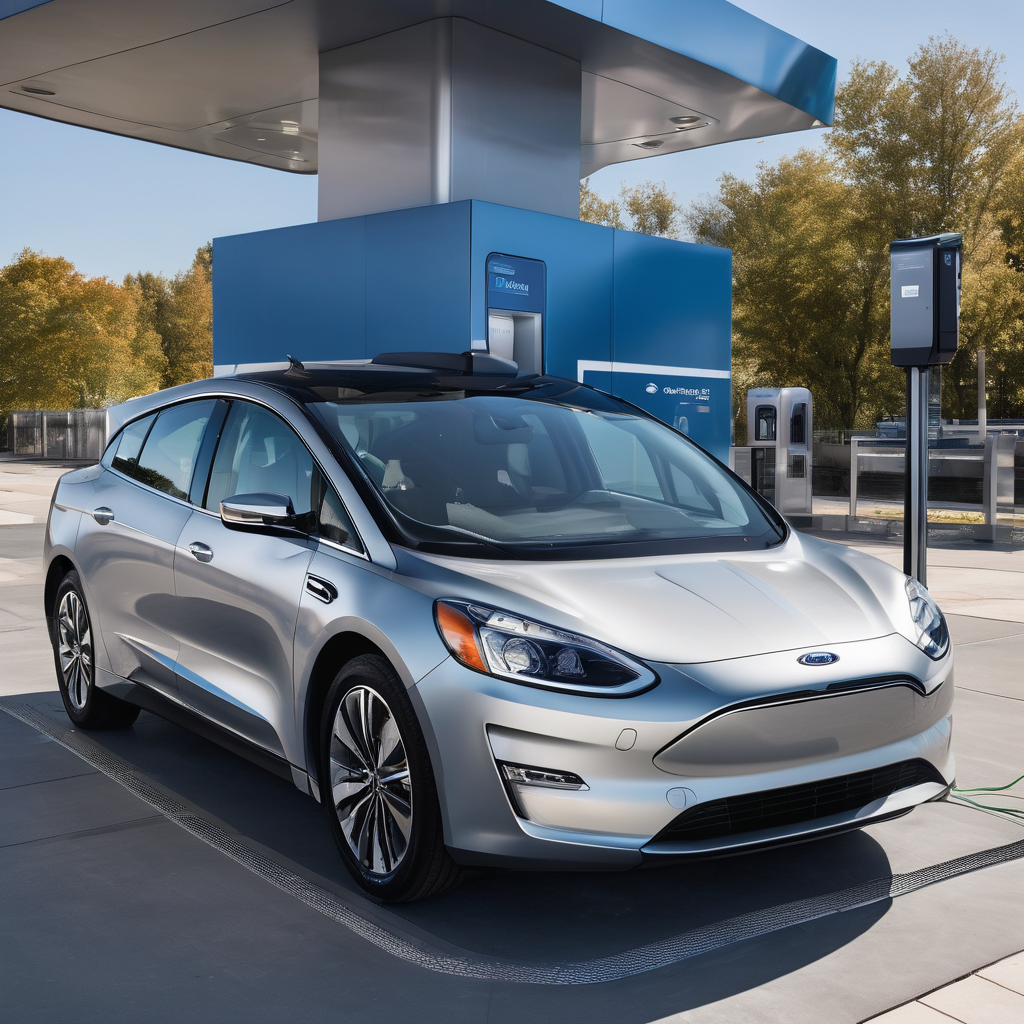
Ford Motor Company is taking significant steps to enhance its production strategy and align more closely with customer demands by announcing expansions in its vehicle offerings and a new battery energy storage initiative. The company plans to introduce a variety of hybrid and electric vehicle (EV) options to complement its efficient gas engines, with an ambitious goal of achieving 50% of its global volume from hybrids, extended-range EVs, and electric vehicles by 2030, up from 17% today.
In a move that underscores its commitment to the U.S. manufacturing sector, Ford will be assembling its new Built Ford Tough pickup trucks in Tennessee’s BlueOval City, while also producing a line of gas and hybrid vans at the Ohio Assembly Plant. This expansion is expected to create thousands of jobs across the country, further reinforcing Ford’s position as the leading employer of hourly autoworkers in the U.S.
As part of its innovative strategies, Ford is launching a battery energy storage business, utilizing its existing manufacturing facilities in Kentucky and Michigan, along with cutting-edge lithium iron phosphate (LFP) technology. The company anticipates beginning shipments of battery energy storage systems by 2027, projecting an annual capacity of 20 gigawatt-hours to meet the rapidly growing demand for energy infrastructure solutions.
In terms of profitability, Ford has made revisions to its financial guidance, now anticipating an adjusted EBIT of approximately $7 billion by 2025, reflecting its robust business strength and continuous improvement in cost management. The company aims for its Ford Model e division to achieve profitability by 2029, with significant enhancements expected to begin in 2026.
To adapt to shifting market conditions, Ford has also revised its product roadmap, choosing to forgo the production of certain larger electric vehicles that no longer meet profitability benchmarks. Instead, the focus will shift toward developing a flexible Universal EV Platform designed for smaller, cost-efficient electric models, making electric vehicles more accessible to a broader customer base.
Ford President and CEO Jim Farley emphasized that these moves signal a customer-driven evolution aimed at making Ford a more resilient and profitable brand. He stated, “The operating reality has changed, and we are redeploying capital into higher-return growth opportunities.”
Part of this transformation includes enhancing its F-150 Lightning model to an extended-range electric vehicle architecture, which will maintain power and performance while providing greater towing capabilities.
Moreover, while Ford has scaled back on its plans for certain electric commercial vehicles in Europe, it remains committed to offering a full range of electrified vans, with a new affordable commercial van slated for production in North America.
Ford’s actions not only reflect a shift toward a sustainable future, aiming for carbon neutrality in its operations by 2050 but also signal its proactive approach to meet the evolving needs of consumers in a rapidly changing automotive landscape. As Ford continues to expand its electric and hybrid vehicle offerings and innovate in battery technologies, the path forward appears increasingly bright for the automaker.