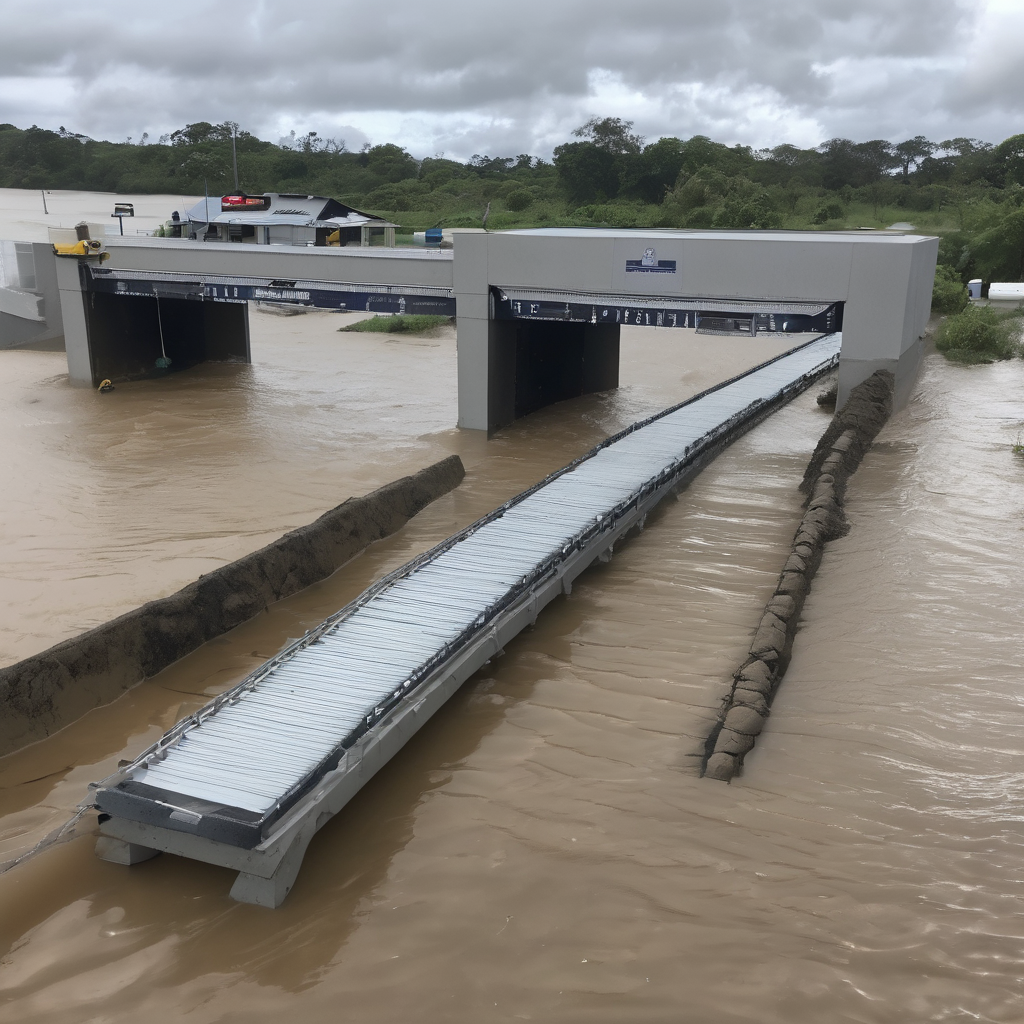
Minister for Public Works and Transport, Ro Filipe Tuisawau, has announced that emergency teams are actively responding to the damage caused to the Nailawa bridge in Dawasamu, Tailevu, after severe flash floods hit the area on Saturday night. Tuisawau revealed that efforts are underway to implement temporary solutions to restore access for the affected villages as quickly as possible.
The Nailawa bridge is vital for several communities, including Delakado, Natadradave, Vorovoro, and Naveilolo, as it functions as their only route to the main highway. Acknowledging the state of the infrastructure, Tuisawau mentioned that upgrades to the Nailawa bridge are already in the procurement stage. Residents were reassured that while these enhancements are planned, immediate temporary measures are being prioritized to address current challenges.
During a recent visit, reporters garnered insights from local villagers who shared their dissatisfaction with the bridge’s condition. For years, it has been submerged and impassable during heavy rains without any sustainable solutions being implemented. This predicament forces residents to navigate through waist-deep waters to fetch essential items like groceries and school supplies. This scenario creates considerable risks, especially for parents aiding their children across the treacherous currents to access transportation.
Local resident Filimoni Masivulo expressed the community’s enduring hardships, stating, “We have begged for this bridge to be fixed for so many years, and every time there is heavy rain, it gets covered again. Yesterday we had to carry our shopping and the children through the water; it is dangerous, but we do not have any other way to reach the highway.”
Amid these challenges, the community remains optimistic that temporary repairs will be initiated soon, blending a sense of urgency with hope for a more lasting solution in the near future. This outlook reflects the resilience of the villagers who continue to advocate for essential infrastructure improvements that are crucial for their safety and connectivity.