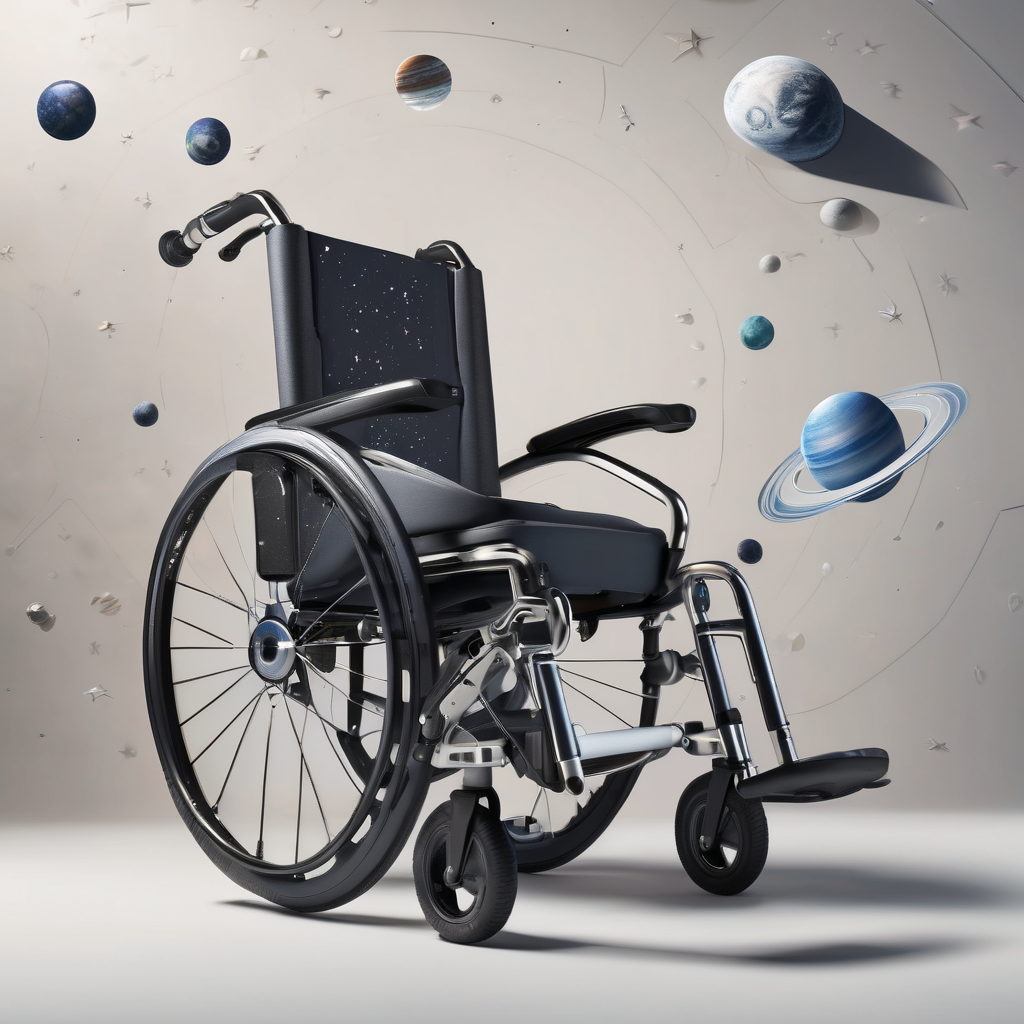
Michaela ‘Michi’ Benthaus, an aerospace and mechatronics engineer at the European Space Agency, is poised to make history by becoming the first wheelchair user to travel to space. In a groundbreaking mission, Blue Origin is set to launch Benthaus aboard its New Shepard rocket, marking a significant milestone in space exploration accessibility.
The launch, which aims to take Benthaus and five other crew members past the Kármán line—an internationally recognized boundary of space located 62 miles above Earth—has generated considerable excitement. Benthaus, who suffered a spinal cord injury from a mountain biking accident, expressed her enthusiasm for the upcoming flight, stating, “I am excited to show the world that also wheelchair users can go on a suborbital flight, and I’m really happy that Blue Origin is supporting this.”
The NS-37 mission will represent the 16th human flight for Blue Origin. To date, the company has successfully sent 86 people—including 80 individuals—beyond the Kármán line. Benthaus has already demonstrated her commitment to space exploration by participating in a Zero-G research flight in 2022 and completing an analog astronaut mission that simulated space activities on Earth. She has a passion for advocating greater access to space for all, particularly for those with disabilities.
Alongside Benthaus on this historic flight are five other crew members: physicist and investor Joel Hyde, aerospace engineer Hans Koenigsmann, entrepreneur Neal Milch, mining engineer Adonis Pouroulis, and space enthusiast Jason Stansell. Each member brings unique expertise and experiences that enrich the mission.
Koenigsmann, for instance, is known for his pivotal role in developing reusable spacecraft during his tenure at SpaceX. Milch, a business executive, champions genetic research at the Jackson Laboratory, while Pouroulis leads companies focused on innovative energy technologies. Stansell is honoring his late brother, Kevin, dedicating his flight to him.
Unlike the recent orbital missions conducted by SpaceX or NASA, the New Shepard flights are suborbital, offering a brief experience of human spaceflight. During the anticipated 10 to 12-minute flight, the crew will enjoy several minutes of microgravity before safely returning to Earth.
The mission was initially set to launch from Blue Origin’s Launch Site One in West Texas but was postponed due to technical issues during the terminal count checks. A new launch date is still to be determined.
This landmark endeavor not only showcases technological achievements but also emphasizes the importance of inclusivity in space exploration, paving the way for future astronauts from all walks of life to experience the wonders of space.