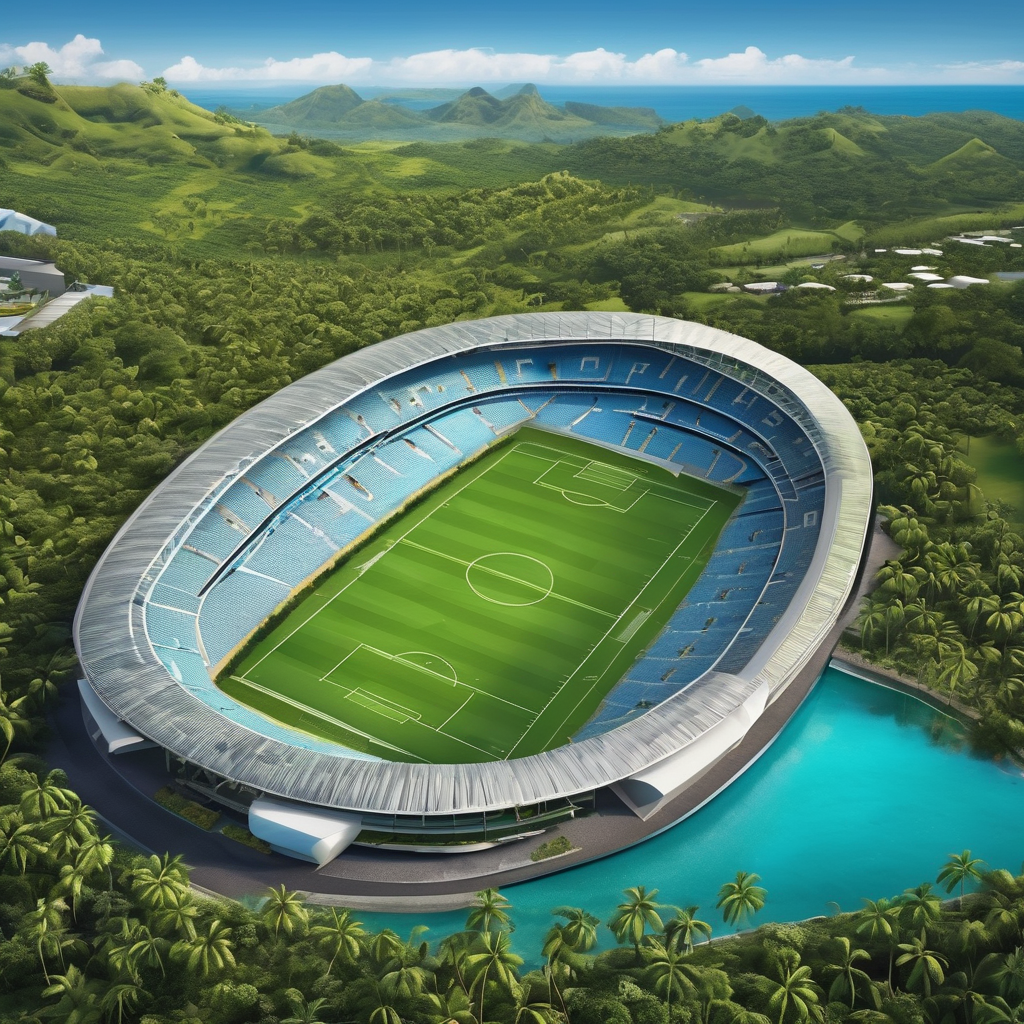
The construction of a multi-purpose football academy and stadium complex in Lomolomo, Fiji, is set to begin in March, as confirmed by Mohammed Yusuf, Chief Executive Officer of the Fiji Football Association (FFA), in a recent exclusive interview. This substantial project has already seen an investment exceeding $350,000 to secure the necessary permits for the initial phase of development.
Funded largely through FIFA, this initiative not only aims to improve local football infrastructure but also seeks to boost sports tourism by providing accommodation units for visiting teams and athletes. Yusuf emphasized the advantages of this development, suggesting that it will allow teams to stay on-site and train at the academy facilities, creating a comprehensive sports package. This initiative is expected to elevate Fiji’s football profile and establish a robust foundation for future generations of athletes.
Initially, the stadium was planned to host 20,000 spectators. However, following careful feasibility studies considering Fiji’s weather conditions, the capacity has been adjusted to a more practical 15,000 seats to prevent underutilization. Although there have been calls from stakeholders for an increase to 25,000 seats, Yusuf explained that any such change would require FIFA’s endorsement due to the funding structure.
The financial framework of this project includes a substantial FIFA grant, with additional support planned through bank loans from the FFA. The total estimated cost of the stadium is around $20 million, with $15 million coming from FIFA’s infrastructure development funds distributed across four cycles from 2026 to 2029. The remaining $5 million is expected to be funded through loans, ensuring the project stays on track.
The FFA plans to execute the construction in three phases, with completion targeted by 2029. Yusuf reported that the schedule anticipates completing the first phase by the end of 2027, the second phase by the end of 2028, and the final phase by the end of 2029. He expressed hopefulness about the timeline, noting, “Things may change if we can acquire more funding, etc., things may change and work faster.” This flexibility could lead to an accelerated timeline depending on future financial developments. The overall vision is to attract significant competitions that will generate revenue to support loan repayments and further advancements in Fiji’s football landscape, ensuring a promising future for the sport in the region.