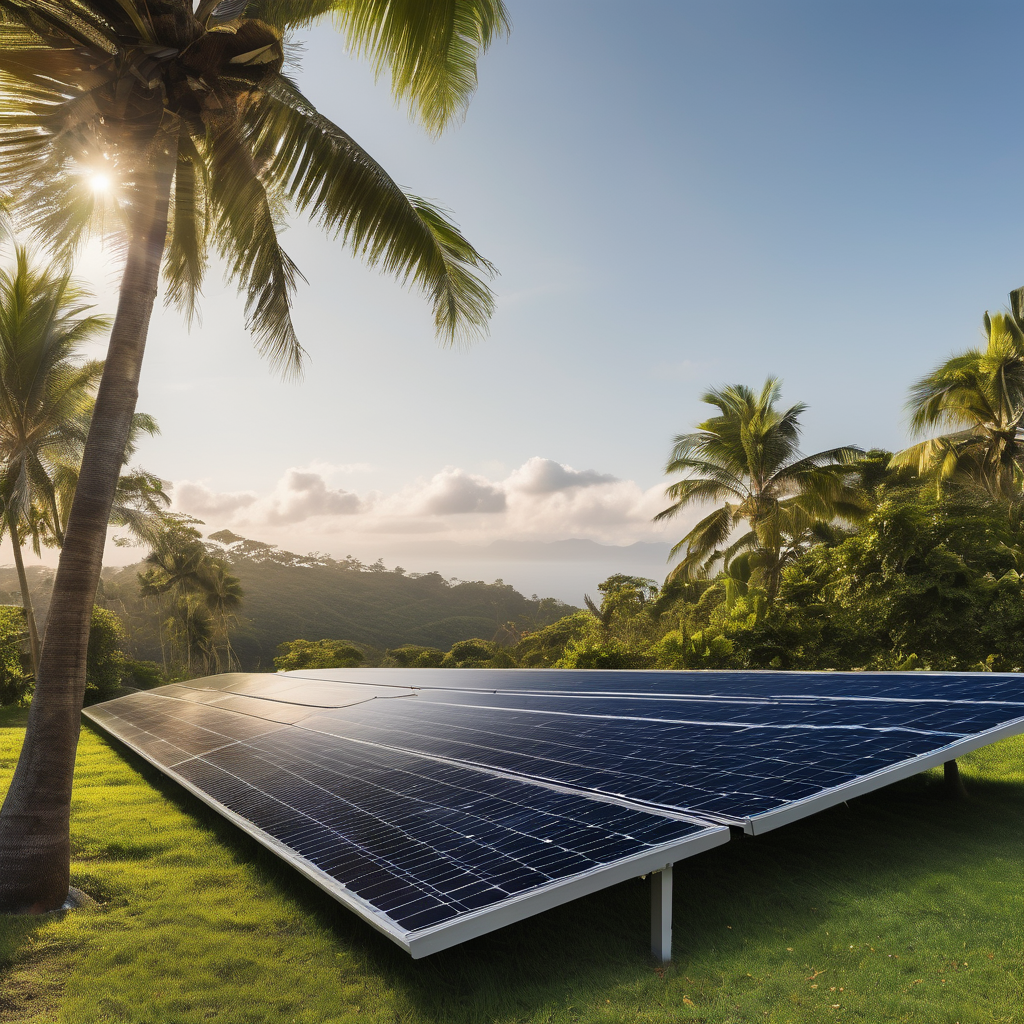
The Fiji Commerce and Employers Federation (FCEF) has expressed serious concerns about what it terms a “strategic failure” on the part of Energy Fiji Ltd (EFL) concerning the adoption of solar photovoltaic technology. This comes despite a significant global decline in solar energy costs. In a detailed 21-page submission to the Fijian Competition and Consumer Commission (FCCC), FCEF argues that proposed increases in tariffs could unfairly impact consumers who were not involved in the decisions leading to these failures.
The submission reveals a dramatic drop in utility-scale solar photovoltaic costs, which have plummeted by 85-90% worldwide over the past decade. According to the International Renewable Energy Agency (IRENA), the global weighted-average levelized cost of electricity (LCOE) from utility-scale solar PV has decreased from around $0.38 per kWh in 2010 to an anticipated $0.04 per kWh by 2024. Despite Fiji’s favorable solar conditions, the uptake of solar energy by EFL has been prohibitively low.
FCEF pointed out a concerning decrease in solar and wind energy generation, which dropped from 3.0 GWh (0.30%) in 2019 to a mere 0.8 GWh (0.07%) by 2024, while diesel power continues to represent a vast majority of energy consumption, exceeding 500 GWh per year. The federation criticized this trend as “technology abandonment,” suggesting that had EFL acted on solar energy initiatives between 2015 and 2016, it could have capitalized on declining costs, thereby reducing dependence on diesel fuel.
The federation elaborated on the potential benefits of accelerating solar energy integration, which could have significantly reduced diesel usage during the high-cost period between 2022 and 2024, leading to savings of millions in fuel costs that would directly improve EFL’s financial health and lower consumer rates.
FCEF also compared Fiji’s energy strategy with that of other island nations such as Hawaii, Barbados, Seychelles, and the Maldives, which have reached renewable energy penetration rates of 20-40% while Fiji has seen minimal solar energy utilization. They cautioned that placing the burden of costs from delayed technology adoption on consumers rewards mismanagement and leads to further complications.
In light of these challenges, the FCCC has stated its commitment to engaging all stakeholders, including holding a specific session with FCEF to integrate their feedback into future decision-making. FCEF is urging a reconsideration of the tariff assessment scheduled for December 19, 2025, advocating for a renewed evaluation process to address these crucial issues.
This call for a transition to renewable energy comes amid a global movement toward enhancing sustainable practices, which could foster greater energy security and economic efficiency for Fiji while also mitigating the environmental consequences tied to fossil fuel use. By reconsidering energy strategies, Fiji has the potential to not only improve its energy sector but also set a positive precedent in the region’s commitment to sustainability.