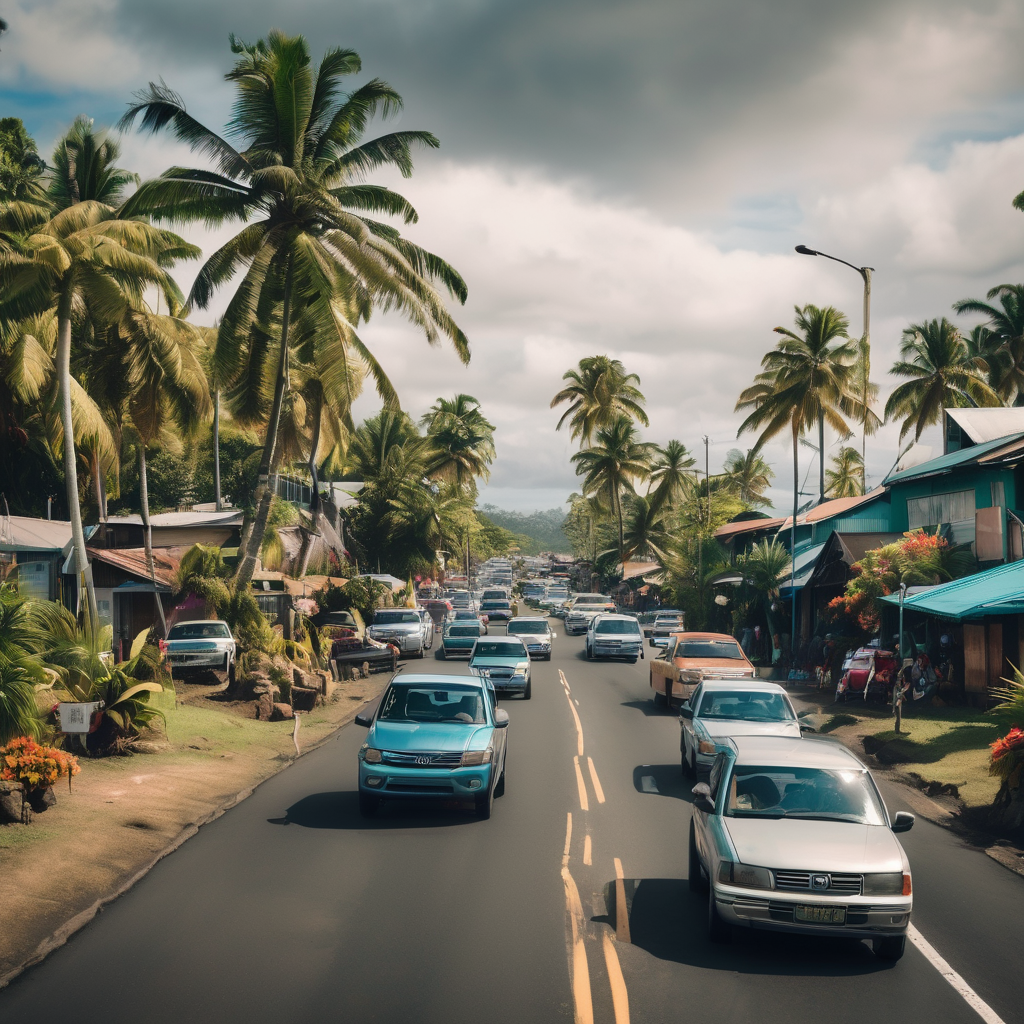
Fiji is considering measures to regulate vehicle ownership as a means to reduce traffic congestion, according to Lui Naisara, chairman of the Land Transport Authority Board. While no formal restrictions have been established yet, discussions are underway regarding potential limits on car ownership, including caps, quotas, or increased taxes on additional vehicles as part of a comprehensive long-term transport management strategy.
Naisara pointed out that vehicle ownership, which once represented a luxury, has become increasingly attainable for many families in Fiji. This trend has led to a notable rise in the number of vehicles on the roads, prompting Naisara to question whether households truly need multiple vehicles.
At present, Fiji lacks a definitive guideline to determine the ideal number of vehicles per kilometer of road. Naisara emphasized that this metric is essential for authorities to evaluate before any restrictions are applied. He noted that traffic congestion is not uniform across the country but varies by district, suggesting that any vehicle limits should be tailored to specific local conditions.
Drawing inspiration from Singapore’s vehicle quota system, Naisara proposed that Fiji could implement similar initiatives. However, he cautioned that such policies must carefully balance economic factors and individual freedoms. He acknowledged the importance of vehicles to the economy, as they are indicative of consumer purchasing power.
To tackle the challenge without enacting outright bans, Naisara suggested that imposing higher taxes on second or third vehicles might persuade households to reconsider the necessity of owning multiple cars. This approach could strike a balance between encouraging responsible vehicle use and accommodating Fiji’s evolving economic landscape.
Despite the challenges, there is optimism that strategically planned changes could lead to a more sustainable and efficient transport system in Fiji, ultimately improving the quality of life for its citizens.