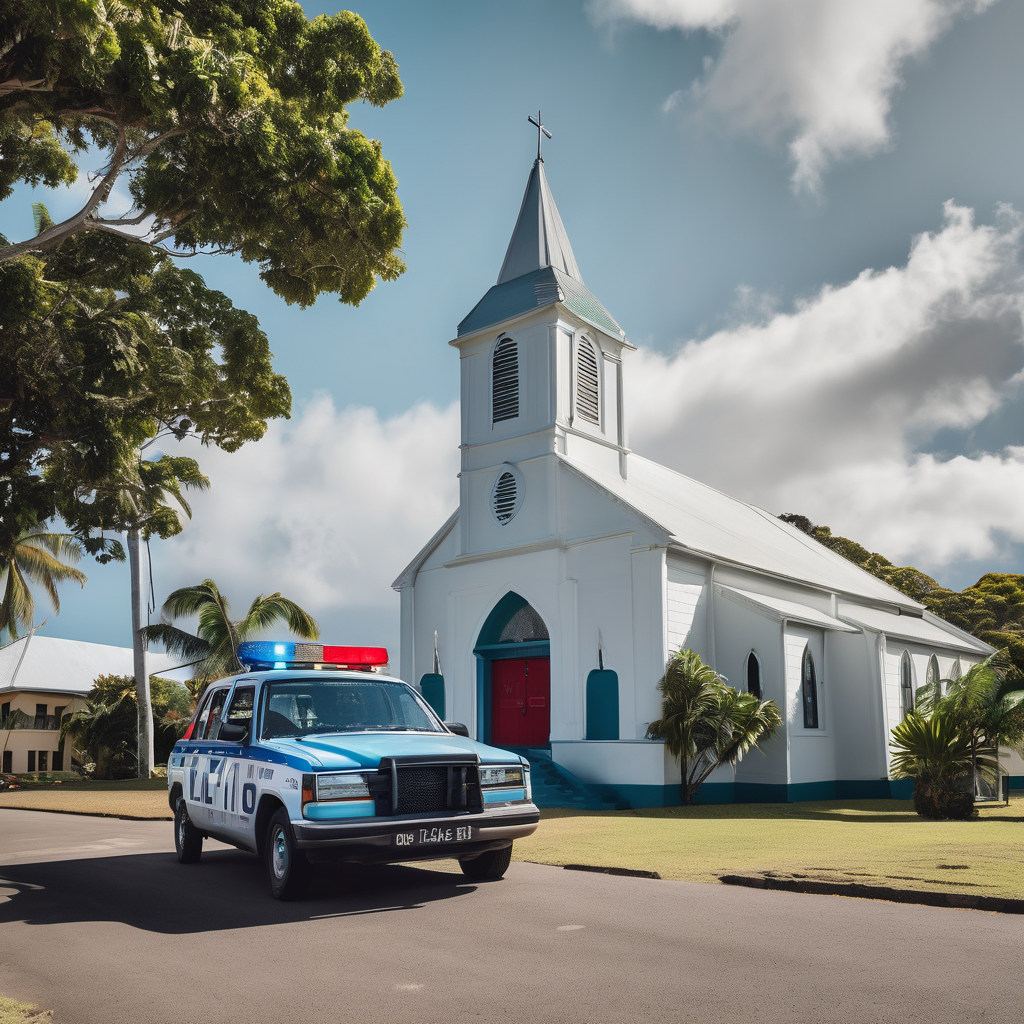
The Government is ramping up its efforts to tackle the illicit drug issue by strengthening collaborations with church leaders, recognizing the crucial role that faith-based organizations have in molding community values and supporting families. This renewed focus was showcased in a recent meeting involving Ioane Naivalurua, the Minister for Policing and Communications, and members of the Council of Churches. The discussions centered on how churches can aid in addressing the growing impact of illicit drugs on society.
Minister Naivalurua pointed out that drug-related crimes are often linked to broader social challenges, such as poverty and unemployment, which can drive individuals toward the illegal drug market as a means of income. He stressed that law enforcement alone is insufficient to confront these issues, advocating for a community-driven approach to effectively tackle the problem.
As part of the Government’s National Narcotics Strategy, the Minister detailed a comprehensive plan that includes prevention, law enforcement, treatment, rehabilitation, and community outreach. This strategy notably emphasizes early intervention and grassroots awareness to address the issue at its core.
Church leaders were acknowledged as vital partners in this initiative because of their influential position in promoting moral values, reinforcing family connections, and fostering positive decision-making in their communities. The meeting saw the presence of notable figures such as Archbishop Peter Loy Chong and other prominent church leaders.
Joining Minister Naivalurua were Assistant Commissioner of Police Operations Livai Driu and senior officers from the Fiji Police Force, signaling the collaborative spirit essential for effectively combating the illicit drug crisis. This initiative highlights the importance of community partnerships in overcoming societal challenges, conveying a hopeful message of unity in the battle against drug abuse.