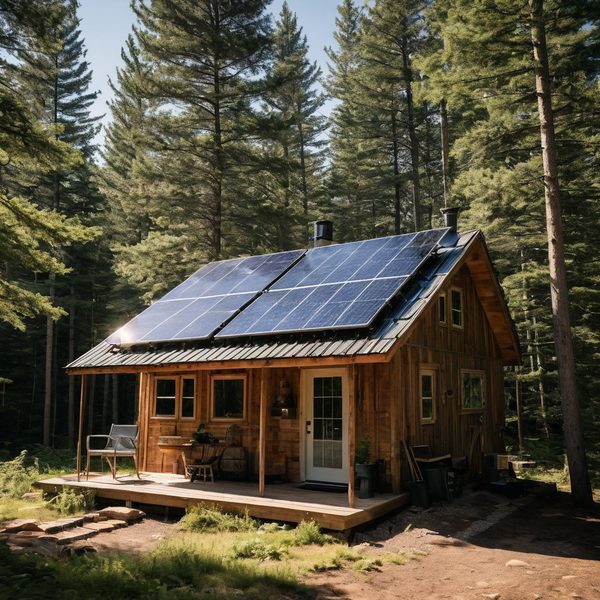
A homeowner who installed a do‑it‑yourself solar array says the system has reliably powered an off‑grid cabin for five months, producing between about 400 and nearly 800 kilowatt‑hours a month during summer and costing roughly US$10,000 to install. The post and a photo of the rooftop setup were shared on Reddit, where the poster detailed that the array runs an 800‑square‑foot cabin’s lights, refrigerator, power tools and even a small heat pump — with a gasoline generator kept on hand as backup.
“The system powers our small cabin, 800 sq ft, lights, fridge, tools, a small heat pump, basically everything,” the poster wrote, noting there is no grid connection. Their stated summer output range suggests the system can meet the daily needs of a modest dwelling during peak production months, though the poster did not specify the system’s panel count, inverter size or whether it includes substantial battery storage.
The $10,000 installation cost prompted discussion among commenters, some calling it a bargain for a whole‑home off‑grid setup. Industry comparison tools such as EnergySage — referenced in the original post — point to wide variation in prices depending on system size, location, installation complexity and incentives, and say homeowners can often reduce costs by shopping multiple quotes and checking local rebates. EnergySage also promotes whole‑home battery backup as a key consideration for those aiming to cut ties with the grid, since batteries store solar power generated during daylight for use at night.
The Reddit account’s experience underscores several practical considerations for would‑be off‑grid homeowners. First, seasonal variability matters: producing up to 800 kWh in summer does not guarantee similar output in winter months with shorter days and lower sun angles. Second, the approach used by this homeowner leans on a conventional fossil‑fuel backup rather than relying solely on batteries, a choice that reduces initial capital outlay but keeps some dependence on external fuel and maintenance. Third, the success of a DIY installation depends heavily on correct system design and safe electrical work; the post did not indicate whether local permits or inspections were obtained.
The account arrives amid growing attention to home energy resilience. In the U.S., increasing outage frequency attributed to aging grid infrastructure, extreme weather and rising electricity demand has led more households to explore solar-plus-storage and off‑grid options. For many, the trade‑offs are financial — upfront costs versus long‑term savings — and practical, including system maintenance, fuel storage for generators and the need to match capacity to household load.
For people interested in following the same route, renewable‑energy marketplaces and advisory services can provide estimates, state‑by‑state cost maps and information on incentives. But experts typically advise careful energy audits, realistic production estimates for local solar resources, and consideration of battery capacity if continuous, overnight backup is required. The Reddit poster’s five‑month update offers a real‑world data point for what a modest, self‑installed solar system can deliver in favorable months, while highlighting the decisions homeowners face when choosing between batteries, generators and grid reliance.