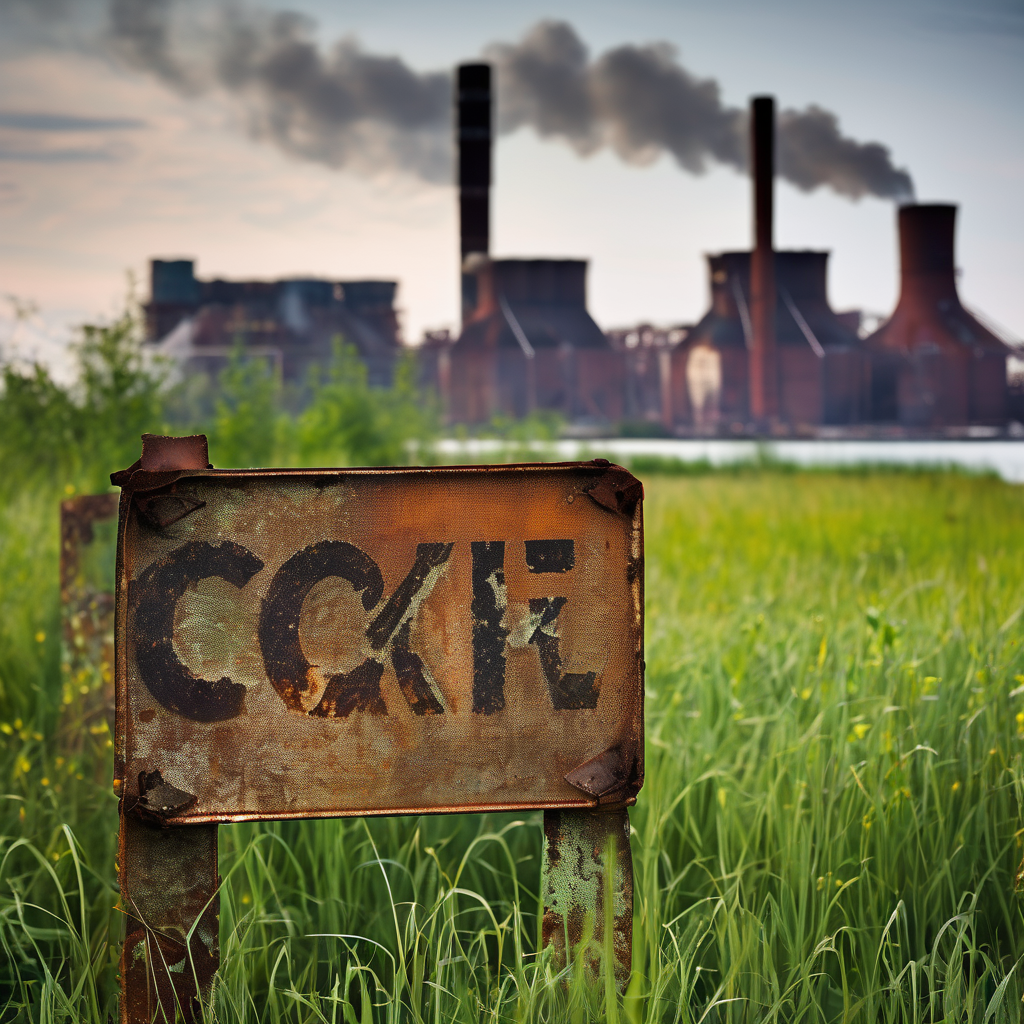
DTE Energy Co. and three of its subsidiaries have been ordered by the U.S. District Court for the Eastern District of Michigan to comply with the Clean Air Act and have been hit with a $100 million penalty due to air quality violations at the EES Coke Battery facility located on Zug Island, perched between River Rouge and Detroit. This facility produces metallurgical coke, a crucial component used in steelmaking, in an area that does not meet federal sulfur dioxide (SO2) air quality standards.
The court’s ruling revealed that modifications made to the facility’s state air permit in 2014 resulted in a dramatic increase in SO2 emissions. In 2018 alone, the facility emitted over 3,200 tons of SO2, significantly surpassing the permitted baseline level of under 2,100 tons annually. The court held DTE and its subsidiaries—DTE Energy Resources LLC and DTE Energy Services Inc.—responsible as operators of the facility, citing their substantial role in environmental decision-making and operations. EES Coke Battery LLC had already been found liable as both owner and operator.
The $100 million civil penalty reflects the approximate $70 million that the companies saved by not complying with the Clean Air Act, which they allocated for other purposes. The ruling emphasized that the defendants have the financial capability to pay this penalty and implement necessary relief measures.
DTE Energy expressed disappointment in the ruling, highlighting concerns over its implications on the U.S. steel industry’s domestic coke supply. The company has indicated plans to appeal the decision in the 6th Circuit Court while asserting its commitment to adhering to environmental regulations.
Zug Island has been part of River Rouge since 1922 and serves as a private industrial area where the River Rouge meets the Detroit River. Principal Deputy Assistant Attorney General Adam Gustafson stated that this ruling underscores the Department of Justice’s resolve to penalize companies neglecting environmental laws, ensuring fair competition and advancing public health initiatives.
Furthermore, the court acknowledged that emissions from the facility have led to severe health effects in nearby communities, including increased rates of asthma attacks, heart complications, strokes, and higher cancer risks. To address these issues, the defendants are required to create a Community Quality Action Committee, funded with $20 million, responsible for overseeing local air quality improvement projects, such as distributing HEPA air purifiers and enhancing air filtration systems in schools.
The government, along with the Sierra Club and the City of River Rouge, is expected to submit a joint proposed judgment by February 20, 2026. This ruling offers a glimmer of hope for local residents, aimed at reducing pollution and improving air quality in affected areas while promoting public health initiatives.