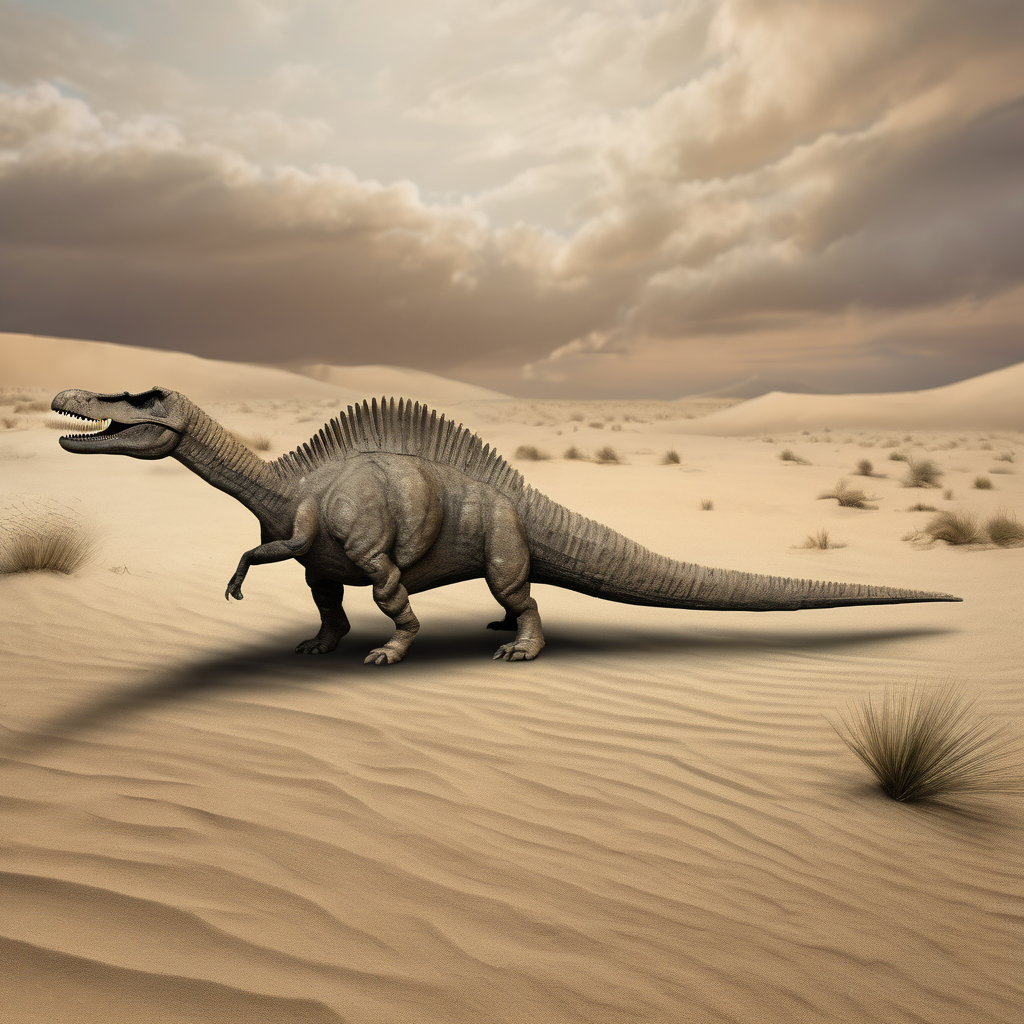
A remarkable new species of Spinosaurus has been discovered in the Saharan desert, featuring a stunning skull adorned with a unique crest previously unseen in this dinosaur family. Paleontologists have designated the species as Spinosaurus mirabilis, translating to “wonderful spine lizard,” a name that reflects its striking appearance.
This finding is significant, not just for its aesthetic appeal, but also for its implications regarding the habitat of Spinosaurus. Traditionally, these dinosaurs have been associated with coastal environments; however, this new specimen was discovered deep inland in Niger, far removed from any ocean, which raises intriguing questions about their ecological adaptation.
The excavation was led by Paul Sereno from the University of Chicago, who described the emotional impact of the discovery on his team. “This find was so sudden and amazing, it was really emotional for our team,” Sereno explained. The moment they first viewed the 3D digital models of the bones in their camp, powered by solar energy amidst the desert, marked a pivotal point in recognizing the significance of their discovery.
Fascinatingly, the new Spinosaurus species exhibits sharp, interlocking teeth similar to those of modern crocodiles, and its remains were found alongside long-necked dinosaurs buried in river sediments. Sereno suggests that Spinosaurus mirabilis may have led a semi-aquatic lifestyle in a forested habitat, explaining, “I envision this dinosaur as a kind of ‘hell heron’ that had no problem wading on its sturdy legs into two meters of water but probably spent most of its time stalking shallower traps for the many large fish of the day.”
While the scimitar-shaped crest adds to its allure, its specific function remains uncertain. The research team hypothesizes that the crest may have been covered in keratin, possibly adorned with vibrant colors similar to a toucan’s bill, serving as a visual display.
This groundbreaking research has been published in the journal Science, and it serves to reshape our understanding of dinosaur diversity and their habitats in prehistoric times. The discovery of Spinosaurus mirabilis not only enriches our knowledge of these magnificent creatures but also continues to spark excitement and curiosity in the field of paleontology.