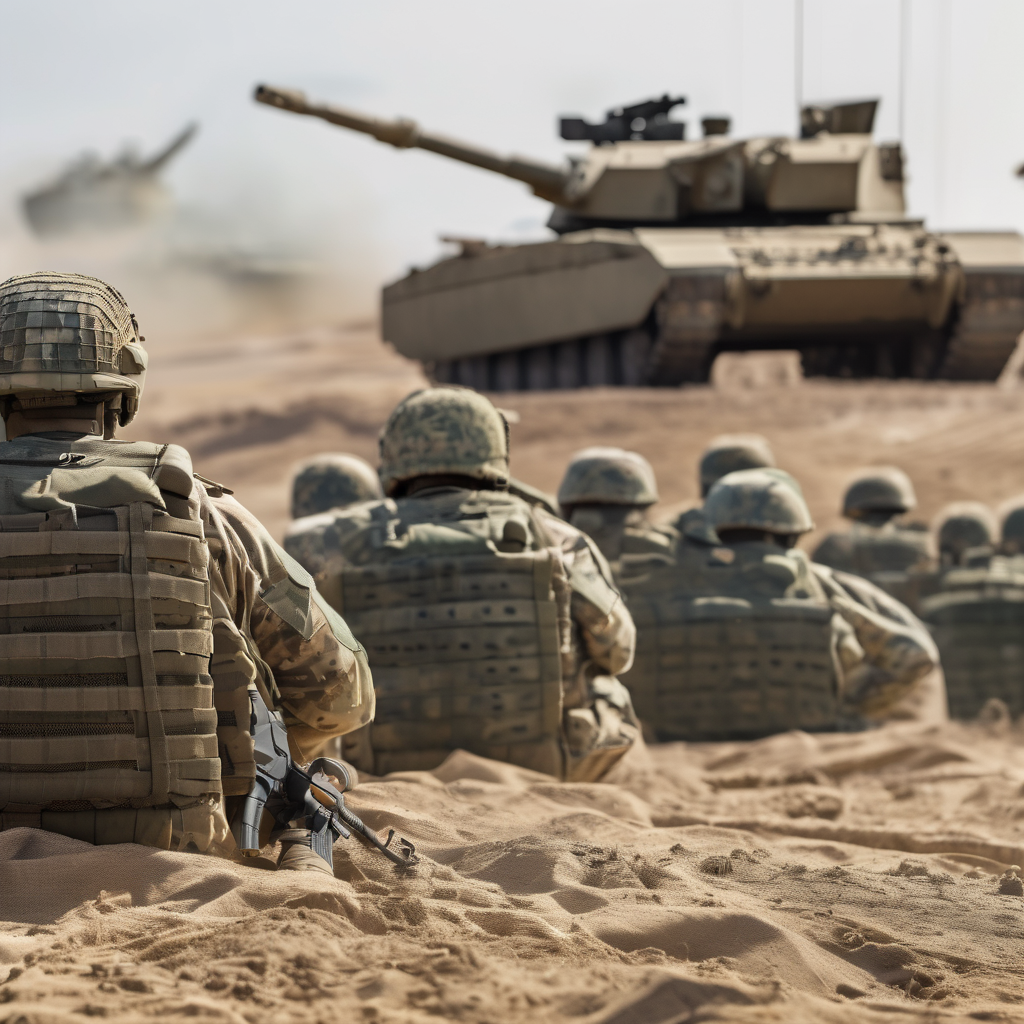
A recent claim circulating on social media suggested that a video showed the United States Armed Forces conducting an aerial attack against the Islamic State’s West African Provinces (ISWAP). This assertion originated from a Facebook page called Nigerian Armed Forces & Military News, which asserted that the military aircraft depicted in the footage was a Black Hawk helicopter involved in an operation near Lake Chad, a known hotspot for ISWAP activities.
However, a thorough fact-check has revealed that the claim is false. Analysis of keyframes from the video shows it is actually footage from a multinational military exercise known as Super Garuda Shield, held in East Java, Indonesia, between August 31 and September 13, 2023. The aircraft featured in the video is identified as a Boeing AH-64 Apache helicopter, contrary to the claim about the Black Hawk.
The video first surfaced online in December 2025, drawing significant attention, with over 10,200 reactions and hundreds of comments and shares on various platforms. The narrative around the supposed attack has provoked widespread discussions, including skepticism among viewers. Some users expressed disbelief regarding the video’s authenticity, while others remarked on the aircraft’s identification as an Apache rather than a Black Hawk.
Upon verification, the fact-checking team identified the source of the video as a YouTube clip from the Associated Press titled “Soldiers from Indonesia, US, Australia, and other nations take part in exercises in Java,” which further clarifies the context of the footage. The military drill, which featured approximately 5,000 personnel, included live-fire exercises showcasing advanced military hardware. Notably, pilots in actual combat scenarios typically avoid flying in static positions, especially in hostile environments, as it would make them susceptible to enemy fire.
In summation, the video in question is part of a planned military demonstration rather than an actual combat operation against ISWAP. This highlights the importance of verifying information before sharing, especially in sensitive geopolitical contexts like the fight against terrorism. Misinterpretations can cause undue alarm and confusion, making it vital for audiences to rely on credible sources and fact-checking organizations amidst a rapidly evolving news landscape.