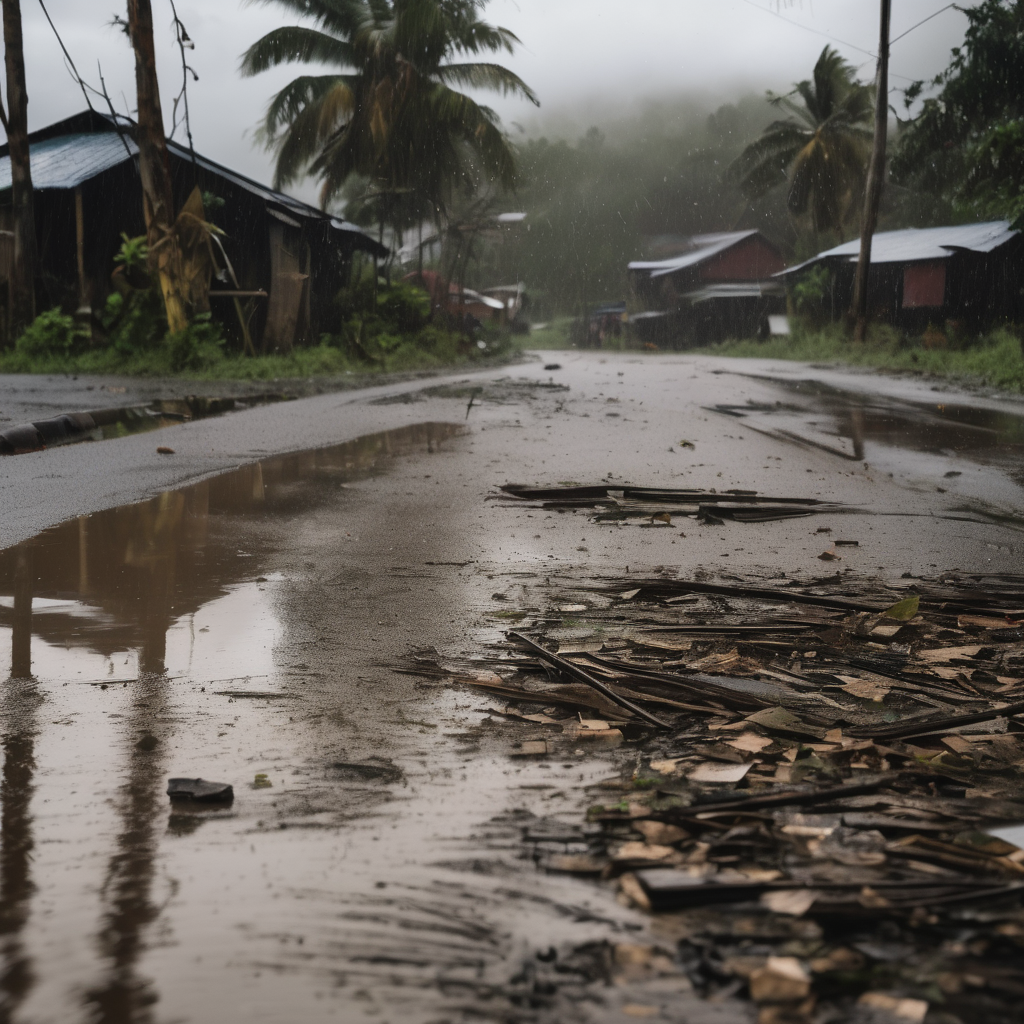
Heavy rainfall has resulted in catastrophic flooding and landslides across Asia, claiming the lives of over 900 people, with many more still missing. The disaster was exacerbated by Cyclone Senyar, which generated torrential downpours throughout Indonesia, Thailand, and Malaysia, following a rare tropical storm’s emergence in the Malacca Strait, which separates Sumatra from these neighboring countries.
In Indonesia, reports indicate that at least 435 individuals have lost their lives as a consequence of the storm, with over 400 still unaccounted for. The islands were hit hardest in areas such as Sumatra, where the cyclone triggered significant landslides. Rescue crews are battling to access the most affected locations as floodwaters rage. Some residents in isolation have resorted to looting for food and water in a desperate attempt to survive. Eyewitness accounts describe utter devastation, with homes reduced to rubble, and belongings swept away by the floods.
Across the sea in Thailand, the situation has been similarly dire, where confirmed fatalities have reached 162. Extreme weather conditions have left approximately 3.5 million people affected. In the southern city of Hat Yai, floodwaters reached unprecedented heights, overwhelming homes and cutting off access to vital services, like maternity wards. Officials noted that recovery efforts are underway, but the capital’s infrastructure has been severely strained.
Sri Lanka has also experienced severe impacts, as Cyclone Ditwah unleashed heavy rains that resulted in at least 334 deaths and left more than 1.1 million people affected. Many residents were forced to evacuate their homes, often with little more than the clothes on their backs. Temporary shelters have been established, but the struggle for food and medicine lingers as communities strive to regain stability.
In Malaysia, the storm caused two casualties as well. Many evacuations occurred in anticipation of the harsh weather; however, some families found themselves stranded by rising floodwaters. Emergency response efforts are currently ongoing to assist those impacted.
This season’s extreme weather in Southeast Asia has raised concerns among scientists about the role of climate change, which has made the region particularly vulnerable to such catastrophic events. Recent conditions exemplify the urgency with which regional authorities and citizens must address climate adaptation and disaster preparedness.
The resilience of impacted communities shines through as they band together to recover and rebuild amidst overwhelming adversity. Volunteers are stepping forward to help provide food and essential supplies, showcasing the strength of human spirit in times of crisis.
As the region contends with the aftermath of these devastating storms, the focus will increasingly turn to not only recovery efforts but also mitigation strategies to prepare for future climate challenges.