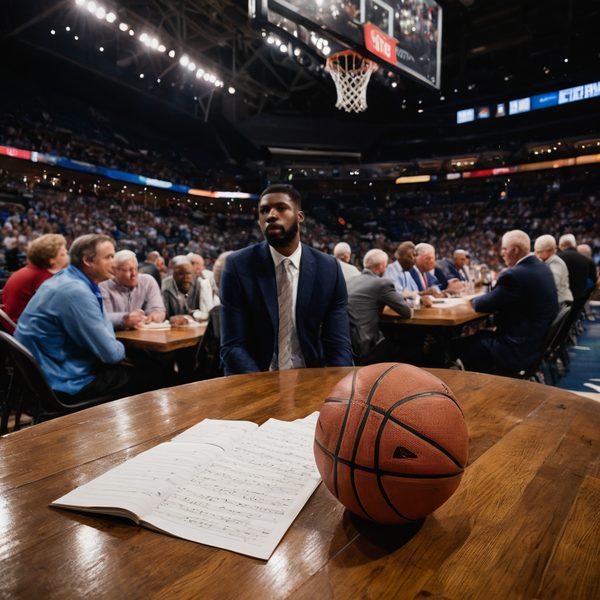
Cooper Flagg said he spent much of draft night trying not to show how thrilled he was, after his agent warned him to “just don’t react” to whatever team appeared on the screen. In a post-draft interview on YouTube, the rising prospect described forcing a stoic expression even as the top three teams were announced — Charlotte, then Philadelphia, then “San Antonio, Dallas” — and he realized the possibility of landing in Texas.
“That was a thing, bro,” Flagg said, recounting his agent’s instructions. He said the warning came from watching how players in similar positions in past years sometimes visibly reacted — or made disappointed faces — when the pick didn’t match their preferred destination. “So the whole time I’m just in there like, all right, just don’t react,” he added, saying he had to guard against both disappointment and obvious excitement.
When the final three teams were revealed, Flagg said he briefly allowed himself to think practically. “Being in Texas would be great. Like I was thinking about state taxes. I was like, this is amazing,” he said, before snapping back into a game face. Even with interior joy, he tried to “contain my excitement” so as not to give coaches, scouts or the broadcast a tell.
Flagg also described the pressure of sitting with teammates and friends whose playful jibes made it harder to remain expressionless. “I got the guys next to me — my teammates from my show — smiling and laughing and like poking at me and trying to get me to react and I’m like, bro,” he recalled, smiling at the memory while explaining why the draft-night footage made him look reserved.
His comments underscore the careful choreography that surrounds modern draft nights, when athletes and their teams try to control reactions that will be broadcast to millions. Flagg’s agent’s simple instruction — don’t give anything away — reflects a broader caution among prospects who know that a momentary expression can be memorably replayed and sometimes dramatized in the weeks that follow.
While Flagg’s remarks won’t alter scouting reports or draft-slot calculations, they offer a human glimpse into the emotional balancing act on one of the most public nights in a young athlete’s life: the effort to appear composed while processing a career-defining moment.