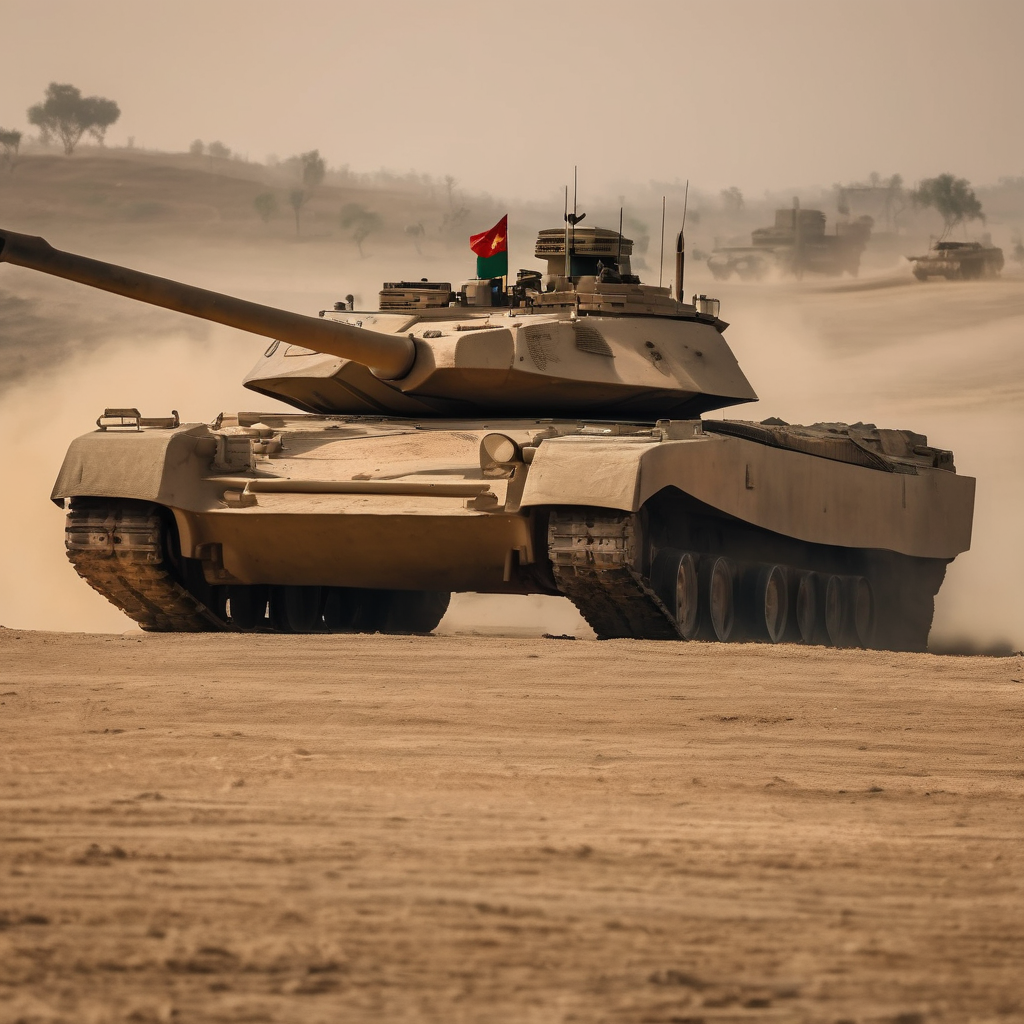
Myanmar’s military is experiencing a resurgence in its efforts against various opposition factions, successfully reclaiming territories and moving forward with a contentious election set to commence this Sunday. This shift in momentum comes as surprising news, given the military’s previous struggles that had led some to speculate on its impending collapse.
Analysts suggest that the changing dynamics of the ongoing conflict, which began after the 2021 coup, are significantly influenced by China’s strategic support. Jason Tower, a senior expert focused on Myanmar at the Global Initiative against Transnational Organized Crime, asserts that China’s involvement has become crucial for the military regime. Beijing has pressured powerful ethnic armed groups in northern Myanmar by imposing border closures, resulting in some of these groups agreeing to ceasefires and ceding territory back to the military. Additionally, new drone technologies and continued arms supplies from China have bolstered the military’s position.
Despite the military’s attempts to regain control, civil conflict persists across many regions, leaving significant areas beyond its reach. Nonetheless, China’s backing has allowed the junta to reclaim some ground. While China has provided weapons to the military, it also maintains relationships with various ethnic armed groups opposing the junta. Initially, China’s response to the coup was subdued, but the subsequent instability and economic turmoil produced by pro-democracy factions prompted Beijing to take a more active role.
China shares a lengthy border with Myanmar and has invested heavily in the country, pursuing plans to establish a corridor linking southwestern China to the Indian Ocean. However, ongoing conflicts have disrupted these infrastructure projects. Frustrated by not just the conflict’s escalation but also the rise in organized crime within border areas, China recently granted tacit support to northern ethnic armed groups, allowing them to challenge the junta.
The situation took a turn when China sought to recalibrate its support, implementing border restrictions that forced these ethnic groups to reconsider their positions. Analysts note that China aimed to prevent any scenario that might lead to the Myanmar military’s collapse, fearing greater chaos could ensue.
As China officially backs the upcoming elections, which have been denounced by various observers and UN experts as illegitimate, it plans to send election monitors alongside countries like Russia and Vietnam. The military’s proxy party, the Union Solidarity and Development Party, is expected to dominate the vote, with no credible opposition.
In an effort to reassure China, the Myanmar military has promised to continue vital economic projects and tackle regional crime, though doubts remain regarding their ability to fulfill these commitments. Observers note that if China’s expectations for political ceasefires and infrastructure progress are not met over the next two years, Beijing may reconsider its support for the military.
Rising anti-China sentiment among the Myanmar populace underscores a growing belief that Beijing’s involvement exacerbates local conflicts to strengthen its influence. However, some experts argue that China does not require war to maintain its leverage. Instead, they view the situation as a complex interplay of power dynamics, with no clear ally being favored.
Overall, the evolving situation in Myanmar continues to draw international attention, as the outcomes of military efforts and upcoming elections will significantly affect the country’s trajectory.