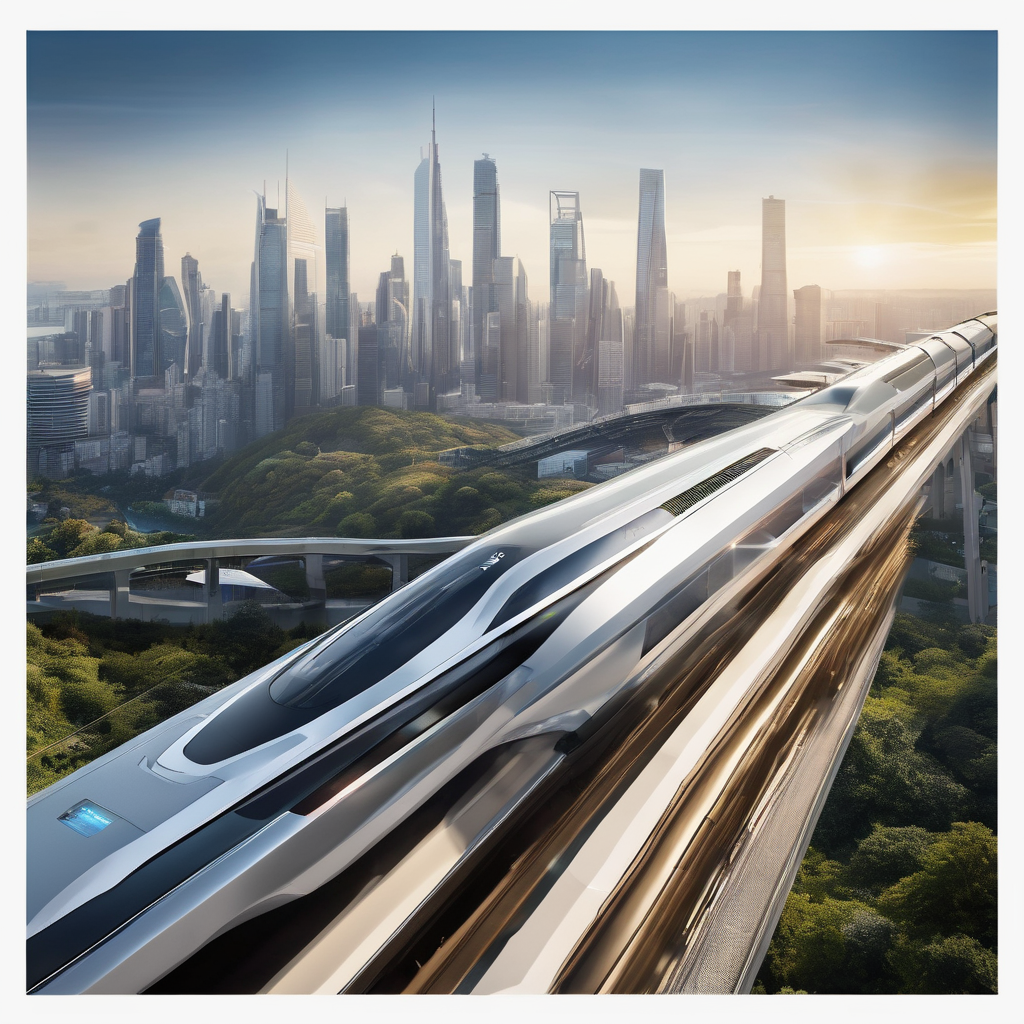
In a remarkable advancement for transportation technology, China has introduced the world’s fastest train, capable of reaching a staggering speed of 603 kilometers per hour (375 mph). This groundbreaking magnetic levitation (maglev) train was developed by CRRC Corporation and represents a significant leap forward in the realm of high-speed rail, reinforcing Asia’s position at the forefront of rail innovations.
Historically, nations like Germany, Japan, and France have led the way in rail advancements, but this latest development signifies a crucial shift in that narrative. Utilizing electromagnetic force, the maglev train floats above its tracks, significantly reducing friction. This technology not only allows for exceptional speeds but also ensures safety and comfort, potentially transforming travel times across China and beyond.
The 603 km/h maglev train stands out against other fast trains, with Japan’s top commercial maglev reaching speeds of approximately 500 km/h and France’s TGVs operating at just over 320 km/h. This record-breaking speed can reduce travel times from several hours by car or conventional train to less than two hours. Major Chinese cities like Beijing, Shanghai, and Shenzhen are expected to see same-day round trips become commonplace, providing a significant boost to economic productivity as the country continues to urbanize and enhance its technological infrastructure.
This new maglev train incorporates advanced engineering techniques that improve upon existing technology. It levitates approximately 10 millimeters above the rail through magnetic forces, essentially eliminating contact and the friction that usually inhibits speed. Enhanced safety measures, including active stability systems, ensure a smooth ride at unprecedented speeds. The materials used in construction, such as carbon fiber and lightweight alloys, further reduce drag and energy consumption.
The implications of this technological leap extend beyond mere speed benefits. Commuters and business travelers will experience drastically reduced travel times, while the high-tech industry in China will showcase its capabilities on a global scale. However, traditional short-haul airlines may face significant market share declines as travelers choose the ultra-fast train services over flights for shorter distances.
Although the train is ready for operation, infrastructure challenges remain, requiring dedicated tracks that differ from conventional rail systems. China has previously tested shorter maglev routes, but the development of a comprehensive national network will be a time-intensive endeavor involving extensive coordination between government officials, engineers, and urban planners.
China’s achievement of this speed milestone also has global implications. It signals the country’s ambition to dominate in the transportation sector, potentially influencing international rail partnerships and exports. As nations across Southeast Asia, the Middle East, and Africa seek to modernize their transport infrastructures, they may look to China for technological guidance and investment.
Notably, the maglev train offers improved safety features due to its design, which includes fewer moving parts that result in reduced wear and tear, and lower derailment risks. Additionally, environmental benefits arise from the absence of fossil fuels on board and the train’s energy-efficient operation, further enhancing its appeal compared to traditional air and road travel.
Although commercial operations are yet to commence, expectations suggest that intercity services could begin within a few years, pending necessary infrastructure and regulatory approvals. Major urban clusters in China stand to gain the most from this technological advancement, reflecting a promising shift in national and international transportation systems.