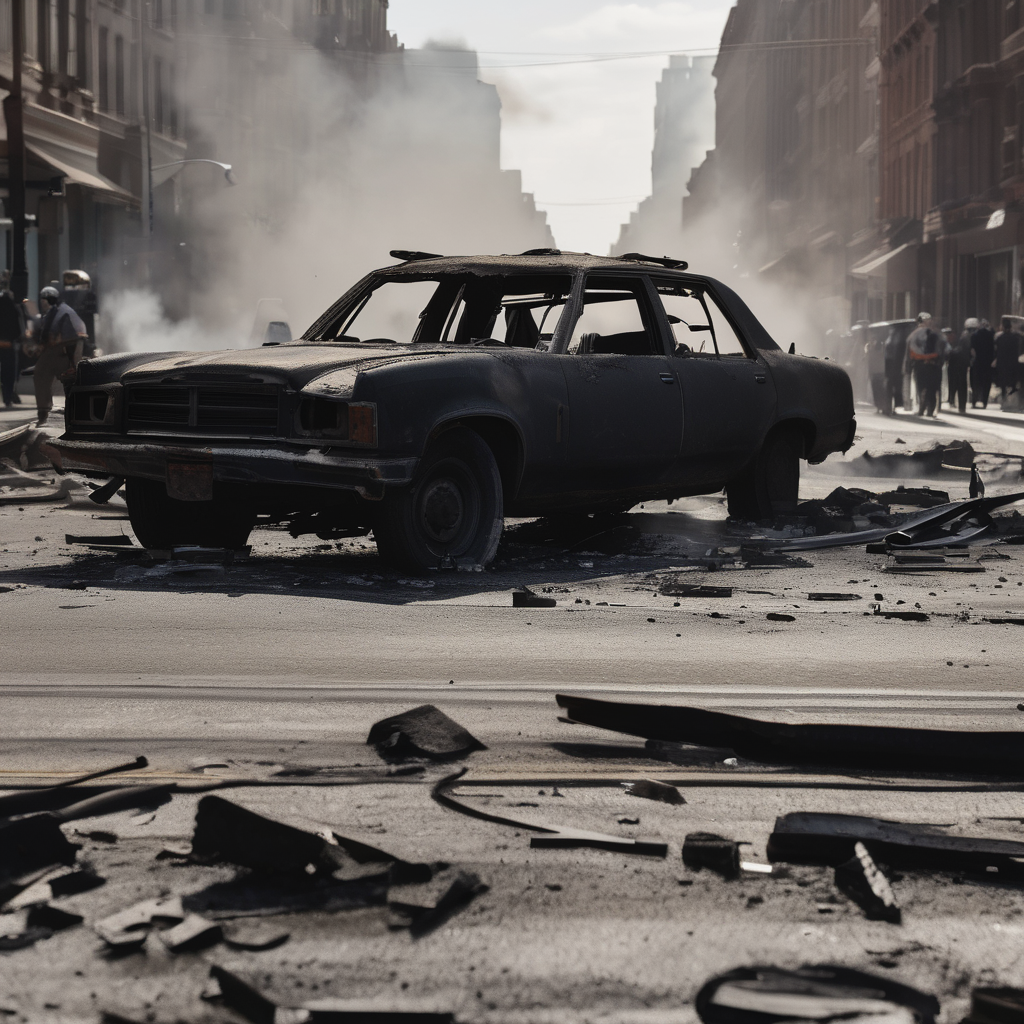
A senior Russian general, Lt. Gen. Fanil Sarvarov, was killed on Monday in Moscow when a bomb concealed beneath his car detonated. Investigators confirmed that this incident marks the third instance within a year where a Russian general has fallen victim to a car bomb. The attack coincides with the anniversary of a similar fatality, involving another high-ranking military official, which was attributed to Ukraine’s domestic security agency, the SBU. In April, yet another Russian general met his demise in a car bomb explosion near Moscow.
The Investigative Committee stated that Sarvarov, who was the head of the army’s Directorate for Operational Training, succumbed to his injuries. Graphic images released by investigators depicted significant destruction to the vehicle, including visible bloodstains and debris scattered around the scene. Attending law enforcement officers were heavily armed and secured the area.
While details remain limited, the Investigative Committee noted Sarvarov’s active involvement in the ongoing war in Ukraine. His military background included operations in Syria from 2015 to 2016 and combat against insurgents during the Chechen conflict in the 1990s. Sarvarov had been promoted to his most recent position in 2016.
In the wake of the explosion, prosecutors launched a criminal investigation, with forensic experts examining the site for evidence. According to spokeswoman Svetlana Petrenko, multiple theories regarding the motive for the murder are under consideration, implicating possible involvement from Ukrainian special services.
This incident follows a heavily publicized assassination a year ago, where Lt. Gen. Igor Kirillov was killed by an explosive device attached to a scooter. The SBU claimed responsibility for that attack. Additionally, in April, Lt. Gen. Yaroslav Moskalik was killed when an explosive device detonated near him in a suburban area of Moscow. Investigations into both earlier attacks suggested surveillance of the targets, with accusations directed at Ukrainian intelligence services.
As these events unfold, negotiations related to a U.S.-sponsored peace proposal are ongoing, involving U.S., Ukrainian, and European officials in talks held in Florida. Special envoy Steve Witkoff and Kyiv’s delegation head, Rustem Umerov, characterized recent discussions as “productive and constructive.” However, Russian officials exhibiting skepticism have critiqued the proposals as “unconstructive,” signaling potential challenges ahead.
Meanwhile, military actions persist, with reports from Ukrainian officials detailing the forced detainment and deportation of around 50 Ukrainian citizens by Russian forces, a situation that the Ukrainian Foreign Minister condemned, drawing parallels to terrorist groups. Such hawkish activities underscore the ongoing hostilities and complexities faced within the region.